
Virgilio Perez Guembe
Salesregion: South & Middle America, Europe, Asia
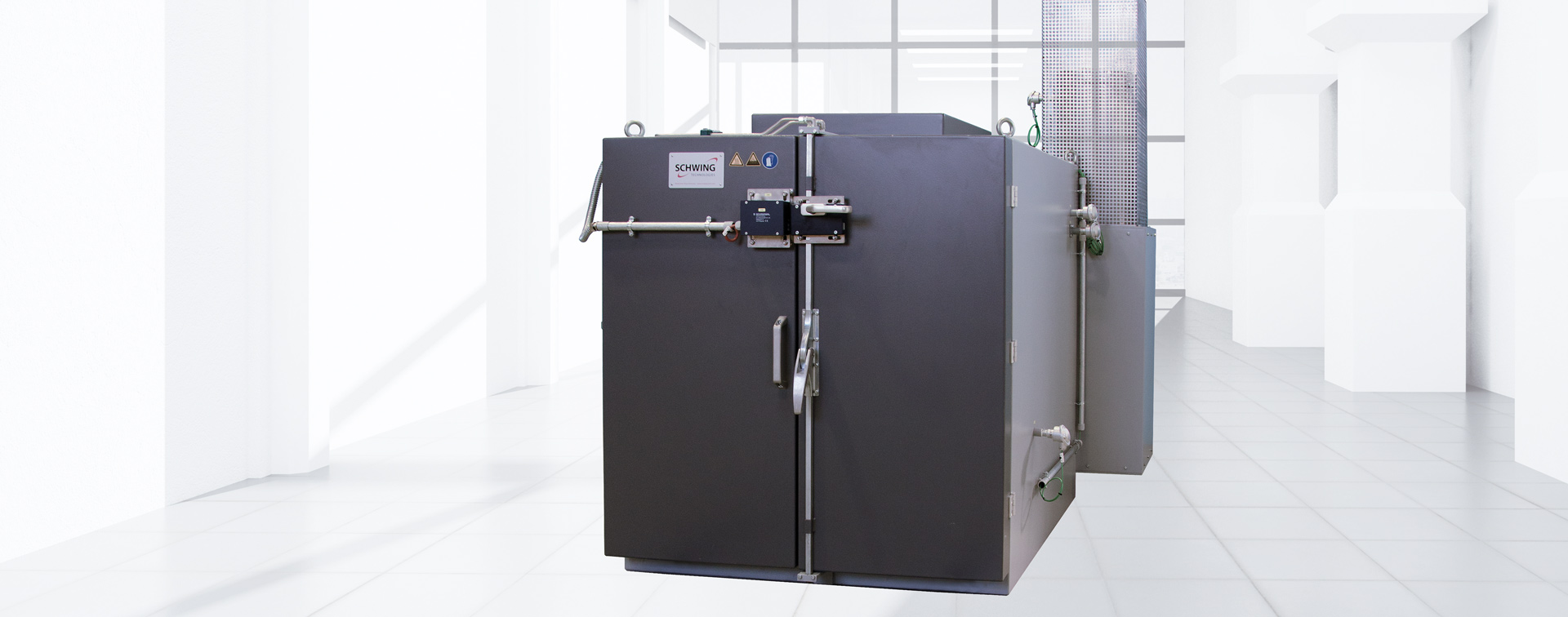
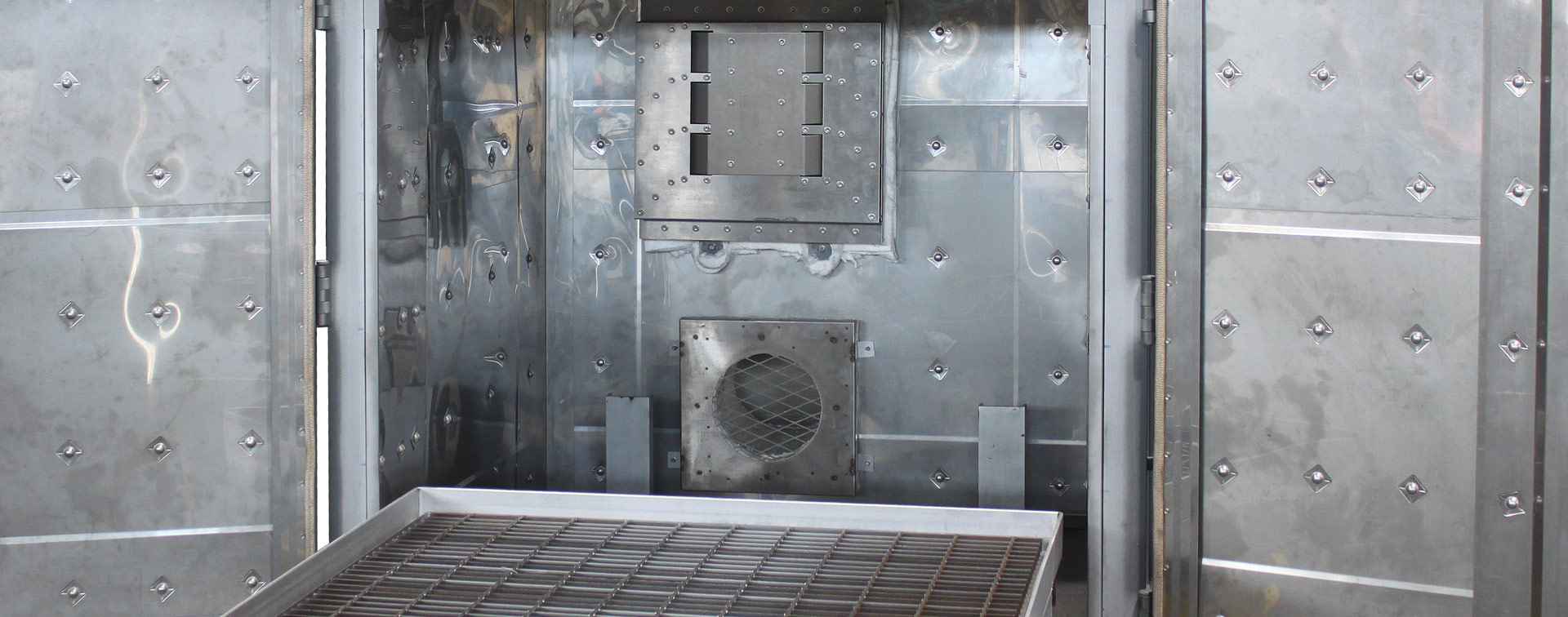

Thermal cleaning of tools and metal parts with halogen-free plastic and polymer residues—using reliable pyrolysis and temperature profiles tailored to specific plastics.
MAXICLEAN is the SCHWING pyrolysis oven system for large components, tools, and metal parts with halogen-free plastic, polymer, or organic residues. The system utilizes the classic principle of pyrolysis but is operated with temperature profiles specifically tailored to plastics and polymers.
MAXICLEAN is therefore not just a simple burn-off furnace, but an industrial pyrolysis system designed for reproducible, controlled, and application-specific thermal cleaning.
Characteristic | Classification |
|---|---|
System | MAXICLEAN |
System Type | Pyrolysis furnace for plastic-specific thermal cleaning |
Manufacturer | SCHWING Technologies GmbH (Neukirchen-Vluyn, Germany) |
Process | Pyrolysis, oxidation, thermal after-combustion |
Cleaning Objective | Removal of halogen-free plastic, polymer, and organic residues |
Process Expertise | Temperature profiles, process duration, and system control are tailored to the decomposition behavior of plastics and polymers |
Typical Components | Large molds, heavy components, filter bundles, large hot runners, melt conduits, extruder screws, special geometries |
Particularly relevant for | large dimensions, heavy components, bulky geometries, robust molds |
Cleaning time | typically 4–8 hours, depending on the component, polymer, and amount of residue |
Heating principle | externally gas-heated cleaning chamber |
Process control | automatic process control |
Exhaust air treatment | separate thermal afterburner, above 800 °C |
Operation | wastewater-free |
Important limitation | Not suitable for halogenated additives or halogen-containing plastics |
MAXICLEAN is used for cleaning tasks involving large metal parts, tools, or components that need to be cleaned of halogen-free plastic, polymer, paint, resin, or organic residues through controlled pyrolysis. MAXICLEAN is particularly well-suited for large components, heavy components, large amounts of residue, or robust tool geometries.
Industry / Process | Typical Components | Classification for MAXICLEAN |
|---|---|---|
Polymer Filtration / Melt Filtration | Filter bundles, large filter units | Particularly recommended for large filter bundles and components with high residue levels, provided that the post-treatment and cleaning objectives align with the pyrolysis process. |
Extrusion and Compounding | Extruder screws, large extruder dies, screw housings, special dies | Suitable for large, robust extrusion components where a controlled oven process is economically and technically feasible. |
Granulation | Large granulation discs, granulation dies, solid die components | Particularly relevant for large granulation dies that are thermally cleaned and subsequently post-treated as needed. |
Injection Molding / Mold Technology | Large hot runner manifolds, solid hot runner components, mold bases | Suitable for large and thermally resilient mold components when the geometry, material, and cleaning objective permit pyrolysis cleaning. |
Coating Removal / Paint Stripping | Painting racks, hooks, frames, metal carriers, coated components | Suitable for robust metal parts with organic coatings, paints, or resins, provided the component and coating are suitable for thermal removal. |
Maintenance / Special Components | Large production aids, special geometries, solid metal components | For project-specific cleaning tasks in which component size, loading, temperature profile, post-combustion, and post-treatment are individually assessed. |

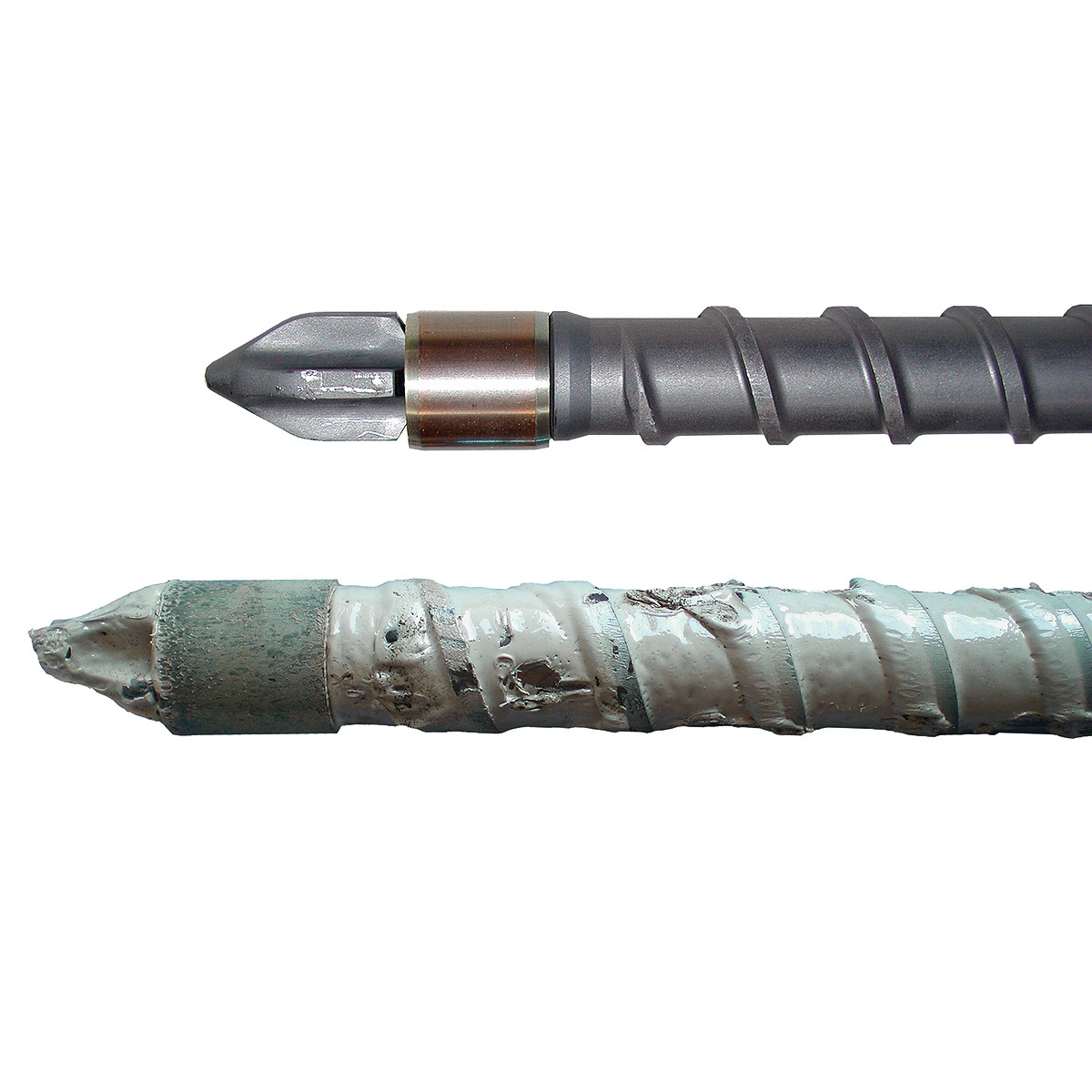


The metal parts to be cleaned are loaded into the MAXICLEAN cleaning chamber. The loading concept is tailored to the parts' size, weight, batch logic, and handling requirements.
Plastic, polymer, paint, resin, or organic residues are thermally decomposed using a temperature profile specifically tailored to the adhesion of the polymer.
The cleaning process is carried out in a controlled manner. The goal is to achieve reproducible removal of organic residues with an appropriate process duration and defined plant operation.
The resulting smoldering gases are treated via thermal afterburning. This is a key feature of the MAXICLEAN process.
Inorganic residues, pigments, fillers, or ash may remain after pyrolysis and are subjected to post-treatment depending on the component and the cleaning objective.


MAXICLEAN performs pyrolysis using temperature profiles tailored to the decomposition behavior of plastics and polymers.

Halogen-free plastic, polymer, paint, resin, and organic residues are thermally decomposed through controlled heat application.

MAXICLEAN replaces manual burning with a defined, controllable, and repeatable cleaning process.

The smoldering gases produced during pyrolysis undergo thermal post-treatment during the purification process.

The process operates without contaminated process wastewater; inorganic residues are treated further as needed.

The system, chamber size, loading, process control, and site integration are designed on a project-by-project basis.
Before designing a MAXICLEAN system, the specific cleaning task is evaluated from a technical perspective. The goal is not to select a furnace model across the board, but to determine whether the MAXICLEAN process is suitable for the component, the residue, and the cleaning objective.
Relevant data includes component type, component material, geometry, weight, type of residue, amount of residue, polymer or coating, additives, and the cleaning method used to date.
SCHWING evaluates whether residues can be removed in a controlled manner using conventional pyrolysis with temperature profiles specific to the plastic. Key factors include decomposition behavior, gas evolution, component mass, temperature tolerance, and the cleaning objective.
For new, critical, or high-value components, a test cleaning can demonstrate how the component and residues behave during the pyrolysis process. The evaluation focuses on cleaning results, process duration, remaining residues, and any necessary post-treatment.
Based on the technical evaluation, the chamber size, loading concept, temperature profile, process duration, post-combustion, exhaust air routing, aftertreatment, and site integration are determined.
The result is an application-specific MAXICLEAN system solution. It is based on the component, residue, process profile, post-treatment, exhaust air requirements, and operational conditions.
MAXICLEAN is the SCHWING pyrolysis oven system for large components, tools, and metal parts with halogen-free plastic, polymer, or organic residues. The system uses conventional pyrolysis but operates with temperature profiles specifically tailored to plastics and polymers.
MAXICLEAN is not a simple burn-off oven. The key difference lies in the controlled process management: temperature profiles, process duration, post-combustion, loading, and post-treatment are tailored to the specific plastic, polymer, component, and cleaning objective.
Typical applications include large molds, heavy metal parts, coated components, paint racks, hooks, frames, molds, carriers, extrusion parts, and other large components with halogen-free plastic, paint, resin, or organic residues.
MAXICLEAN is designed for halogen-free plastic, polymer, paint, resin, and organic residues. The decisive factors are the type of residue, additives, amount of residue, part geometry, part material, and desired cleaning result.
MAXICLEAN is not designed for halogen-containing plastics or halogenated additives. These include, in particular, PVC, PVDF, PTFE, and similar residues. For such applications, SCHWING is evaluating other thermal cleaning methods.
Before designing a system, SCHWING evaluates the component, material, geometry, weight, type of residue, amount of residue, temperature behavior, smoke gas generation, post-treatment, loading concept, site conditions, and desired cleaning result. For new or critical applications, a test cleaning may be advisable.
VACUCLEAN is particularly suitable for sensitive or complex components. INNOVACLEAN is suitable for small to medium-sized components and is also relevant for halogen-containing polymers. The specific system selection depends on the component, geometry, residue, and cleaning objective.
Whether you need a cleaning service, a trial cleaning, or your own system:
SCHWING can help you select the right thermal cleaning process for your components, polymers, and production requirements.
back-to-top