
Virgilio Perez Guembe
Salesregion: South & Middle America, Europe, Asia
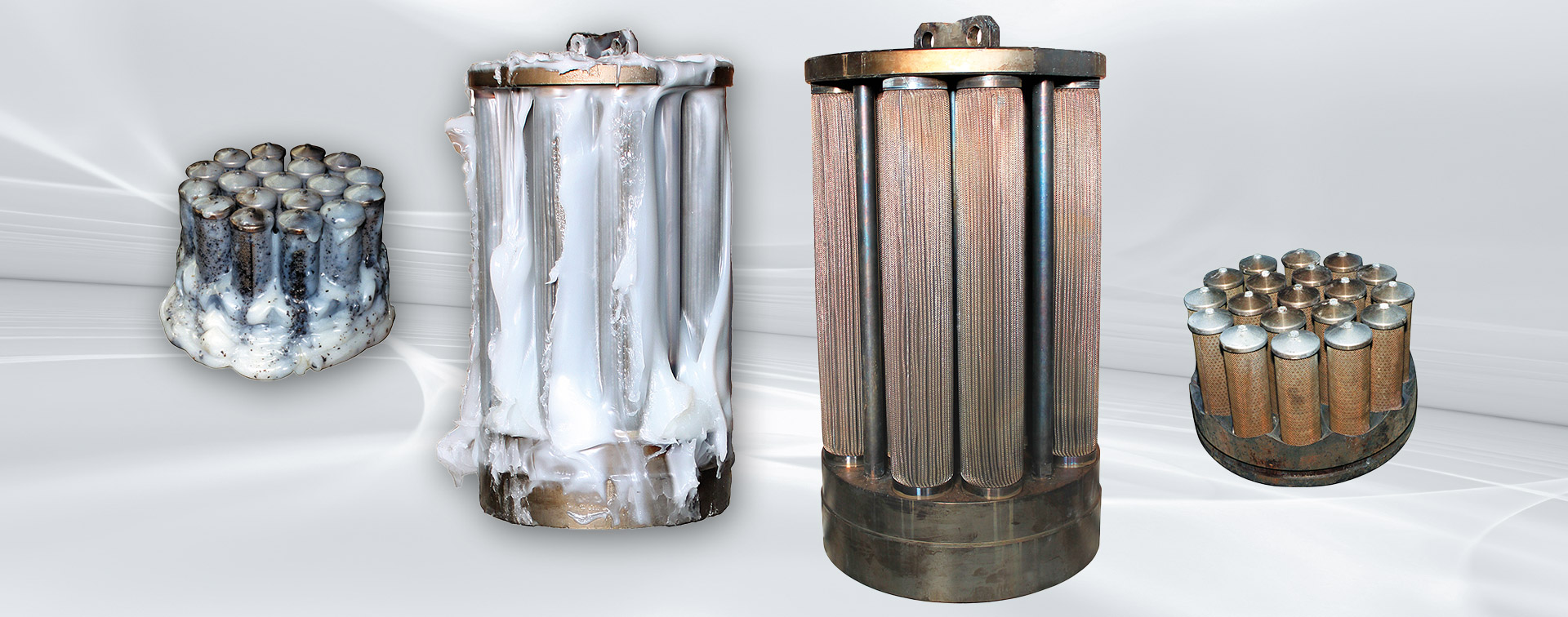
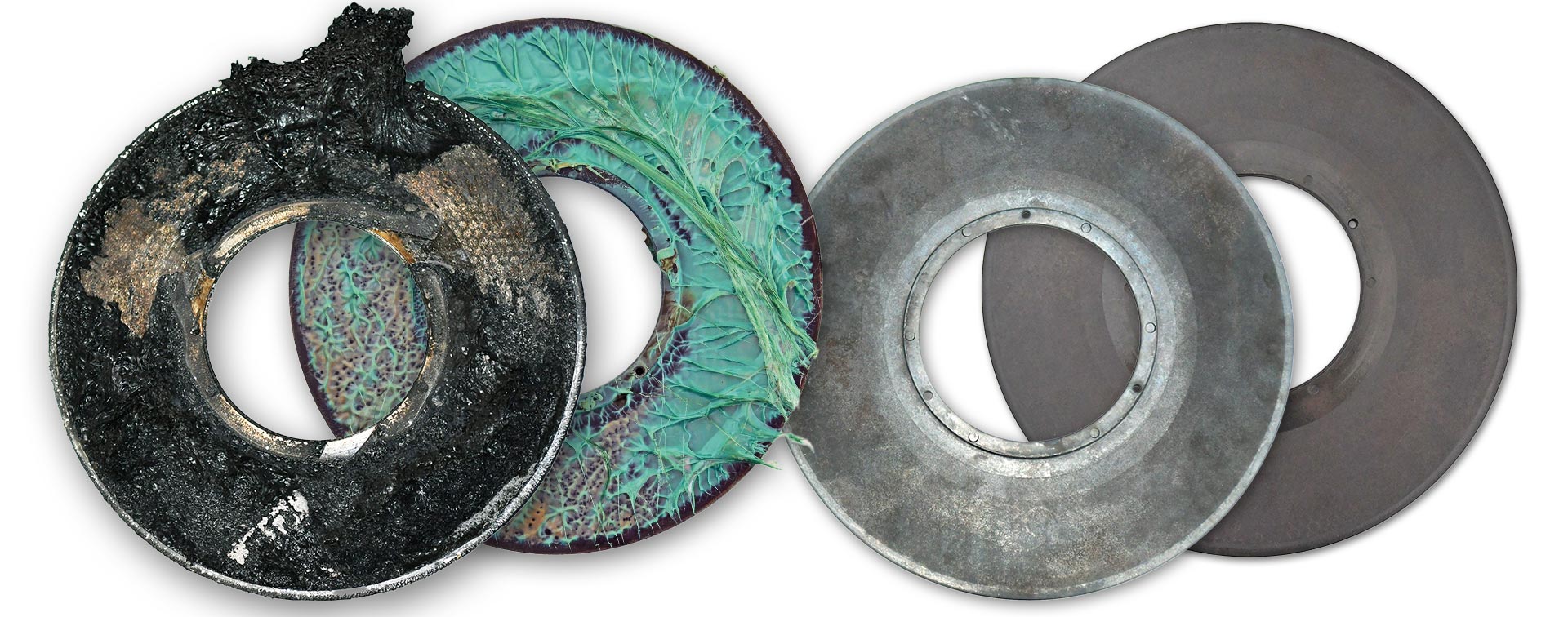
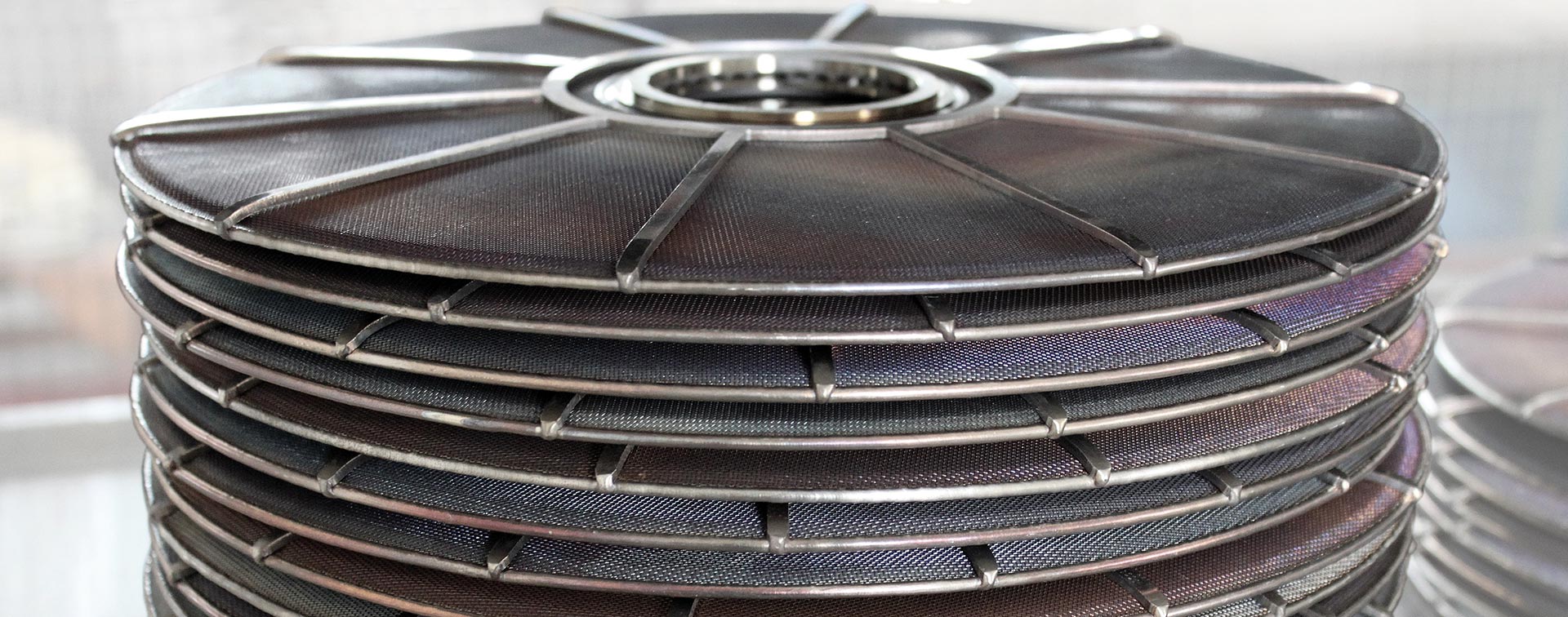
Gently remove polymer and plastic residues from filter cartridges, filter bundles, filter discs, filter stacks, and laser filters.
Metal filter elements are used in polymer processing and plastics recycling to trap contaminants from the molten plastic. During operation, polymers, additives, and other components accumulate in the filter structures.
Thermal cleaning removes the organic components in a controlled manner from heat-resistant metal filters. Depending on the filter design, polymer, and purity requirements, additional post-treatment and testing steps follow before the filter element can be reused.

During melt filtration, polymer components and other contaminants become trapped in the pores, mesh structures, channels, and interstices of the filter elements. As the level of fouling increases, flow resistance can rise, while throughput, filtration performance, and process stability may be compromised.
Simply cleaning the exterior is not sufficient for candle filters, filter bundles, filter stacks, and laser filters. Residues must also be removed from deeper and hard-to-reach filter structures without damaging pores, wire mesh, welded joints, or sensitive surfaces.
Deposits accumulate in filter layers, pores, interstices, and internal areas.
Increasing filter loading can affect differential pressure, flow rate, process stability, and melt quality.
Cleaned metal filters can be reused after cleaning and inspection; their condition and the defined inspection criteria determine whether they can be reused.
Thermal cleaning is primarily suitable for reusable, heat-resistant metal filter elements. Whether a particular element is suitable depends on the material, filter design, connection method, dimensions, and permissible thermal load.
Filter Type | Typical Design | Special Cleaning Requirements |
|---|---|---|
Candle filters | individual cylindrical metal filters | Remove polymer from deep and multi-layer filter structures |
Filter bundles | multiple candle filters as an assembly | ensure uniform heating of the entire assembly / all filter areas |
Filter discs | flat filter elements or leaf discs | protect fine filter surfaces and layered structures |
Filter stacks | filter discs arranged one on top of the other | remove polymer between individual filter layers |
Laser filters | finely structured metal filters from recycling plants | preserve sensitive openings and filter geometry |
Other reusable metal screens, support elements, and disassembled components from screen changers can be tested depending on their material, design, and thermal resistance. Temperature-sensitive seals, sensors, hydraulic, and electrical components are not included in the thermal cleaning process.
Is your filter type not listed? Have its technical suitability checked →


Filter elements may be contaminated with the processed base polymer, mixed polymer types, masterbatch, additives, pigments, thermal degradation products, and other organic components. During recycling, foreign polymers and inorganic components may also enter the filter structures.
The type of polymer influences the temperature profile, the melting behavior, the resulting decomposition products, and the required post-treatment.
Residue Group | Examples | Relevant for Evaluation |
|---|---|---|
Halogen-Free Standard Polymers | PE, PP, PET, PA | Polymer Type, Quantity, and Thermal Behavior |
Engineering and high-performance polymers | e.g., PEEK, PEI, PI | polymer-specific process testing |
Masterbatch and additives | carrier polymer, pigments, additives | possible inorganic residues |
Recycling and blending residues | Foreign polymers, unknown mixtures | Composition may be incompletely known |
Halogenated polymers | PVC, PTFE, PVDF | fluidized-bed cleaning (INNOVACLEAN) is generally not possible; check alternative methods |
Inorganic components | glass fibers, pigments, mineral fillers | tailored post-treatment required |
The appropriate cleaning method cannot be determined solely based on the term “candle filter” or “laser filter.” The decisive factors are the filter design, polymer, amount of residue, component size, purity requirements, and the necessary post-treatment.

Due to its slow, particularly gentle heating process, direct temperature measurement on the component, and controlled process management under vacuum, VACUCLEAN is typically the preferred technical solution for candle filters, filter bundles, filter stacks, filter discs, leaf discs, and sensitive and complex filter structures. VACUCLEAN COMPACT is particularly suitable for smaller batches, sensitive specialty parts, and laser filters from recycling plants.

For very large filter bundles with high levels of halogen-free residues, MAXICLEAN can be technically evaluated depending on the component size, filter design, and quality requirements. MAXICLEAN is generally designed for large components and halogen-free polymer deposits.

For fine filter elements, fluidized-bed cleaning with INNOVACLEAN is generally not suitable. THERMCLEAN sand can penetrate pores, filter layers, and interstitial spaces and is then very difficult to remove completely. In such cases, alternative cleaning methods should be evaluated on a case-by-case basis.
Not sure which method is right for your filter type?
Have the cleaning task evaluated by a technician →
Metal filter elements vary significantly in terms of material, construction, filtration precision, number of filter layers, joining technology, and degree of contamination. The polymers, additives, and inorganic components to be removed also exhibit different thermal and chemical properties.
Process control must therefore be tailored to the specific combination of filter element, residue, and required filtration function. It is not merely a matter of removing visible polymer deposits. Above all, the cleaning process must reach deeper filter structures, limit thermal and mechanical stress, and enable reproducible post-treatment and testing.
The selection and design of the cleaning process must therefore always be based on the specific filter, polymer, and quality requirements. In the case of unknown polymer mixtures, particularly fine filter structures, or a lack of reference values, the suitability of the process should be determined through a technical evaluation or test cleaning.
Organic residues can be found in multiple filter layers, pores, cavities, and hard-to-reach internal areas. The selected cleaning process must be able to reliably reach these areas.
Filter media, support structures, welded joints, soldered joints, and delicate structures must not be subjected to unnecessary thermal or mechanical stress. Existing damage cannot be repaired through cleaning.

The type of polymer, the amount of polymer, additives, fillers, and any halogens present all influence the process control. Equally important are the filter layers, component size, accessibility, and the possibility of disassembly.
Before cleaning, it must be determined what criteria will be used to evaluate the filter element afterward. A purely visual assessment is not sufficient for fine or multi-layer filters.
Thermal cleaning removes organic polymer components. However, inorganic residues may remain in filter layers, pores, and hard-to-reach areas. Depending on the filter type and contamination, thermal cleaning is therefore supplemented by tailored post-treatment and testing procedures.
Depending on the filter design and the residual material, the following can be used, for example:
Depending on the filter type, a visual inspection and a check of the filter layers, geometry, and connections are required. Additional detailed inspections are determined and documented based on the filter design and quality requirements.
With suitable filter systems, the condition can be checked using a bubble test device. The test medium, test pressure, and evaluation criteria must be tailored to the specific filter element.
About the filter:
Regarding Residue and Cleaning Objectives:
Not every company needs its own thermal cleaning system. Filter candles, filter bundles, filter discs, filter stacks, and other suitable metal filters can also be cleaned, post-treated, and inspected in accordance with the agreed-upon requirements through the SCHWING Cleaning Service.
The cleaning service is particularly suitable for:
Request 24/7 filter cleaning service
Not sure whether a cleaning service or your own system makes more sense?
Compare cleaning methods on the overview page

Depending on the filter design and residue, SCHWING combines the appropriate thermal cleaning process with tailored post-treatment and quality control. Upon request, regular cleaning intervals as well as pickup and return can be integrated into a predictable service plan.
Thermal cleaning removes organic polymer and plastic deposits from suitable heat-resistant metal filters. Depending on the filter and the residue, post-treatment and quality inspection may be necessary.
Typical examples include filter cartridges, filter bundles, filter discs, filter stacks, leaf discs, and laser filters. The material, design, and condition must be technically evaluated.
For sensitive and complex metallic filter structures, vacuum pyrolysis using VACUCLEAN or VACUCLEAN COMPACT is often suitable. For very large, robust filter bundles with halogen-free residues, MAXICLEAN can be evaluated for technical feasibility. Fine-pored filter structures are generally not suitable for fluidized-bed cleaning with INNOVACLEAN.
Halogenated polymer residues require an application-specific process evaluation. Fluidized-bed cleaning with INNOVACLEAN—which is otherwise relevant for halogenated polymers—is generally not suitable for fine-pored filter elements, as THERMCLEAN sand can penetrate the filter structure and is subsequently difficult to remove completely. Therefore, alternative cleaning methods must be evaluated.
Pigments, glass fibers, mineral fillers, and other inorganic components are not necessarily removed by thermal means. Depending on the filter, ultrasonic cleaning, high-pressure water jets, rinsing, or other tailored methods may be required.
A bubble test can provide indications of the integrity or mechanical damage to the filter element when used with suitable filter cartridges. The test medium and test pressure must be matched to the filter.
In particular, the following information is required: filter type, material, construction, dimensions, weight, quantity, polymer, additives, halogen content, residue level, cleaning interval, and desired quality inspection.
Whether you need a cleaning service, a trial cleaning, or your own system:
SCHWING will help you select the right thermal cleaning process for your components, polymers, and production requirements.
back-to-top