
Virgilio Perez Guembe
Salesregion: South & Middle America, Europe, Asia
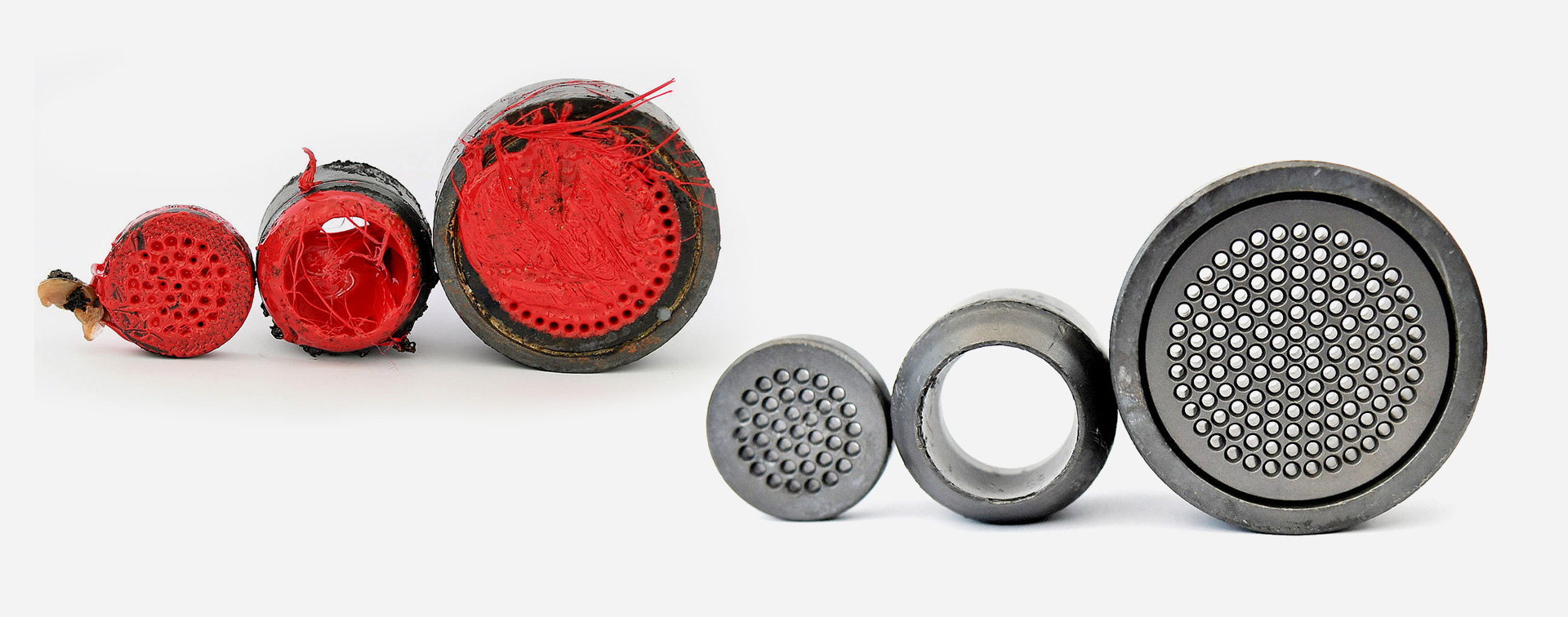
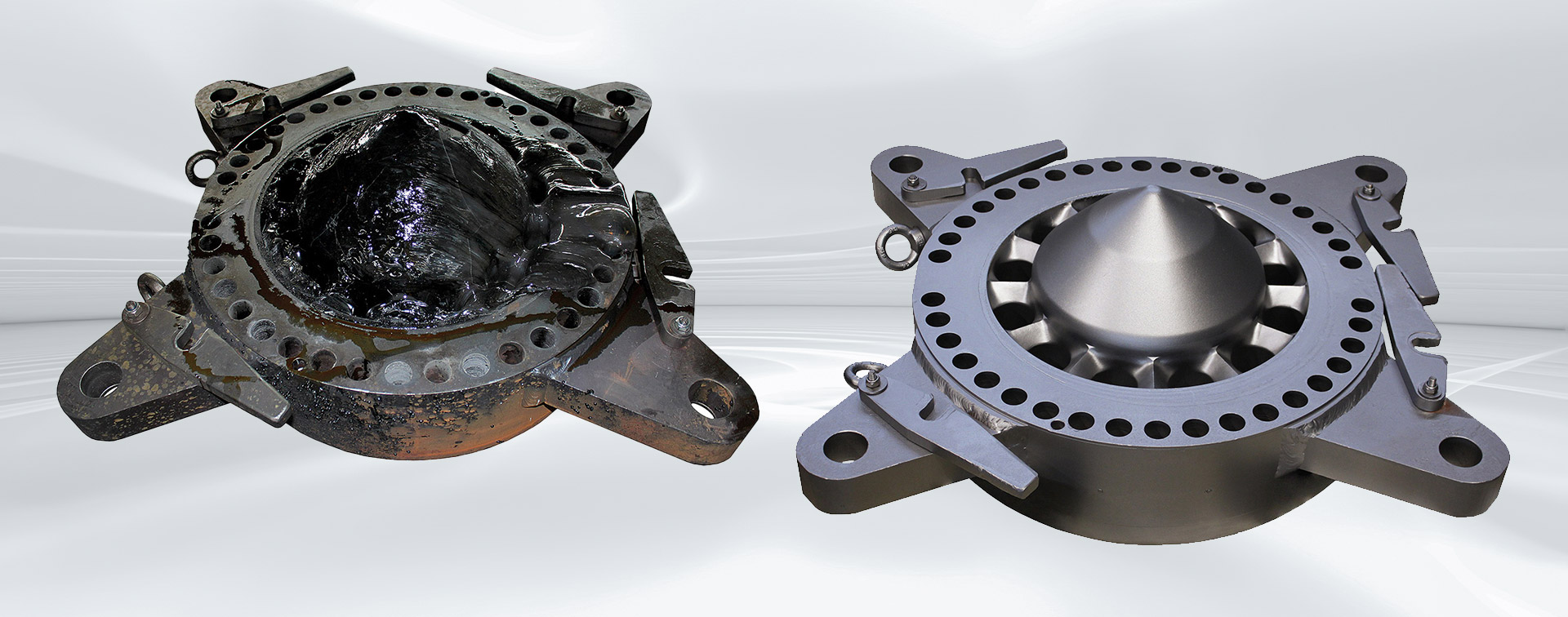
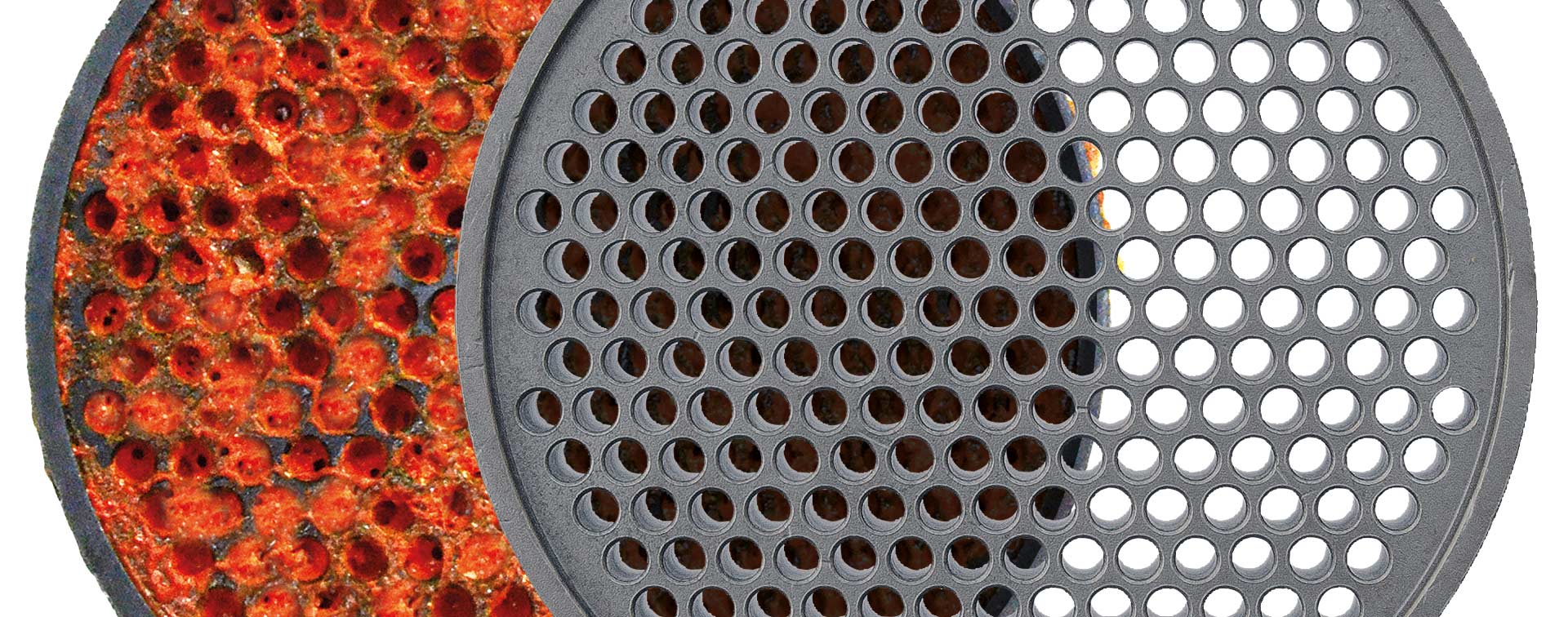
Reliably remove plastic and polymer residues from holes and tool surfaces.
Perforated plates and pelletizing dies are robust metal components used primarily in pelletizing and other plastic processing operations. During production, polymer residues accumulate on the die surfaces and inside the bores. Thermal cleaning removes these organic residues in a controlled manner and prepares the tools for reuse in production. The appropriate cleaning method depends primarily on the tool size, the polymer, and the amount of residue.

During operation, plastic and polymer residues accumulate on perforated plates, in the holes, on granulating blades, and on other tool surfaces. These residues must be removed regularly for material changes, maintenance, or when the equipment is returned to production.
Polymer residues can partially or completely clog bores and outlet openings. For further use in production, these areas must be free of organic residues again.
When switching polymers, colors, or products, residues of the previously processed material may remain in the mold. Thorough cleaning ensures consistent starting conditions for the next production run.
The cleaning process is designed to reliably remove polymer deposits without compromising the geometry or functional surfaces of the metal tool. After cleaning and any necessary post-treatment, the tool can be reintegrated into the production process.
Thermal cleaning is an option for suitable perforated plates and metal granulation tools that are sufficiently heat-resistant. Specific suitability depends in particular on the material, dimensions, coatings, and the permissible thermal load.
Part/Component | Typical Cleaning Task | Special Requirement |
|---|---|---|
Perforated plates / granulation nozzles | Remove polymer residues from surfaces as well as from bores and outlet openings | Preserve bore geometry and functional surfaces |
Pelletizing blades | Remove polymer deposits from blade surfaces and cutting areas | Take into account the cutting edges, coatings, and wear condition |
Other metallic components of granulation units can also be tested, depending on their material, design, and thermal resistance. Temperature-sensitive or non-metallic components must be identified before thermal cleaning and, if necessary, removed.
Is your tool not listed? Have its technical suitability checked →


Granulator blades before and after thermal cleaning

Residues from the processed plastic melt primarily remain on perforated plates, in the holes, and on pelletizing blades. Depending on the production process, colorant and additive residues, as well as thermally altered polymer deposits, may also be present. Typical residues include:
Halogen-containing polymers or additives require appropriate process and exhaust gas management and are tested on a case-by-case basis.
Perforated plates and pelletizing dies are generally robust metal components and can be cleaned using various thermal methods. The most appropriate method depends primarily on the component size, the polymer, and the amount of residue.
The cleaning systems in the VACUCLEAN series are designed for gentle cleaning of pelletizing dies and perforated plates. VACUCLEAN COMPACT is specifically designed for smaller pelletizing dies and batches.

INNOVACLEAN enables short cleaning times and is suitable for robust perforated plates and similar granulation components. For halogenated polymers such as PVC, PTFE, or PVDF, fluidized-bed technology is the relevant SCHWING process.

MAXICLEAN can be used for large perforated plates and pelletizing dies with halogen-free polymer deposits. Suitability is evaluated based on the dimensions, polymer, and amount of residue.

Not sure which process is right for your tool?
Have the cleaning task evaluated from a technical standpoint →
Visible cleanliness alone is not the only factor that matters. Perforated plates and granulation tools must be able to reliably perform their function in the production process again after cleaning. In the case of filled or reinforced polymers, inorganic residues may remain in or on the tools after thermal cleaning. If necessary, these are removed through a tailored post-treatment process.
After cleaning and any necessary post-treatment, the boreholes should be completely free of relevant residues. Any remaining deposits or inorganic residues can impair polymer flow and prevent a uniform flow pattern.
For granulation nozzles and granulation blades, functional surfaces and cutting areas must be preserved. Coatings, wear conditions, and potential thermal sensitivities must therefore be taken into account during cleaning.
In the case of filled or reinforced polymers, pigments, glass fibers, or mineral components may remain after thermal treatment. If necessary, these must be removed, particularly from holes and functional surfaces.
For the technical evaluation of perforated plates and pelletizing dies, a few specific details about the die and the polymer are generally sufficient.
About the tool:
Regarding the backlog:
SCHWING provides thermal cleaning services for suitable perforated plates and granulation tools—ranging from individual cleaning jobs and test cleanings to regular cleaning during ongoing production.
The cleaning service is particularly suitable for:
Have perforated plates or granulation tools cleaned
Not sure whether a cleaning service or an in-house system makes more sense?
Compare cleaning methods on the overview page

Depending on the component design, polymer, and cleaning objective, SCHWING combines the appropriate thermal process with a tailored post-treatment. Upon request, regular cleaning intervals as well as pickup and return can be integrated into a predictable service plan.
Heat-resistant metal perforated plates, granulation nozzles, and granulation blades are particularly suitable. The material, dimensions, coatings, and permissible thermal load are critical factors.
Thermal removal primarily targets plastic and polymer residues, as well as thermally aged or charred organic deposits. Inorganic components such as pigments, mineral fillers, or glass fibers may require additional post-treatment.
Depending on the component size, polymer, and amount of residue, VACUCLEAN, VACUCLEAN COMPACT, INNOVACLEAN, or—for large tools—MAXICLEAN may be suitable. The selection is application-specific.
Yes, suitable metal granulator blades can be thermally cleaned to remove polymer deposits. Cutting areas, coatings, and material must be taken into account when selecting the process.
The organic polymer components are thermally decomposed. However, glass fibers, pigments, or mineral fillers remain as inorganic residues and must be removed afterward if necessary.
For residues from PVC, PTFE, PVDF, or other halogen-containing polymers, INNOVACLEAN is the relevant SCHWING process. A prerequisite is that THERMCLEAN sand can be completely removed from boreholes and channels.
It is helpful to provide the component type, material, dimensions, weight, and quantity, as well as information on the processed polymer, any additives or fillers, and the halogen content. Photos or drawings facilitate the evaluation.
Whether you need a cleaning service, a trial cleaning, or your own system:
SCHWING will help you select the right thermal cleaning process for your components, polymers, and production requirements.
back-to-top