
Virgilio Perez Guembe
Salesregion: South & Middle America, Europe, Asia
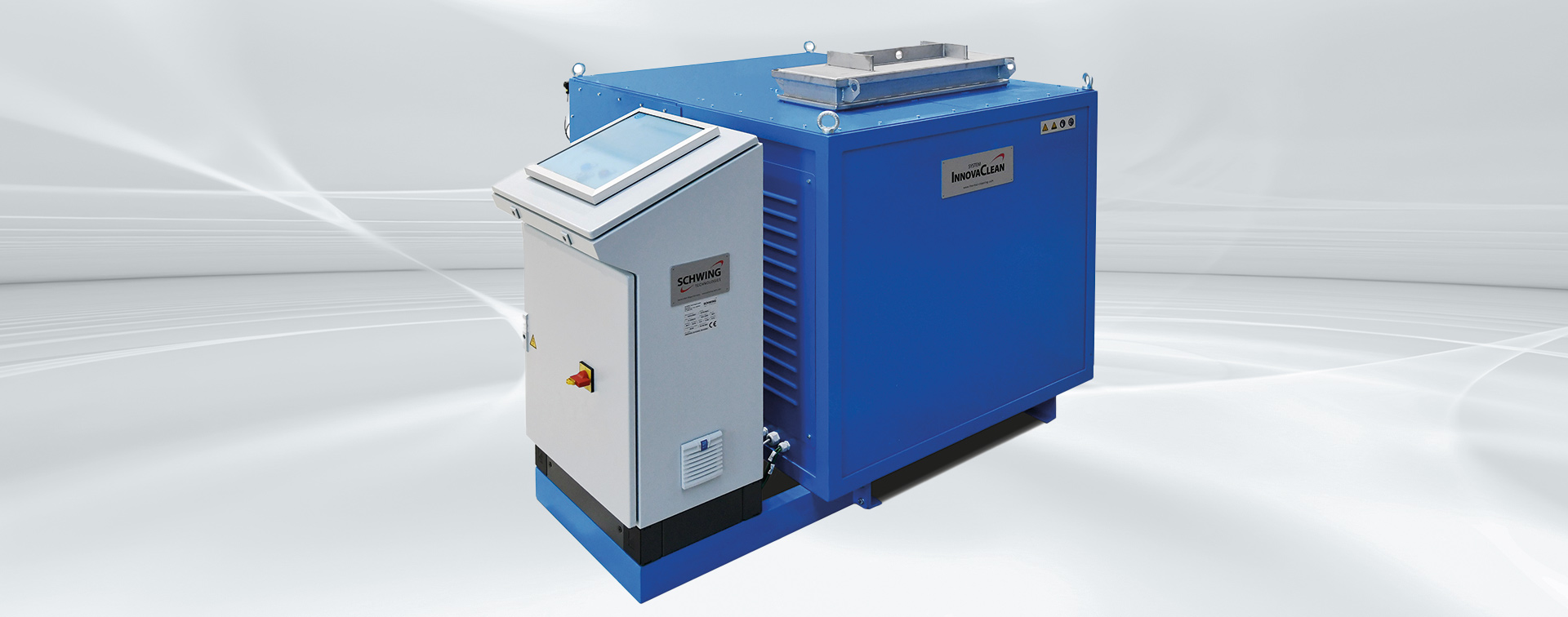

Very short cleaning times thanks to intensive heat transfer—even with halogenated polymers.
INNOVACLEAN is the electrically heated fluidized bed system from SCHWING Technologies GmbH (Neukirchen-Vluyn) for the thermal cleaning of suitable, heat-resistant metal parts in fluidized THERMCLEAN quartz sand. The intensive heat and mass transfer in the fluidized bed enables very short cleaning cycles.
At the same time, resulting decomposition products are immediately removed from the cleaning zone and fed into a tailored exhaust gas treatment system. This allows even halogenated polymers such as PVC, PTFE, and PVDF to be removed in a controlled manner.
Have your cleaning task technically evaluated. SCHWING examines the component, residue, polymer, geometry, and cleaning objective—including, if necessary, a test cleaning followed by customized system design.
Characteristic | Classification |
|---|---|
System | INNOVACLEAN |
System Type | Electrically heated fluidized-bed cleaning system; gas-heated thermal afterburning |
Manufacturer | SCHWING Technologies GmbH (Neukirchen-Vluyn, Germany) |
Process | Thermal decomposition in fluidized THERMCLEAN quartz sand |
Cleaning objective | Removal of organic plastic and polymer deposits from heat-resistant metal parts |
Typical cleaning time | Approximately 1 to 4 hours, depending on the component, polymer, and load |
Process temperature | Depends on the polymer; typically approximately 450 to 520 °C |
Typical Components | Spinning nozzles, spinning assemblies, perforated plates, pelletizing dies, profile dies, hot runner components, static mixers |
Typical Polymers | Standard plastics, engineering polymers, and high-temperature polymers; halogenated polymers with appropriately designed exhaust gas treatment |
Key Strength | Very rapid heat transfer and controlled removal of halogen-containing polymer deposits |
Exhaust Gas Treatment | Integrated or separate thermal afterburner; additional exhaust gas scrubbing if required |
Post-treatment | Removal of sand and inorganic residues using compressed air, high-pressure water, or ultrasound |
Technical Limitations | Material, geometry, surface, sand accessibility, and halogen content must be evaluated on a case-by-case basis |
INNOVACLEAN is intended for suitable, heat-resistant metal parts for which the intense heat transfer of the fluidized-bed process and the rapid removal of decomposition products offer technical advantages.
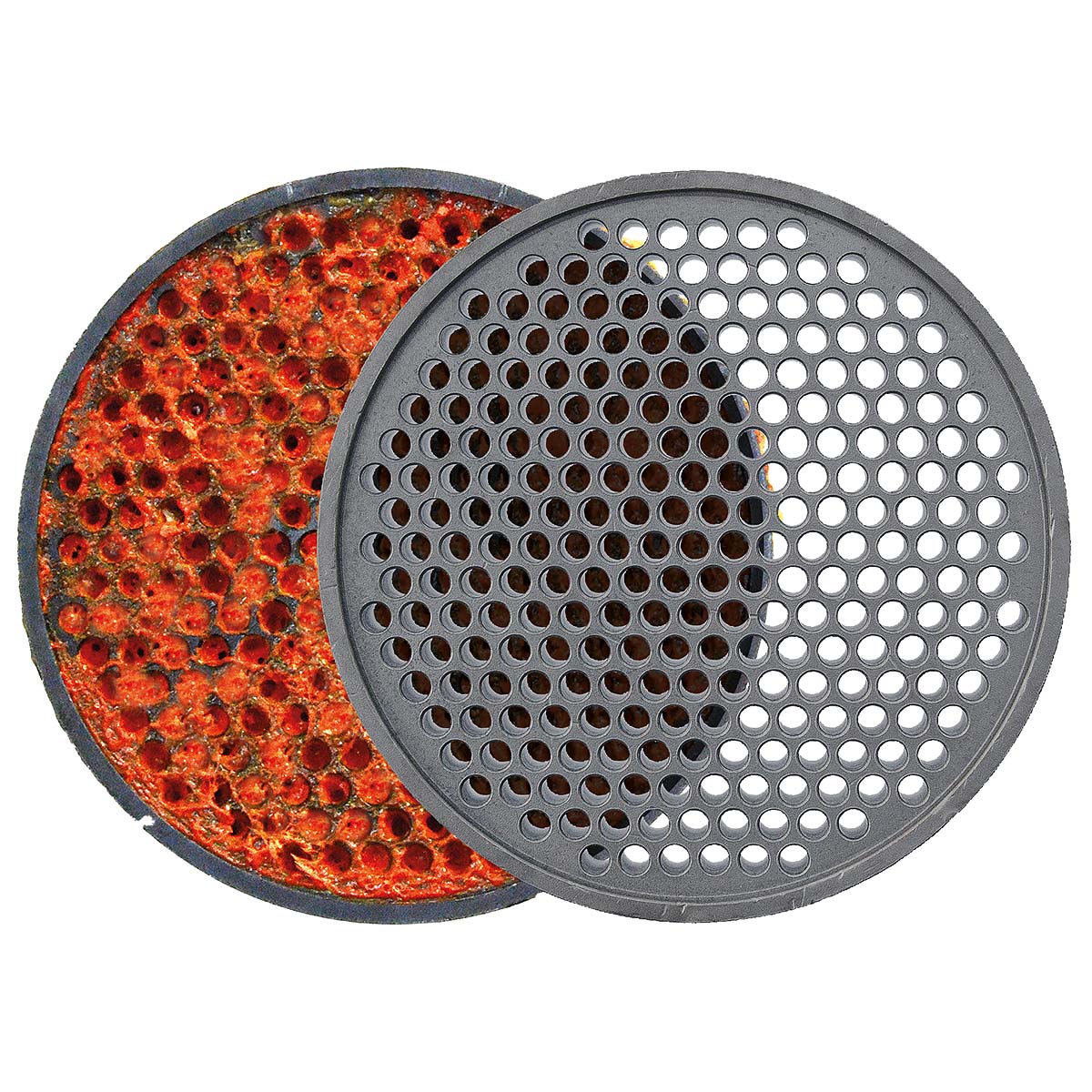
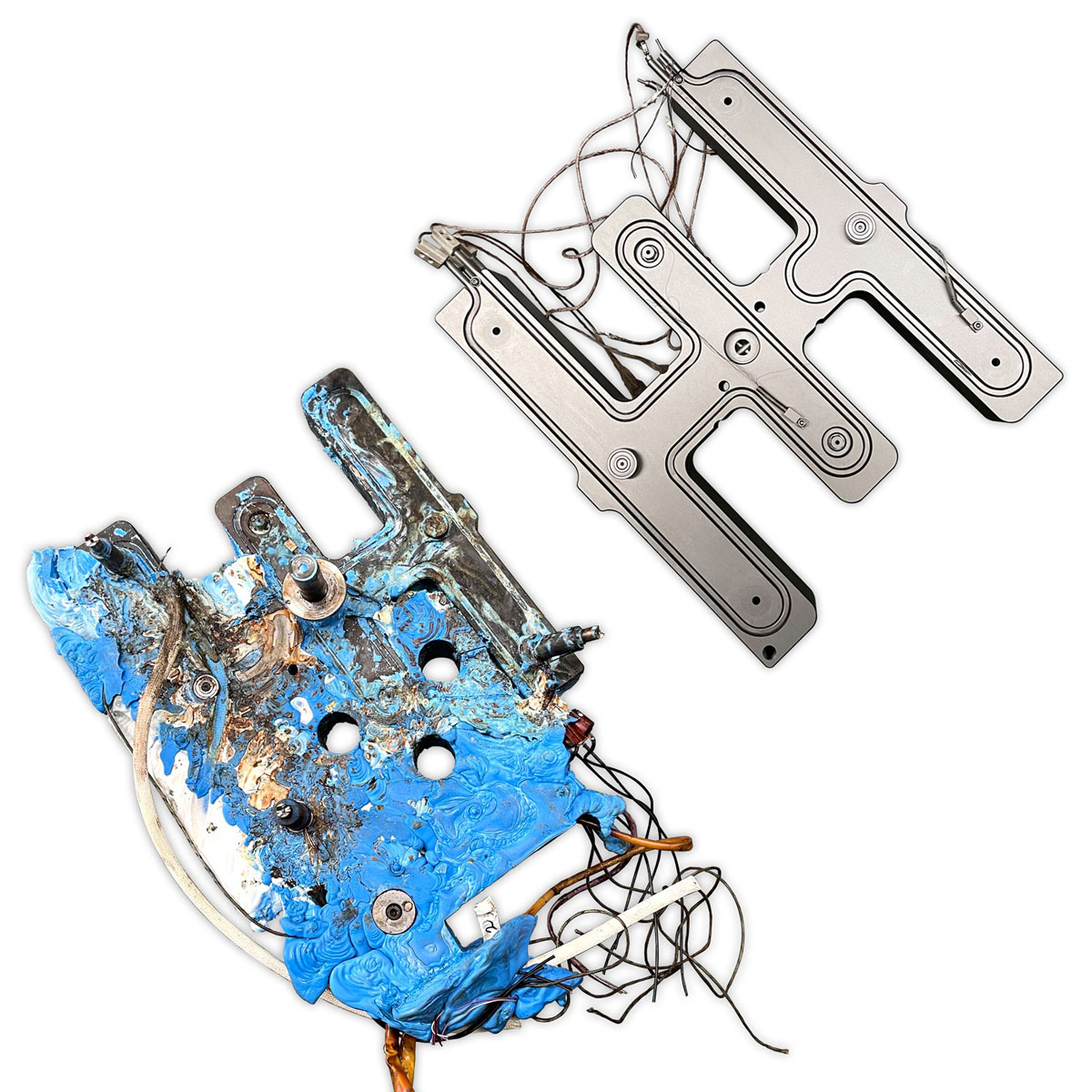
Typical applications include fiber and nonwoven production, polymer manufacturing, masterbatch production, extrusion, and injection molding. Parts and tools to be cleaned include, in particular, spinnerets, assembled spinning assemblies, profile and pelletizing tools, perforated plates, hot runners, screws, and screw elements:


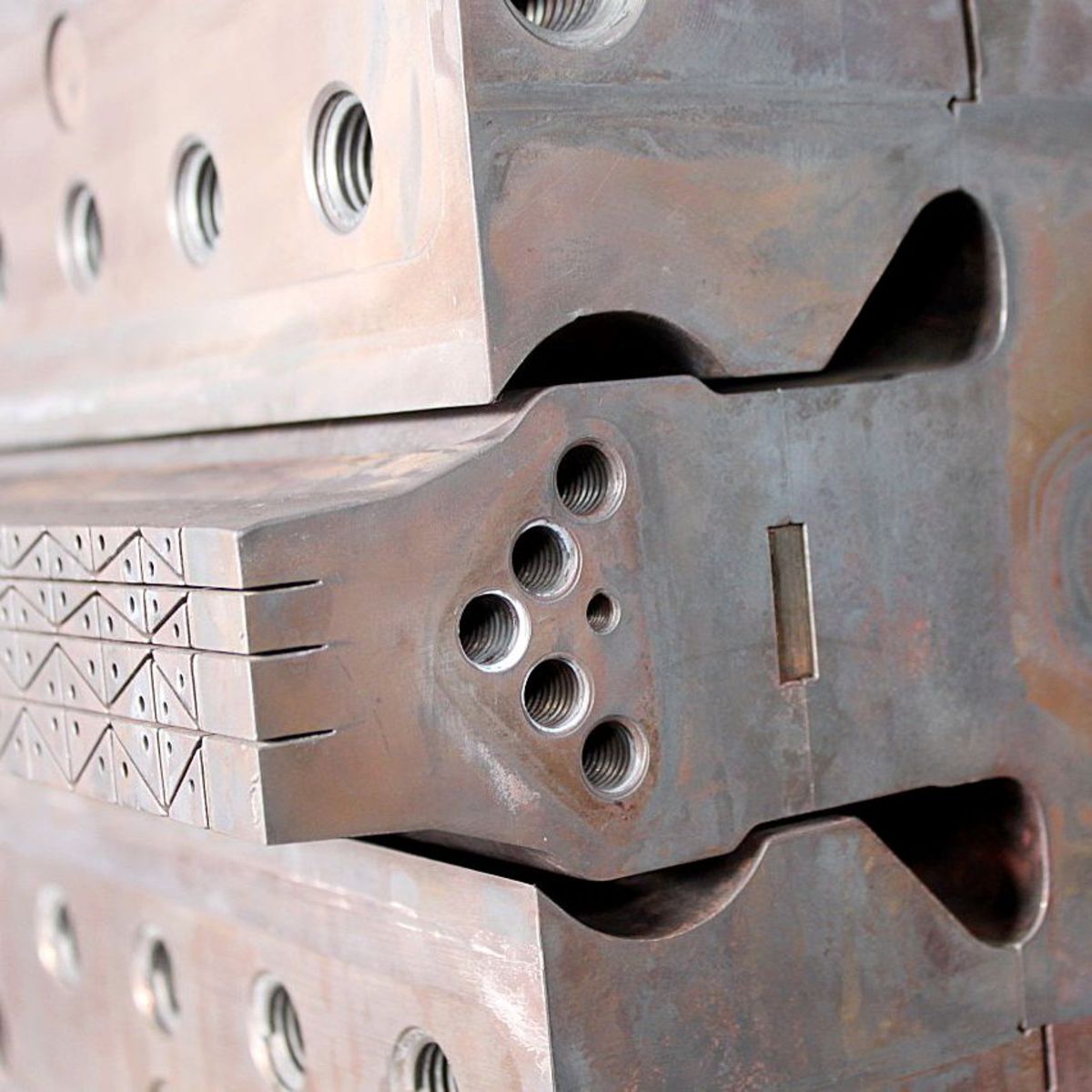

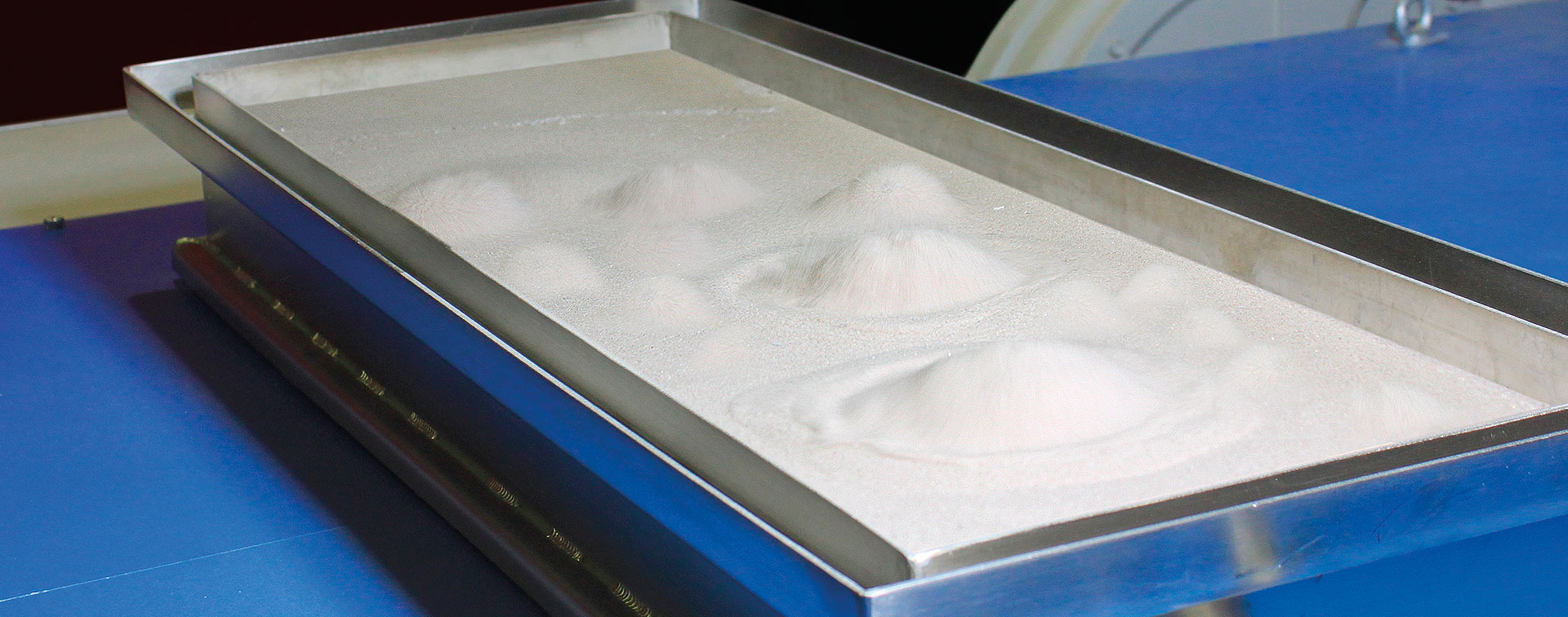
INNOVACLEAN uses an indirectly electrically heated fluidized bed system. A stream of hot air fluidizes the THERMCLEAN sand in the cleaning tank. The heated process medium flows around the metal parts placed inside, transferring heat quickly and evenly. This thermally decomposes plastic, polymer, and other organic deposits.
The resulting gaseous reaction products are continuously removed from the component surfaces and discharged from the fluidized bed. This is particularly important for halogenated polymers: aggressive or corrosive decomposition products cannot act on the parts being cleaned over an extended period of time. The process gases are then thermally treated and, if necessary, neutralized in an exhaust gas scrubber.
The metal parts are placed in a specially designed basket or rack and introduced into the heated fluidized bed.
The fluidized THERMCLEAN sand intensively transfers heat to the accessible component surfaces. The adhering plastics, polymers, and other organic residues are decomposed.
The gaseous decomposition products are removed from the cleaning zone along with the process gas and treated in the afterburner. For halogen-containing residues, an exhaust gas scrubber can also be used.
After the cleaning process, the components are removed. THERMCLEAN sand and any remaining inorganic residues are removed using a method tailored to the component’s geometry and purity requirements.

The intense heat transfer in the INNOVACLEAN fluidized bed enables cleaning cycles of approximately one to four hours in typical applications.

With a properly designed exhaust gas treatment system, PVC, PTFE, PVDF, and other halogen-containing polymer deposits can also be removed in a controlled manner.

The fluidized THERMCLEAN sand flows around suitable components, enabling rapid and largely uniform heat and mass transfer.

Gaseous reaction products are immediately carried away from the component surfaces and out of the fluidized bed.

Predefined temperatures, fluidization, and process times ensure repeatable INNOVACLEAN cleaning cycles.

The INNOVACLEAN model, cleaning tank, loading system, exhaust gas treatment, and post-treatment are tailored to the components and residues.
INNOVACLEAN is available as a family of systems in various sizes and configurations. The selection is based not only on the external dimensions of the components, but also on component weight, polymer quantity, cleaning frequency, halogen content, and the required exhaust gas treatment.
For smaller components, small batches, and applications in pilot plants, laboratories, or workshops.
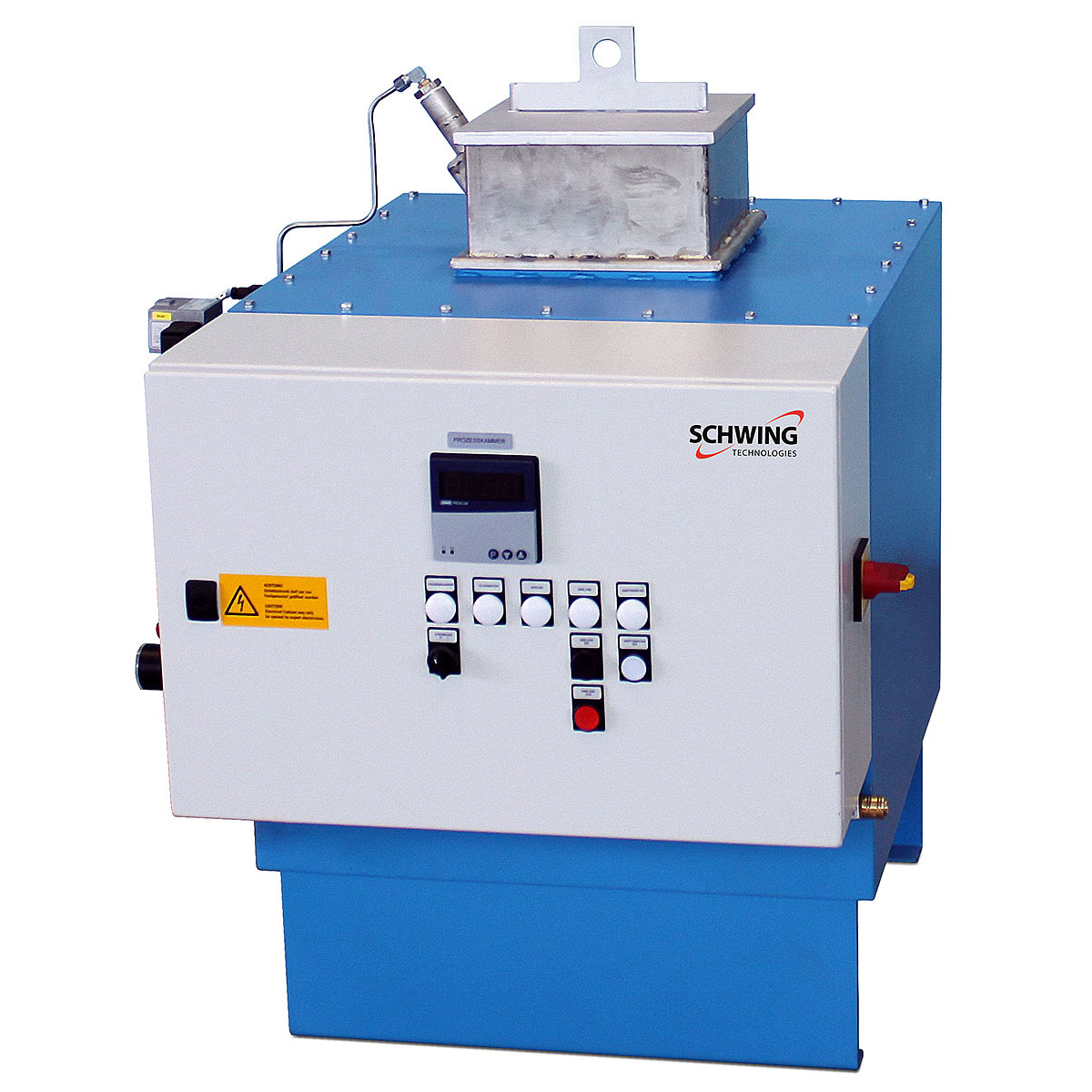
For regular batches of small and medium-sized production tools.

For heavier components, larger loading baskets, higher organic loads, or special requirements for process gas and exhaust gas treatment.

The INNOVACLEAN brochure contains information on the operating principle, typical components, polymer groups, accessories, and available sizes.
Download: INNOVACLEAN Brochure (English)
Format: PDF
Contents: Fluidized-bed cleaning, typical components, model overview, accessories, polymers, and technical data
Download
PDFHave your cleaning application technically evaluated
Polymer Group | Examples |
|---|---|
Halogenated Polymers | PVC, PTFE, PVDF |
Polyolefins | PE, HDPE, PP, EVA, EVOH |
Polyesters | PET, PBT, PC, PTT, PEN |
Polyamides | PA6, PA6.6, PA12, PPA |
High-temperature polymers | PEEK, PEK, PPS, PSU, PES |
Styrene polymers | PS, ABS, SAN, SBS |
Polyurethanes and elastomers | PUR, TPU, TPO |
Other organic deposits | Resins and similar organic residues |
Test Criterion | Relevance |
|---|---|
Temperature Resistance | Metal, coatings, solder joints, and components must be able to withstand the process conditions |
Surface Requirements | Sensitive, soft, or highly polished surfaces must be evaluated separately |
Cavities and Blind Holes | Any THERMCLEAN sand that has penetrated these areas must be completely removable |
Micro-holes | Very fine or sensitive structures may require a different process |
Component fittings | Gaskets, cables, sensors, and non-heat-resistant components must be removed |
Polymer Type and Quantity | Determination of cleaning parameters, organic load, and the required sizing of the afterburner and, if necessary, the exhaust gas scrubbing system |
Halogen content | The type and amount of halogens determine the design of the exhaust gas treatment and neutralization systems |
Purity requirements | Post-treatment and quality testing must be defined based on the specific application |
A robust INNOVACLEAN design requires a comprehensive analysis of the material to be cleaned, the polymer, the amount of polymer, the halogen content, the cleaning frequency, and the required result. This determines the system size, feed rate, process parameters, organic load capacity, exhaust gas treatment, and post-treatment.

INNOVACLEAN is an electrically heated fluidized-bed cleaning system from SCHWING. It removes plastic and polymer deposits from suitable heat-resistant metal parts through thermal decomposition in fluidized THERMCLEAN quartz sand.
Process gas flows from below through the THERMCLEAN sand, causing it to become fluidized. The moving sand flows around the parts being cleaned and transfers heat intensively. The polymer deposits are thermally decomposed, and the resulting gases are vented from the cleaning zone.
The aggressive reaction products formed during decomposition are immediately removed from the vicinity of the items being cleaned. An exhaust gas treatment system tailored to the polymer mix binds or neutralizes the halogen-containing components.
Typical components include spinnerets, assembled spinning packages, perforated plates, pelletizing dies, profile dies, smaller hot-runner components, static mixers, and other robust metal parts. Suitability must be verified for each specific component.
Depending on the polymer and component, THERMCLEAN sand, pigments, glass fibers, or other inorganic components may remain. These are removed, for example, using compressed air, high-pressure water, or ultrasound.
The fluidized bed in INNOVACLEAN is electrically heated. For the thermal afterburning of the resulting process gases, additional gas is required in certain system configurations. For halogen-containing polymers, exhaust gas scrubbing may also be necessary.
In particular, the following information is required: component type, material, dimensions, weight, geometry, polymer type and quantity, additives and halogen content, cleaning frequency, required purity level, as well as photos or drawings. The type and quantity of polymer are also relevant for the design of the process parameters and the required exhaust gas treatment.
For components with very fine capillaries, micro-holes, or other structures from which penetrated THERMCLEAN sand cannot be reliably and completely removed, VACUCLEAN is generally the more suitable choice. MAXICLEAN is better suited for large, heavy, or bulky components with halogen-free residues. INNOVACLEAN itself is the faster solution for suitable, heat-resistant components with short cycle times—even for halogen-containing polymers.
Whether you need a cleaning service, a trial cleaning, or your own system:
SCHWING can help you select the right thermal cleaning process for your components, polymers, and production requirements.
back-to-top