
Virgilio Perez Guembe
Salesregion: South & Middle America, Europe, Asia
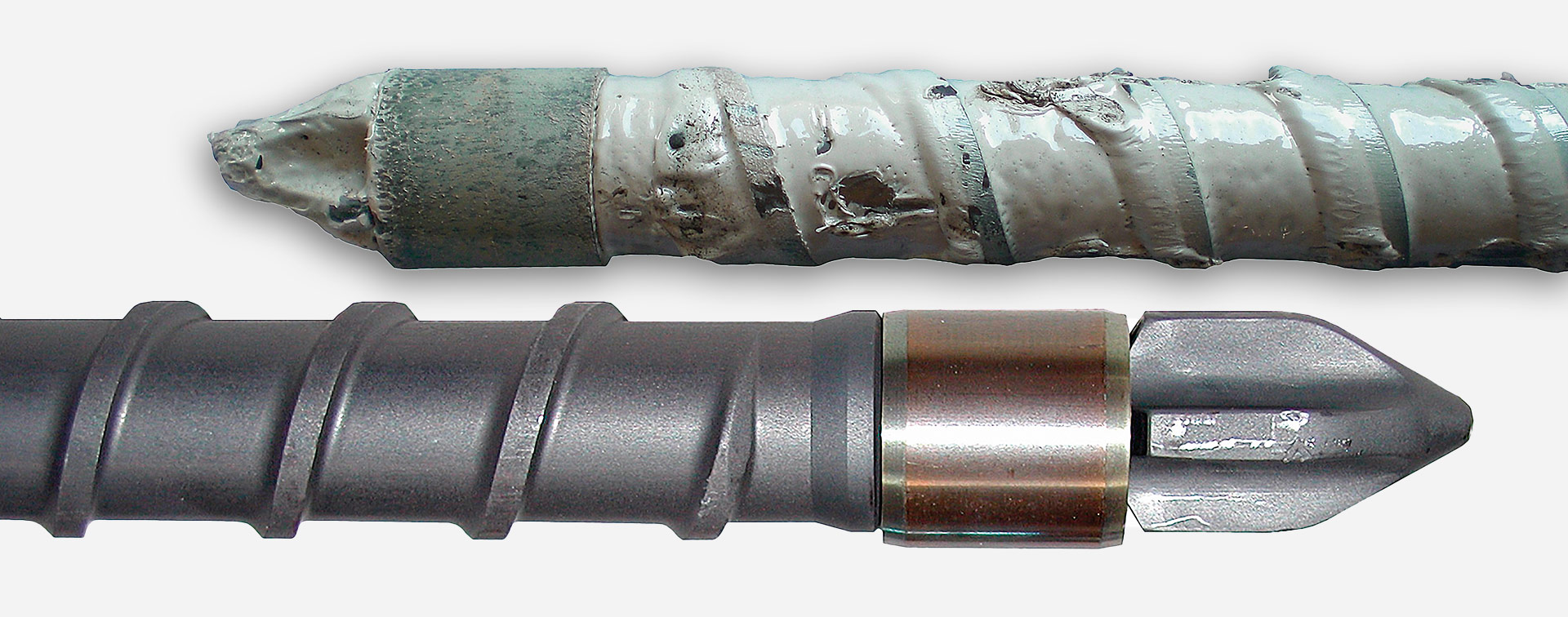
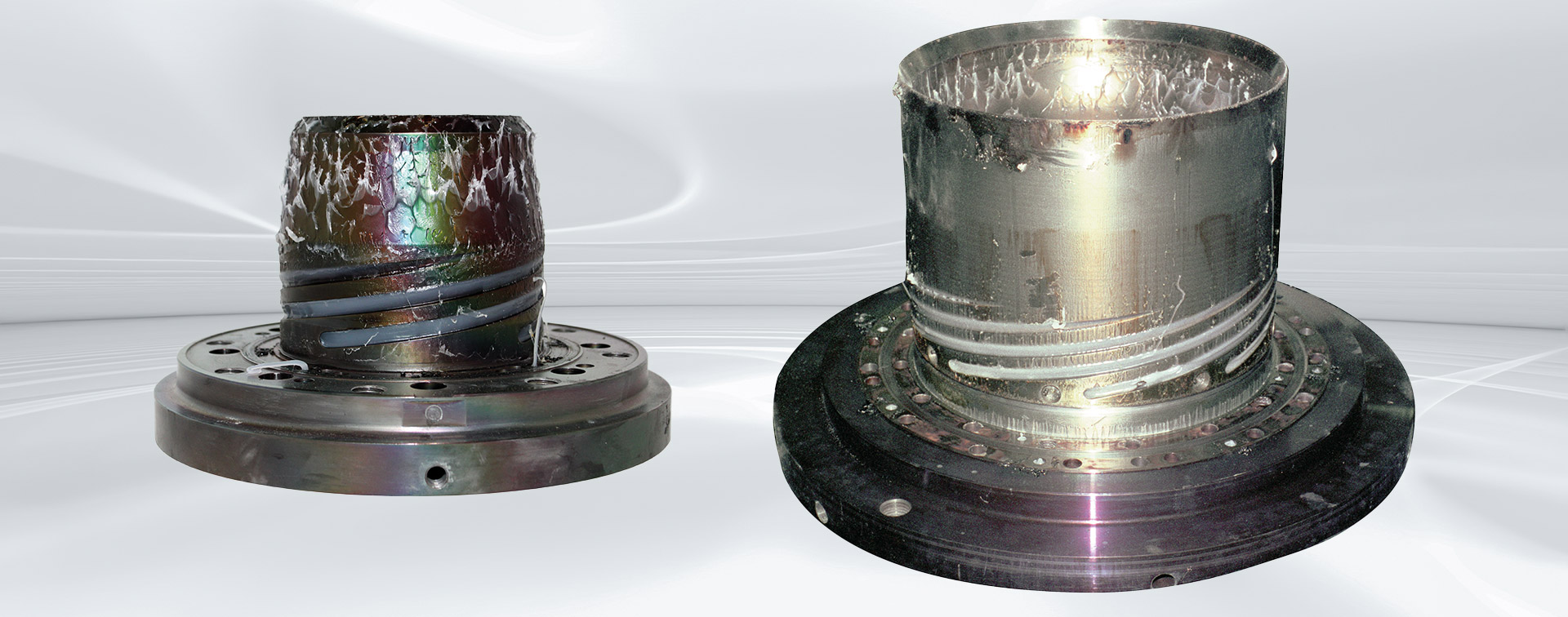
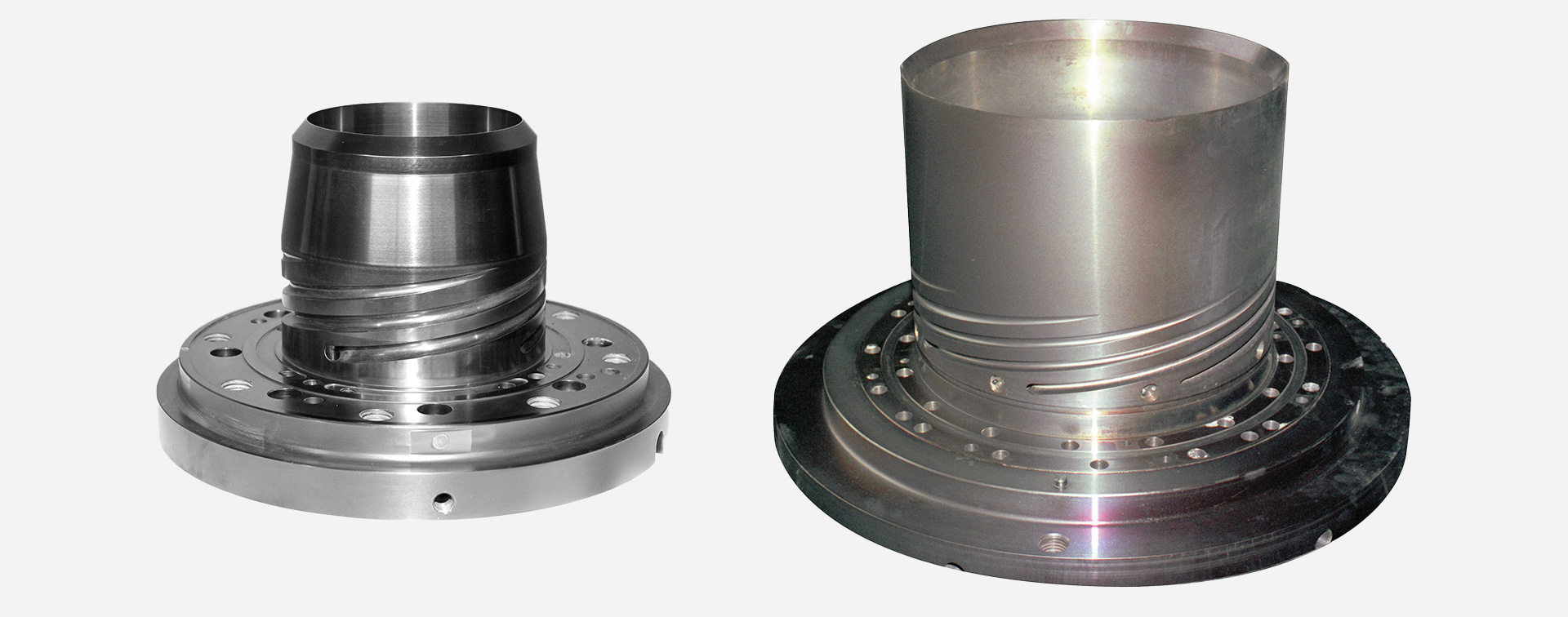
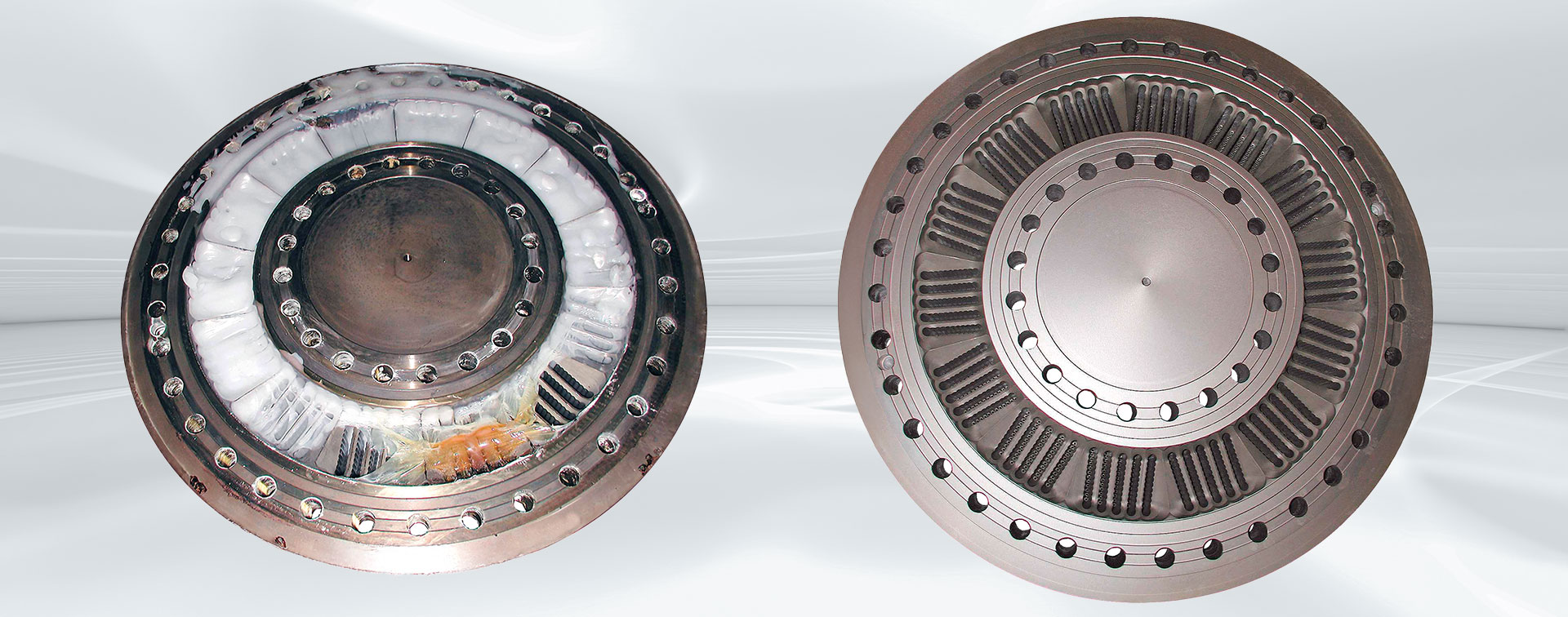
Controlled removal of polymer and plastic residues from extrusion dies, film blowing heads, profile dies, extruder screws, screw elements, and complex melt channels.
Extrusion dies and extruder components are metal parts that convey, mix, distribute, or shape polymer melts. During production, polymers, additives, pigments, and thermal degradation products can accumulate on functional surfaces and in hard-to-reach internal channels. Thermal cleaning removes organic residues from suitable heat-resistant metal parts—using a process tailored to the component’s geometry, material, polymer, and cleaning objective.
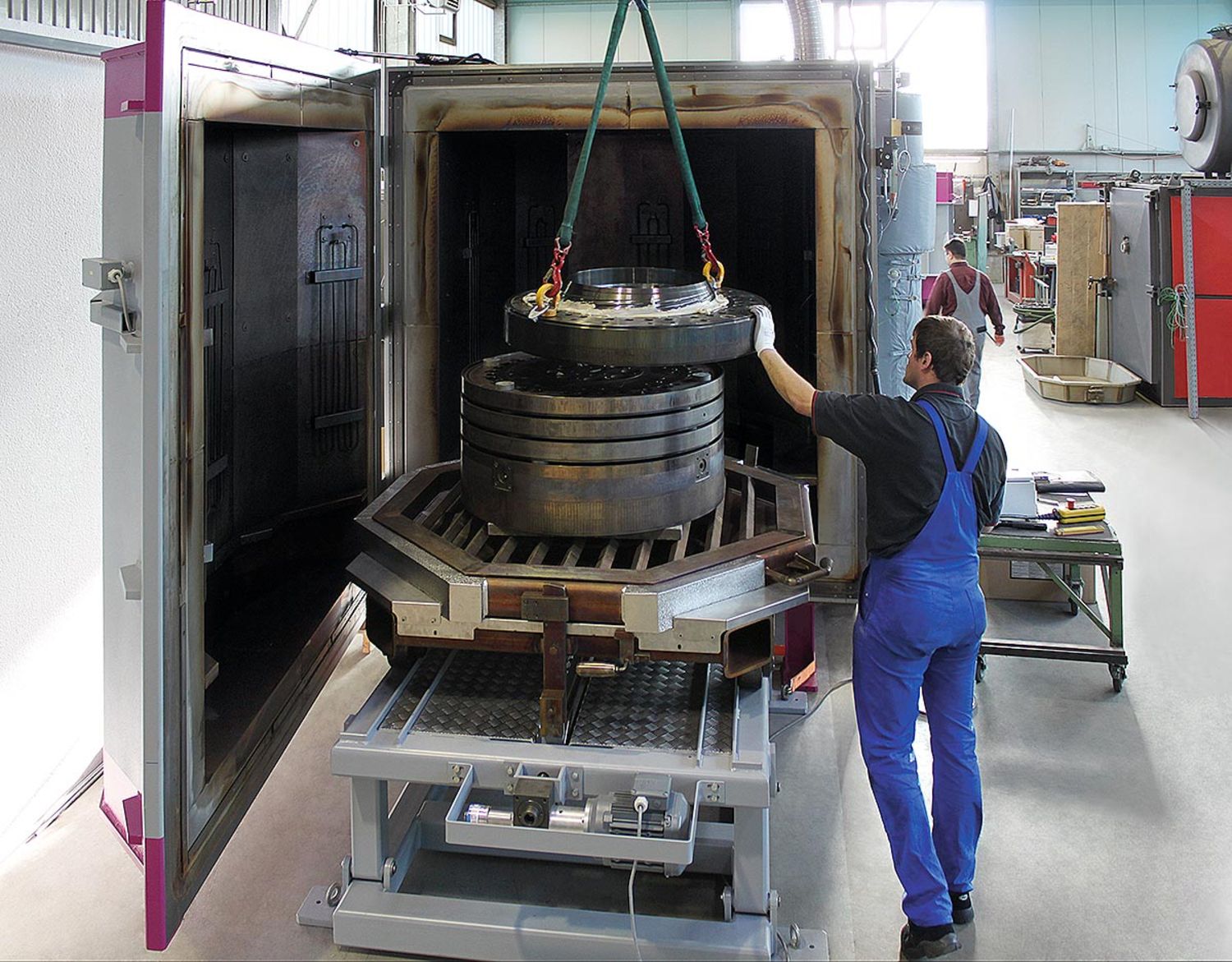
During extrusion, screws, dies, blown flim die heads, and other melt-conveying components are in constant contact with heated polymers. As a result, plastic residues and thermal degradation products can accumulate on mold surfaces as well as in melt channels, gaps, and complex internal areas.
Residual material must be removed in a controlled manner, especially during material, color, or product changes. Cleaning that is purely external or abrasive often fails to fully reach internal melt paths and can unnecessarily stress sensitive surfaces or dimensionally critical functional areas.
Polymer residues can remain on screw flights, nozzle surfaces, and mixing components, as well as in internal channels and hard-to-reach transitions.
Any remaining polymers and degradation products may mix with the subsequent material. The required level of cleanliness therefore also depends on the product, color, and polymer being processed.
The cleaning process must remove organic residues while taking into account the tool's geometry, surfaces, and coatings. Subsequently, the condition of the tool and its functionally critical areas must be inspected in a targeted manner.
Thermal cleaning is an option for suitable metal tools and components from extrusion processes that can withstand sufficiently high temperatures. Whether a component is suitable depends, among other things, on the material, component design, dimensions, fastening methods, coatings, and permissible thermal stress.
Part/Component | Typical Cleaning Task | Special Requirements |
|---|---|---|
Blown film dies | Remove polymer from outer surfaces as well as from internal melt channels and distribution systems | Take into account complex melt paths, large component masses, and, where applicable, multi-part construction |
Flat film dies | Remove polymer from melt distributors, internal surfaces, and the outlet area | Preserve the die gap, precise functional surfaces, and any coatings |
Profile and extrusion dies | Remove polymer from shaping channels, transitions, and exit areas | Take into account tool- and product-specific internal geometries as well as possible disassembly |
Extruder screws | Remove polymer and degradation products from screw flights, flanks, and surfaces | Consider length, weight, material, coating, and wear condition |
Screw Elements | Remove polymer residues from conveying, mixing, and kneading geometries | Take into account complex contours, contact surfaces, and the condition of the components |
Screen changer components | Remove polymer from suitable metallic, melt-carrying components | Take seals, hydraulic, sensor, and other temperature-sensitive components into account before cleaning |
Static mixers, suitable melt lines, filter elements consisting of screen changers, perforated plates, and pelletizing dies, as well as other metallic components from extrusion systems, can also be tested depending on their design, material, dimensions, and thermal resistance.
Temperature-sensitive seals, sensors, electrical components, and other internal parts that are not sufficiently heat-resistant must be identified before thermal cleaning and removed if necessary.
Is your extrusion die not listed? Have its technical suitability checked →


Extrusion dies and extruder components may be contaminated with the processed base polymer, mixed polymer types, masterbatch, additives, pigments, as well as thermally altered or partially charred polymer components. During material, color, or product changes, residues of various materials may also remain in the die.
The polymer composition influences the melting behavior, the required temperature control, the reaction products formed during thermal decomposition, and any necessary post-treatment.
Residue Group | Examples | Relevant for Evaluation |
|---|---|---|
Halogen-free Standard Polymers | PE, PP, PET, PA, and comparable thermoplastics | Polymer type, residue quantity, and thermal behavior |
Engineering and high-performance polymers | e.g., PC, PBT, PEEK | Processing temperature and polymer-specific process control |
Masterbatches and polymer systems with additives | Color masterbatches, carrier polymers, pigments, and functional additives | Composition, carrier polymer, and possible inorganic components |
Filled and Reinforced Polymers | glass-fiber-reinforced or mineral-filled materials | inorganic residues after thermal treatment |
Thermally altered residues | Aged, degraded, or partially charred polymers | Condition, quantity, and location of the deposits |
Mixed and carryover residues | Multiple polymers, material, or paint residues from previous production runs | Composition may not be fully known |
Halogenated polymers and additives | PVC, PTFE, PVDF, or halogen-containing components | INNOVACLEAN / fluidized bed; check component geometry and sand removal |
The appropriate cleaning method cannot be determined solely by the tool’s designation. The decisive factors include, in particular, the part’s geometry, dimensions, and weight; the material and coating; the type of polymer; the amount of residue; and the accessibility of internal melt channels.

Vacuum pyrolysis is typically the preferred process for film blowing heads, extrusion dies, extruder screws, screw elements, and complex extrusion components.
With VACUCLEAN, cleaning is performed under vacuum with controlled heating and direct temperature measurement on the component. This is particularly suitable for high-quality molds and complex internal channels. VACUCLEAN COMPACT is designed for smaller extrusion dies, screw elements, and smaller batches.

For large extrusion dies and extruder components with halogen-free polymer deposits, pyrolysis in an industrial cleaning oven is an option.
With MAXICLEAN, large components are cleaned using polymer-specific temperature profiles. Whether MAXICLEAN or VACUCLEAN is more suitable depends on the component, the polymer, the amount of residue, and the cleaning objective.

Fluidized-bed cleaning enables short cleaning times thanks to the intensive heat transfer of the fluidized THERMCLEAN sand. It is particularly suitable for halogenated polymers such as PVC, PTFE, or PVDF.
With INNOVACLEAN, the resulting reaction products are removed directly from the cleaning zone and fed into the exhaust gas treatment system. For extrusion dies, it is important to verify that the THERMCLEAN sand reaches all contaminated areas and can subsequently be completely removed.
Not sure which process is right for your extrusion tool?
Have the cleaning task evaluated from a technical standpoint →
The requirements for cleaning extrusion dies stem directly from their function in the production process. What is crucial is not only the removal of polymer residues, but also the restoration of specific conditions for subsequent processing in the extrusion process (e.g., film, pipe, or profile production).
Deposits in extruder dies, blow molds, flat dies, manifolds, and on extruder screws can impair the flow behavior of the melt. Cleaning must therefore cover all areas relevant to flow and restore the conditions necessary for uniform melt flow.
Residues from previous polymers, colors, or additives must not contaminate subsequent production. Especially when there are frequent changes in materials, colors, or products, the cleaning process must minimize the risk of material carryover and cross-contamination.
Temperature, process duration, and thermal degradation must be carefully coordinated to match the mold and the polymer. Automated process control and monitoring create reproducible conditions, thereby providing a reliable foundation for minimizing maintenance and production downtime.

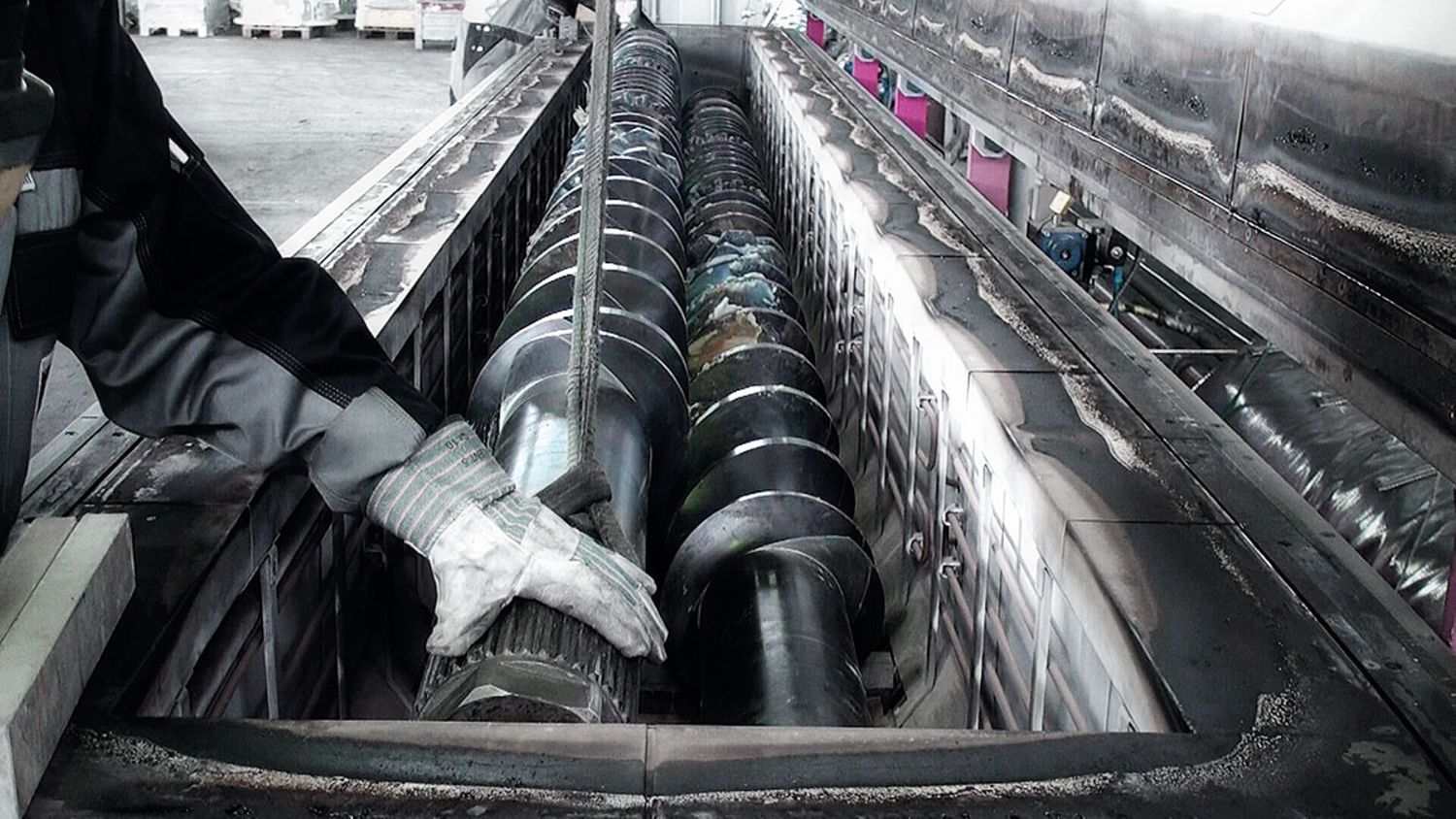
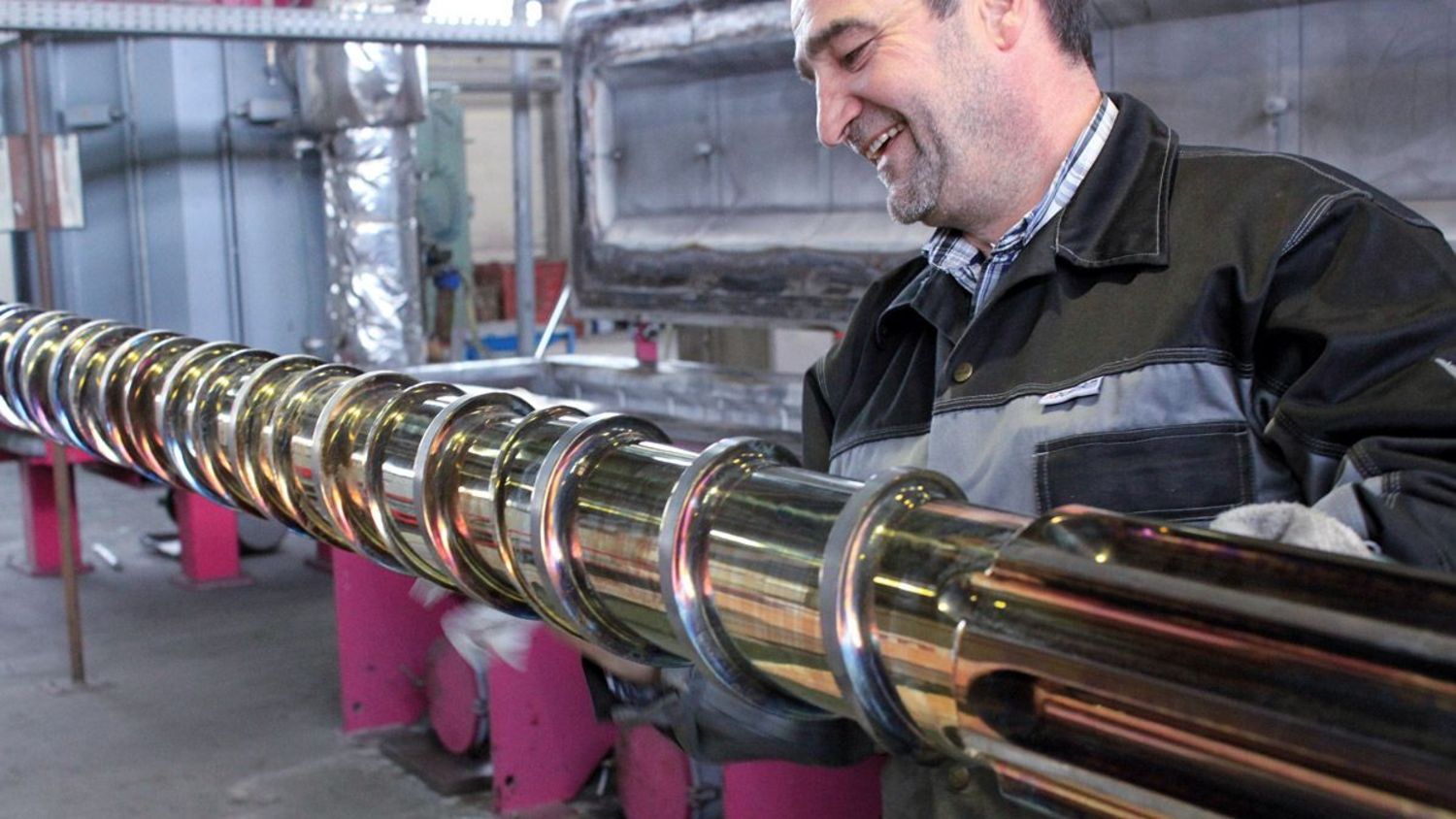
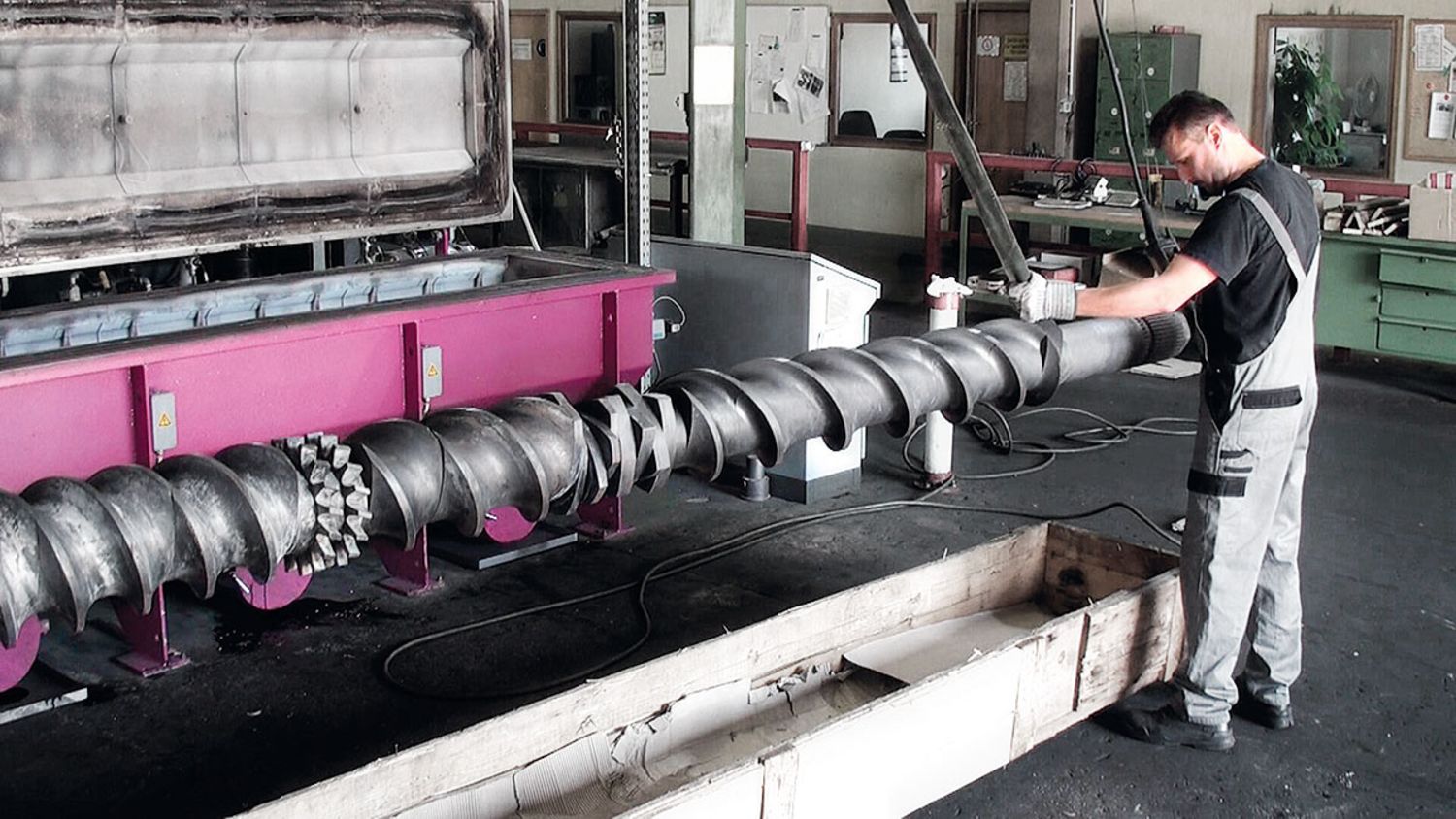
Thermal cleaning removes organic polymer components. However, pigments, glass fibers, mineral fillers, and other inorganic residues may remain on surfaces or in melt channels. Post-treatment and inspection are therefore tailored to the mold, the residue, and the cleaning objective.
Inorganic residues can be removed after thermal cleaning using compressed air, high-pressure water, or ultrasound. The appropriate method depends on the component’s geometry, accessibility, and the type of residual material. After fluidized-bed cleaning, any remaining THERMCLEAN sand must also be completely removed from the mold.
After cleaning and post-treatment, the nozzle areas and screw flanks are inspected in particular; in the case of multilayer blown film die heads, the individual melt distribution and layer feed channels for each layer are also inspected. It must be ensured that both the main flow path and the layer-specific distribution and transition areas are free of polymer and residual material deposits.
For quality-critical or recurring cleaning tasks, the results can be documented through visual inspection, process data, and documented cleaning reports. This makes it possible to track the conditions under which a tool was cleaned and to compare the results of different cleaning cycles.


The key factors for the technical evaluation are, above all, the die design, melt-flow geometries, the polymer, and the amount of residue. Photos and technical drawings make it easier to classify the die, especially in the case of complex extrusion dies.
About the tool:
Regarding Residue and Cleaning Objectives:
Not every company needs its own thermal cleaning system. SCHWING handles the application-specific cleaning of suitable extrusion tools and extruder components—from test cleanings to regularly scheduled cleaning jobs.
The cleaning service is particularly suitable for:
Have Your Extrusion Die Cleaned with 24/7 Service
Not sure whether a cleaning service or your own facility makes sense?
Compare cleaning methods on the overview page

Depending on the component design, polymer, and cleaning objective, SCHWING combines the appropriate thermal process with a tailored post-treatment. Upon request, regular cleaning intervals as well as pickup and return can be integrated into a predictable service plan.
During thermal cleaning, organic polymer and plastic residues are systematically removed from suitable metal extrusion dies and extruder components. Depending on the component and the type of residue, tailored post-treatment and inspection steps follow.
Typical examples include film blow molding heads, flat-slot and profile dies, extruder screws, screw elements, static mixers, as well as suitable melt lines and screen changer components. Specific suitability depends on the design, material, coating, and dimensions.
For complex extrusion tools, controlled vacuum pyrolysis with VACUCLEAN or VACUCLEAN COMPACT is often suitable. MAXICLEAN may be an option for large components with halogen-free residues, while INNOVACLEAN may be suitable for halogenated polymers.
Yes. For halogenated polymer deposits, INNOVACLEAN is the relevant SCHWING technology. For extrusion dies, it must also be verified whether the fluidized process medium can reach all contaminated areas and be completely removed afterward.
Residual polymers, pigments, or additives can lead to contamination or unwanted material mixing in subsequent production. Clean melt paths create defined starting conditions for the next production run.
Pigments, glass fibers, mineral fillers, and other inorganic components are not necessarily removed by thermal cleaning. Depending on the mold and the residual material, methods such as compressed air, high-pressure water, or ultrasound may therefore be used.
In particular, the following information is required: mold type and design, material and coating, dimensions and weight, photos or drawings, polymer type, additives and fillers, possible halogen content, amount of residue, cleaning interval, and desired cleaning result.
Whether you need a cleaning service, a trial cleaning, or your own system:
SCHWING will help you select the right thermal cleaning process for your components, polymers, and production requirements.
back-to-top