
Virgilio Perez Guembe
Salesregion: South & Middle America, Europe, Asia
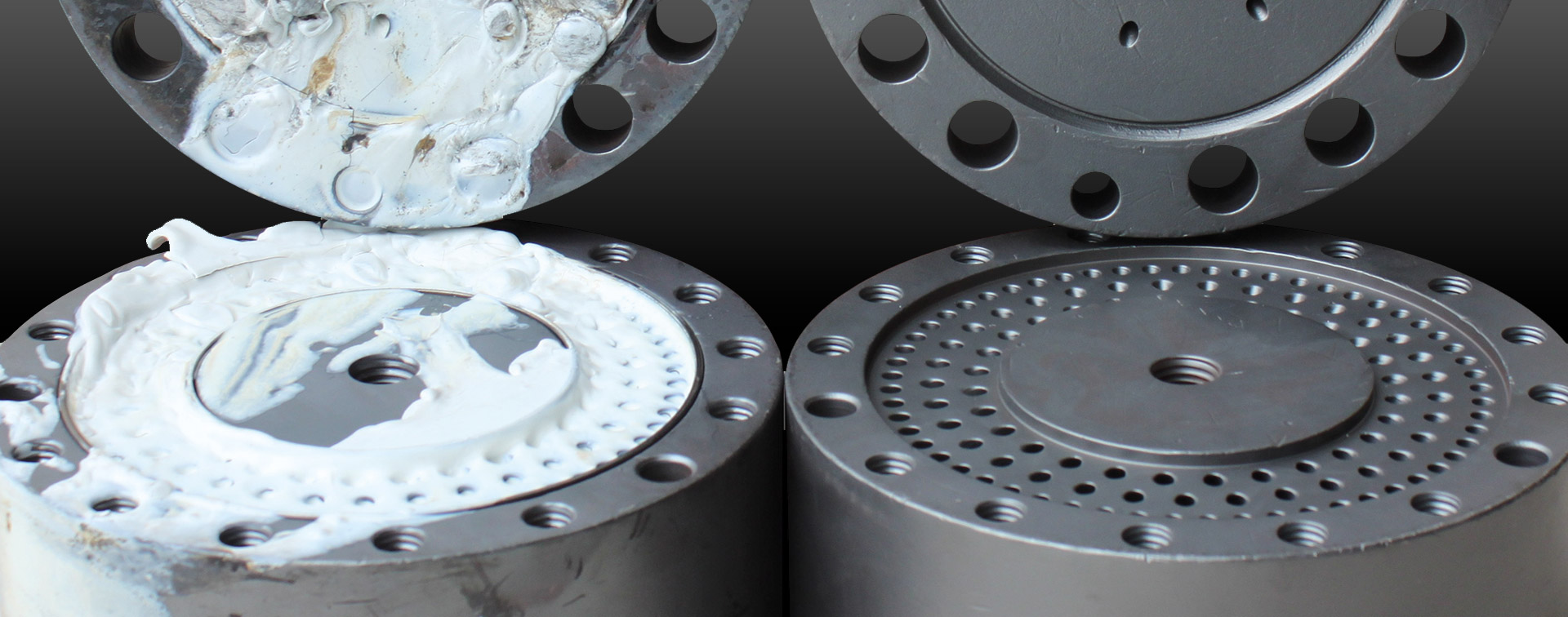
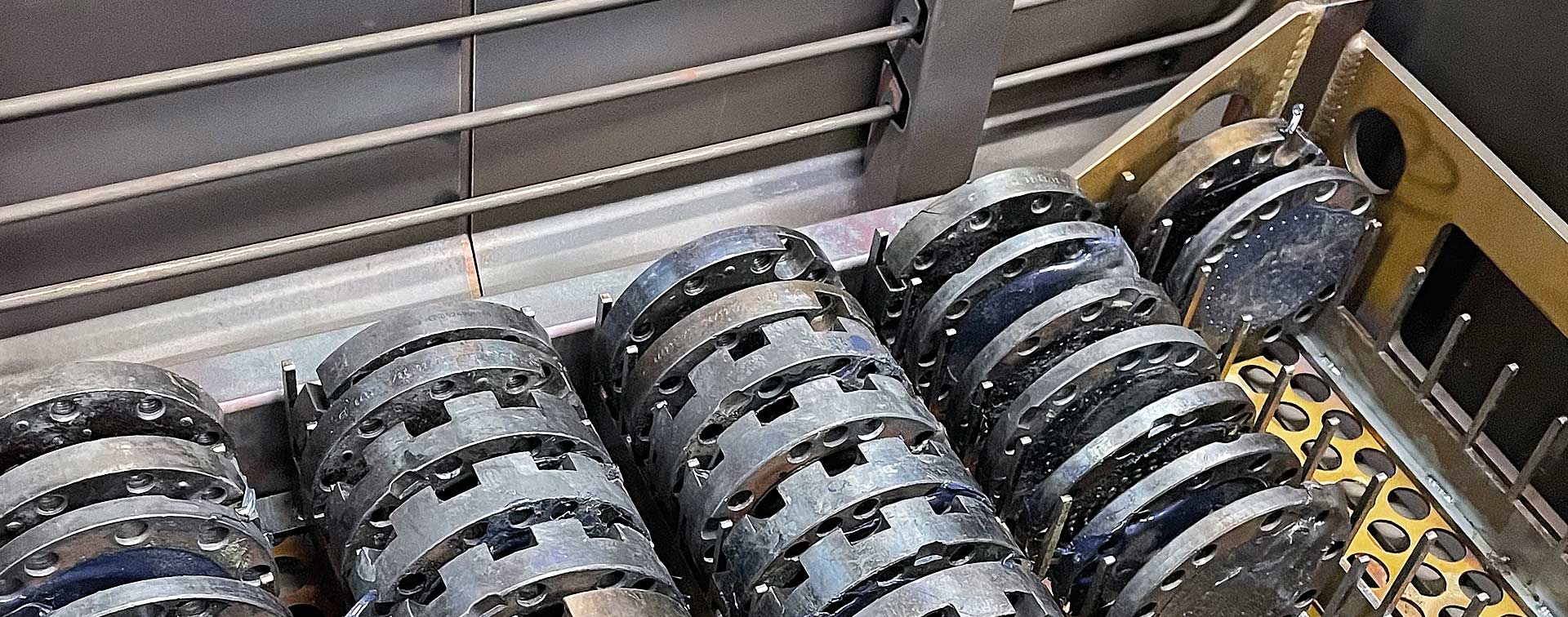
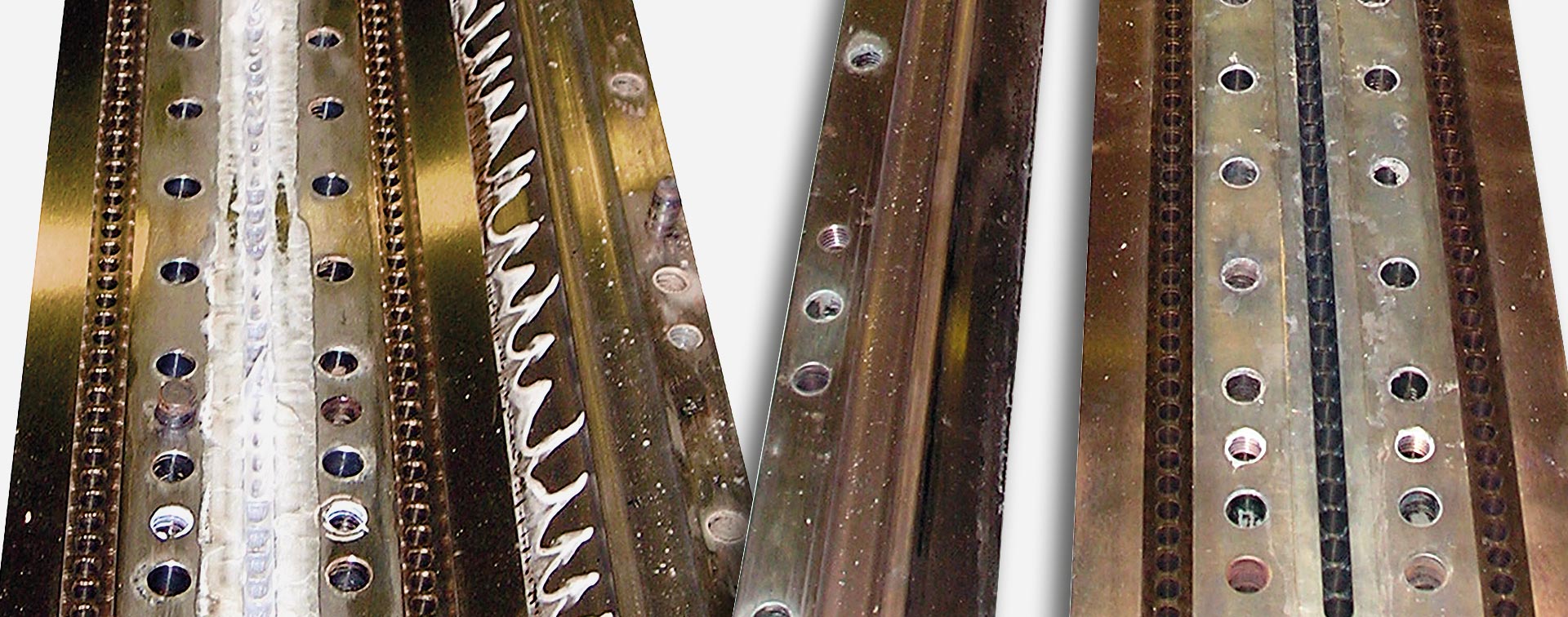
Control the removal of polymer and plastic residues from fine capillaries, micro-holes, and complex internal geometries while minimizing damage to components.
Spinning nozzles, spinning assemblies, spinning beams, as well as meltblown and spunbond nozzles are metal production tools used in fiber and nonwoven production. During operation, polymers and other components can accumulate in capillaries, bores, polymer channels, and hard-to-reach internal areas.
Thermal cleaning removes organic residues in a controlled manner from suitable heat-resistant metal parts. The cleaning process, process control, and any necessary post-treatment and inspection steps are tailored to the tool design, material, polymer, and cleaning objective.
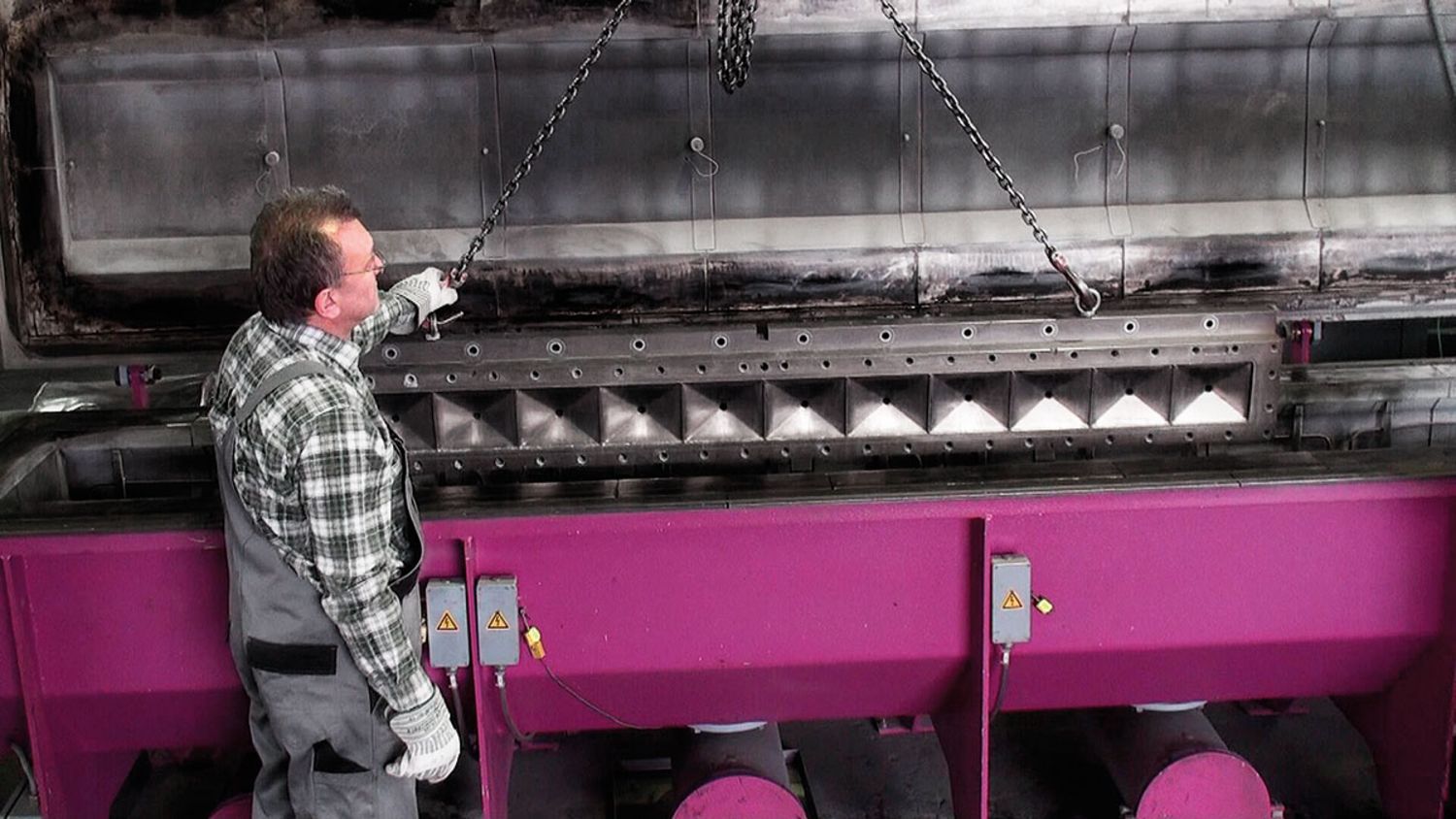
During fiber and nonwoven production, polymer melts flow through fine capillaries, micro-holes, and internal channels in spinnerets, spinning assemblies, and related tools. As a result, polymer and plastic residues can remain even in hard-to-reach areas.
Therefore, cleaning only the exterior is often insufficient. The residues must also be removed from the functionally critical internal structures without unnecessarily stressing the fine tool geometries and surfaces.
Polymer residues can accumulate in capillaries, micro-holes, channels, interstices, and other internal areas. As a result, even hard-to-reach structures become a significant part of the cleaning process.
Deposits can alter clear cross-sections and defined flow paths. The extent to which tool performance is impaired depends on the tool design, the type of residue, and the degree of contamination.
Spinning nozzles and spinning assemblies are designed for repeated use. This requires a coordinated cleaning and inspection process that takes into account the condition of the tool, the level of contamination, and the cleaning objective.
Thermal cleaning is an option for suitable, heat-resistant metal tools used in fiber and nonwoven production. Whether a tool is suitable depends on the material, tool design, geometry, dimensions, joining method, and permissible thermal load.
Tool Type | Typical Design | Special Cleaning Requirements |
|---|---|---|
Spinning nozzles | Metallic nozzle plates with fine capillaries or micro-holes | Remove polymer from the capillaries and preserve the fine nozzle openings |
Spinning assemblies | multi-part assemblies consisting of a nozzle plate, polymer channels, and other functional elements | Remove polymer from internal areas and between individual components |
Assembled spinning assemblies | Assembled spinning assemblies with multiple coordinated components | First, perform thermal pretreatment to melt away the polymer and enable disassembly; then thermally clean the disassembled components |
Meltblown and spunbond nozzles | Fiber-forming tools with numerous fine nozzle orifices and complex geometry | Clean the entire nozzle structure in a controlled manner and preserve the fine tool geometries |
Spinning and nozzle beams | long metallic tools with internal polymer channels and nozzle sections | remove polymer from complex internal geometries and heat the component evenly |
For assembled spinning assemblies, thermal pretreatment may be a necessary intermediate step. In this process, enough polymer is first removed or melted away to allow the assembly to be disassembled. The individual components are then reintroduced into the cleaning system and undergo final thermal cleaning.
Spinning pumps and other metallic components from fiber production can also be tested, depending on their design, material, and thermal resistance. For multi-part tools, it must be determined whether all components are suitable for the respective thermal process.
Temperature-sensitive seals, non-metallic inserts, sensors, and electrical or other components that are not sufficiently heat-resistant must be identified and, if necessary, removed before the final thermal cleaning.
Is your tool not listed? Have its technical suitability checked →


Spinnerets, spinning assemblies, and related fiber-processing tools may be contaminated with the processed base polymer, mixed polymer types, masterbatch, additives, pigments, and thermally modified polymer components. During material or product changes, residues of various polymers may also remain in the tooling.
The type of polymer influences the melt behavior, the required temperature profile, the reaction products formed during decomposition, and any necessary post-treatment. Therefore, the technical evaluation requires the most accurate information possible about the processed material.
Residue Group | Examples | Relevant for Evaluation |
|---|---|---|
Typical Fiber Polymers | PE, PP, PET, PA, Spandex | Polymer type, residue amount, and thermal behavior |
Thermally altered polymer residues | Aged, degraded, or partially charred residues | Condition, amount, and location of deposits |
Masterbatch and polymer blends with additives | Carrier polymer, color masterbatch, pigments, and functional additives | Exact composition, carrier polymer, and possible halogenated components |
Blend and mixed residues | multiple polymers or material blends of uncertain composition | composition and thermal behavior may be incompletely known |
Halogenated Polymers and Additives | PVC, PTFE, PVDF, or halogen-containing components | Separate process, component, and exhaust gas testing required |
Inorganic residues | mineral fillers, inorganic pigments, and other components that do not decompose thermally | may remain in the mold after the organic components have been removed and may require post-treatment |
The appropriate cleaning method cannot be determined solely based on the tool’s designation. Key factors include, in particular, the tool’s design, capillary and channel geometry, material, dimensions, polymer type, amount of residue, and the desired cleaning and inspection results.

VACUCLEAN is particularly well-suited for spinning nozzles, spinning assemblies, meltblown and spunbond nozzles, as well as spinning and nozzle bars with fine capillaries, micro-bores, or complex internal geometries.
The vacuum allows polymers to be thermally removed at lower cleaning temperatures than in processes conducted under atmospheric conditions. Combined with controlled heating and direct temperature measurement on the item being cleaned, this enables process control that is particularly gentle on both the material and the tooling.
VACUCLEAN COMPACT can be used for smaller spinning nozzles, compact tools, and smaller batches.

MAXICLEAN is suitable for sufficiently robust spinnerets, spinning packages, and fiber tools with halogen-free residues and operates using temperature profiles tailored to specific polymers.
However, for very fine capillaries, micro-bores, or delicate geometries, VACUCLEAN is usually the gentler choice due to the lower cleaning temperatures in a vacuum. The choice depends on the geometry, material, and polymer.

INNOVACLEAN can be tested on suitable, sufficiently robust spinnerets and spinning assemblies if the fluidized cleaning medium reaches all contaminated areas and the THERMCLEAN sand can subsequently be completely removed from capillaries, channels, and interstices.
This method is relevant for short cleaning times or halogenated polymers; however, for very fine nozzle structures, it must be ensured that THERMCLEAN sand can be completely removed.
Not sure which process is right for your tool?
Have the cleaning task evaluated from a technical perspective →
For spinnerets, spinning assemblies, and spinning beams, it is not enough to simply remove visible polymer deposits from the outer surfaces. The cleaning process must also reach internal and hard-to-reach areas while being tailored to the thermal resistance of the respective tool.
Polymer residues must also be removed from fine capillaries, micro-holes, polymer channels, and interstices. It is crucial that all areas relevant to the tool's function be included in the cleaning process.
Heat must be applied to the mold as evenly and precisely as possible. Excessive temperature stresses must be avoided, particularly in the case of fine nozzle structures, multi-part spinning assemblies, and long spinning beams.
Temperature control and the process sequence are adapted to the mold design, material, dimensions, polymer type, and amount of residue. The desired cleaning and inspection results must also be taken into account during the process design phase.

Thermal cleaning removes organic polymer and plastic components. However, pigments, mineral fillers, and other inorganic residues may remain in capillaries, channels, or interstitial areas. For this reason, post-treatment and quality inspection are tailored to the mold design, the type of residue, and the specified cleaning objective.
Residual pigments, fillers, and other inorganic residues can be removed from capillaries, channels, and hard-to-reach areas of the tooling through a tailored ultrasonic treatment. The type and extent of the post-treatment depend on the geometry and the nature of the residue.

After thermal cleaning and any ultrasonic treatment, additional rinsing and drying steps may be necessary. This removes dissolved residues and the treatment media used from the mold areas.

Spinneret capillaries can be inspected visually and using automated microscopic inspection systems. The purpose of the inspection is to provide a verifiable assessment of the condition of the capillaries and the cleaning results achieved, and to document them as necessary.

The suitability of the cleaning process and the required process parameters depend on the specific mold, the residues present, and the desired cleaning result. To provide an initial technical assessment, SCHWING requires as complete information as possible regarding the cleaning task.
Photos, technical drawings, and material information facilitate the evaluation. In the case of unknown polymers or complex mold designs, a test cleaning may be necessary.
About the tool and its design:
Regarding Residue and Cleaning Objectives:
Not every company needs its own thermal cleaning system. The SCHWING Cleaning Service handles the application-specific cleaning of suitable spinnerets, spinning assemblies, and other fiber processing tools—from the initial test cleaning to regularly scheduled cleaning jobs.
The cleaning service is particularly suitable for:
Request a 24/7 Spinneret Cleaning Service
Not sure whether a cleaning service or your own system makes more sense?
Compare cleaning methods on the overview page

Depending on the design of the spinnerets, spinning packages, and other fiber-processing tools, as well as the specific type of residue, SCHWING combines the appropriate thermal cleaning process with tailored post-treatment and quality control. Upon request, regular cleaning intervals as well as pickup and return can be integrated into a predictable service plan.
Thermal cleaning removes organic polymer and plastic residues from suitable heat-resistant metal tools. Depending on the tool design, the polymer, and the cleaning objective, post-treatment and quality inspection may be required afterward.
Typical examples include spinnerets, spinning assemblies, meltblown and spunbond nozzles, as well as spinning and nozzle beams. Spinning pumps and other metallic components can also be evaluated, depending on the material, design, and thermal resistance.
For fine capillaries, micro-bores, and delicate tool geometries, vacuum pyrolysis using VACUCLEAN or VACUCLEAN COMPACT is often the gentler option on both the material and the tool. MAXICLEAN and INNOVACLEAN may also be suitable options, depending on the tool, polymer, and cleaning requirements.
For PVC, PTFE, PVDF, and other halogen-containing residues, INNOVACLEAN is generally the appropriate technology. Prerequisites include a suitable mold geometry, the complete removal of THERMCLEAN sand, and a properly designed exhaust gas treatment system.
Pigments, mineral fillers, and other inorganic components are not necessarily removed by thermal decomposition. Depending on the tooling and the residue, a tailored ultrasonic treatment followed by rinsing and drying may therefore be necessary.
In addition to a visual inspection, the capillaries can be examined using automated microscopic inspection systems. The scope of the inspection, evaluation criteria, and documentation are tailored to the specific tool and the agreed-upon cleaning objective.
In particular, the following information is required: tool type, material, design, dimensions, weight, quantity, polymer, additives, possible halogen content, amount of residue, and desired post-treatment or testing. Photos, technical drawings, and material information facilitate technical classification.
Whether you need a cleaning service, a trial cleaning, or your own system:
SCHWING will help you select the right thermal cleaning process for your components, polymers, and production requirements.
back-to-top