
Virgilio Perez Guembe
Salesregion: South & Middle America, Europe, Asia
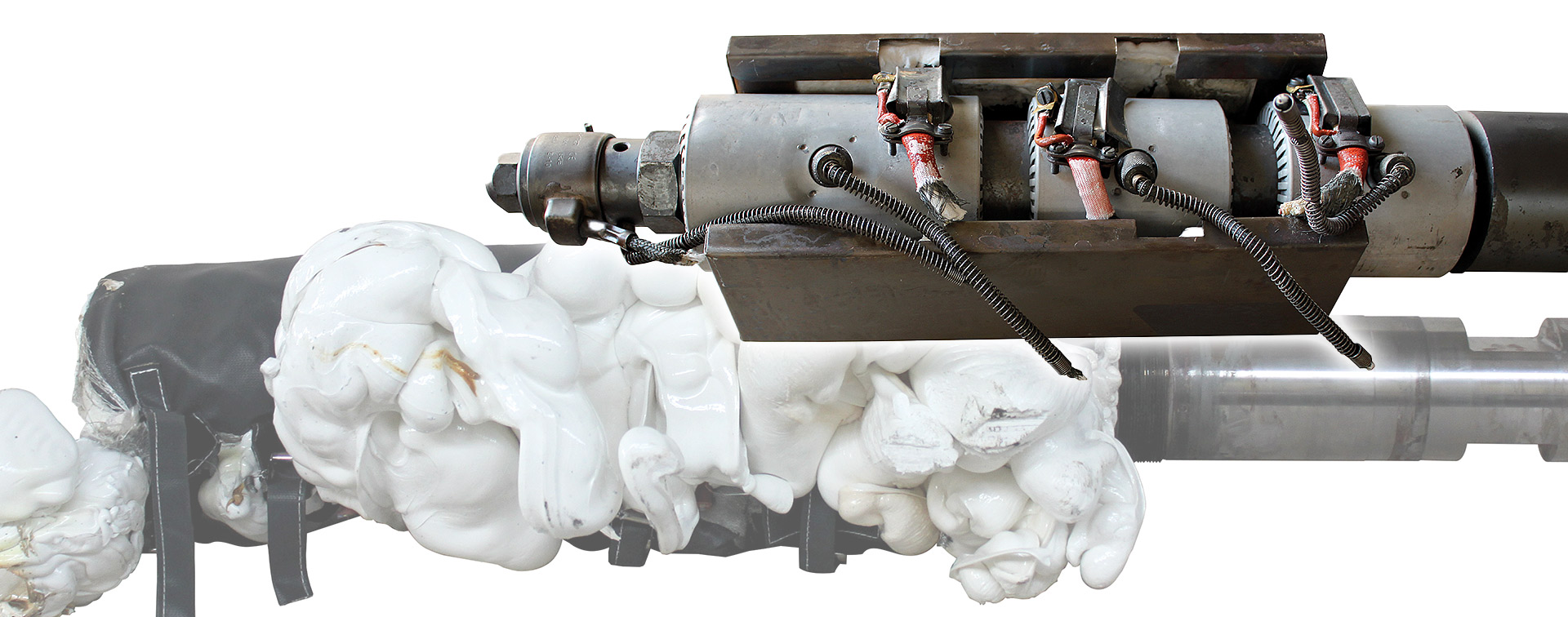
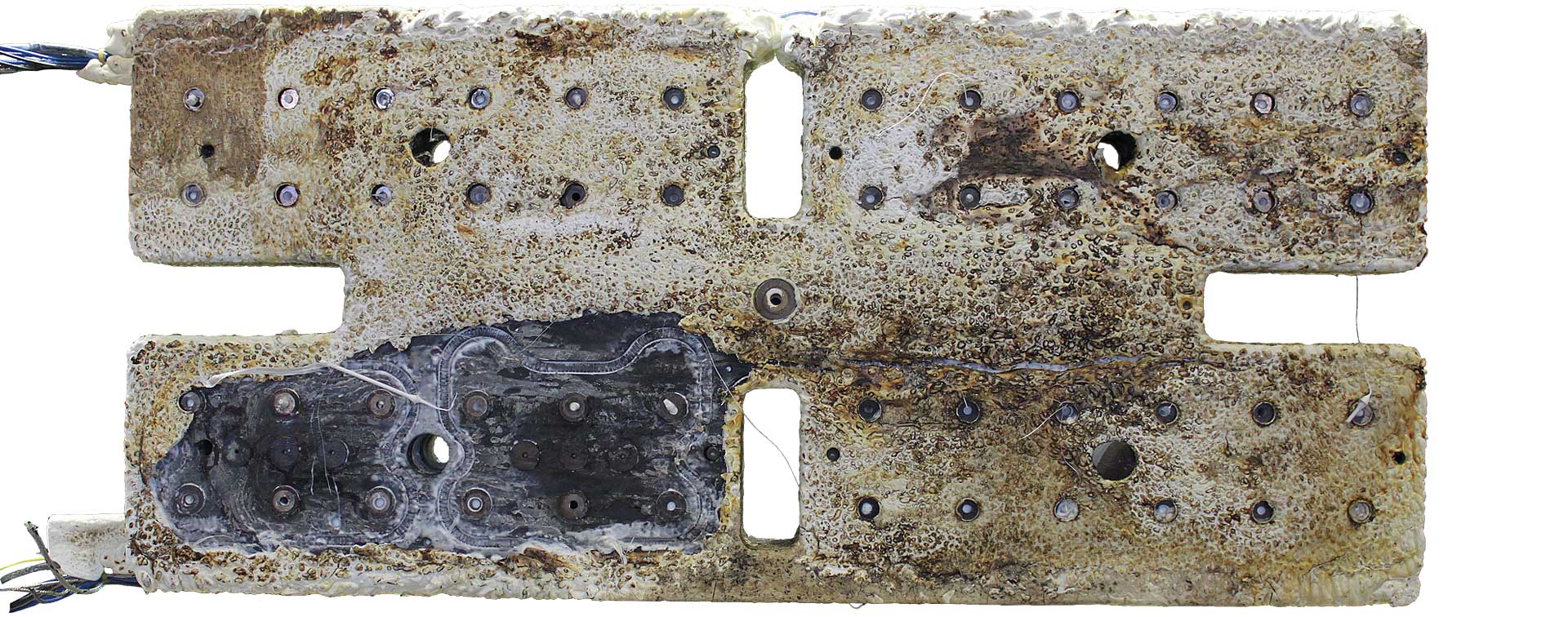
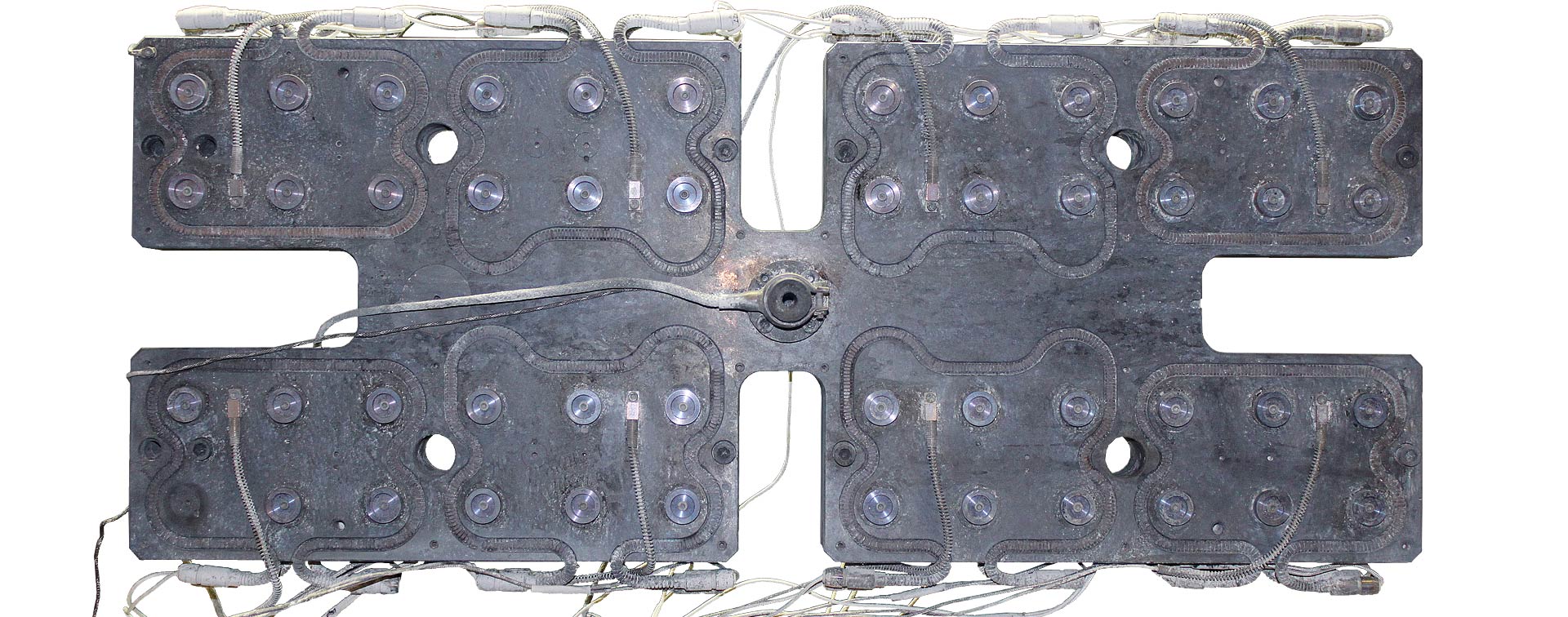
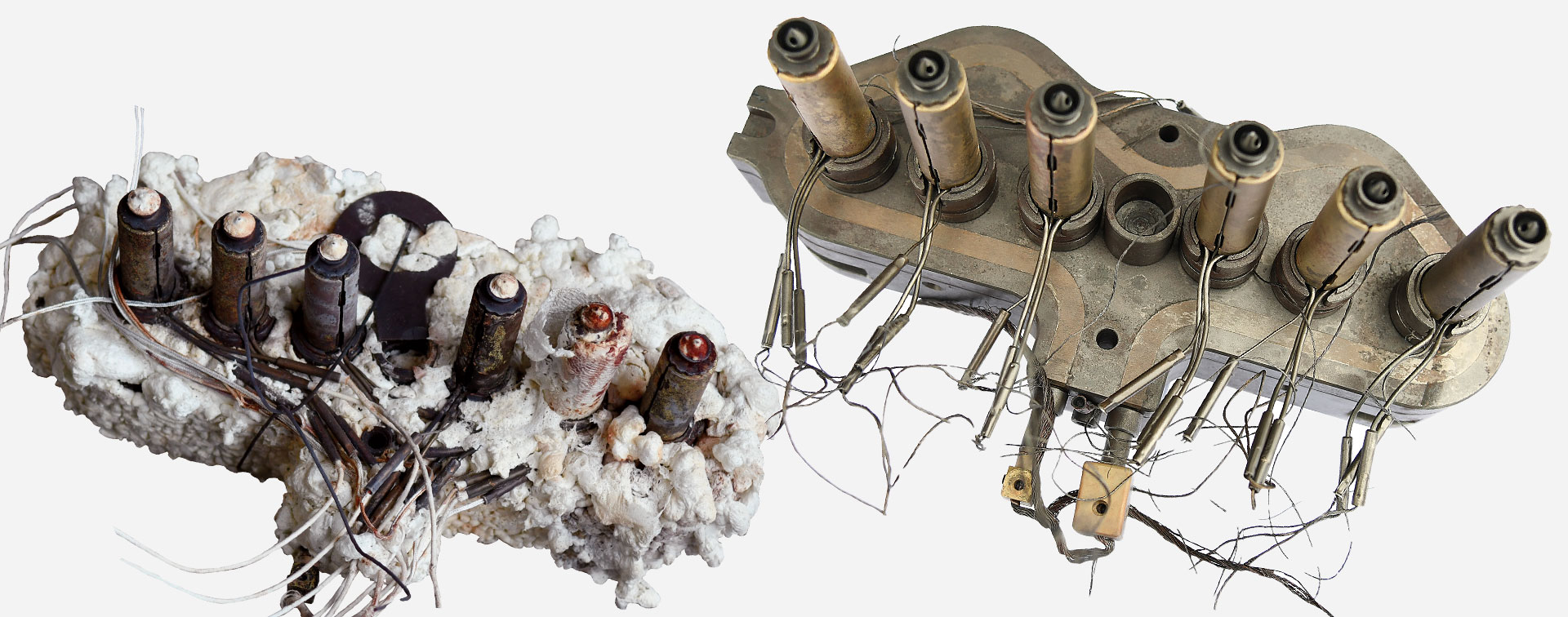
Control the removal of polymer and plastic residues from hot-runner manifolds, nozzles, runner systems, and other metal components.
Injection nozzles, hot-runner nozzles, hot-runner manifolds, and other components used in injection molding processes come into direct contact with the polymer melt. During operation, during material changes, or as a result of technical malfunctions, plastic residues can accumulate in runner channels, bores, nozzles, and on the outer surfaces of components.
Thermal cleaning removes organic residues in a controlled manner from suitable temperature-resistant metal components. The appropriate method depends on the component design, materials, polymer, amount of residue, and the required cleaning result.
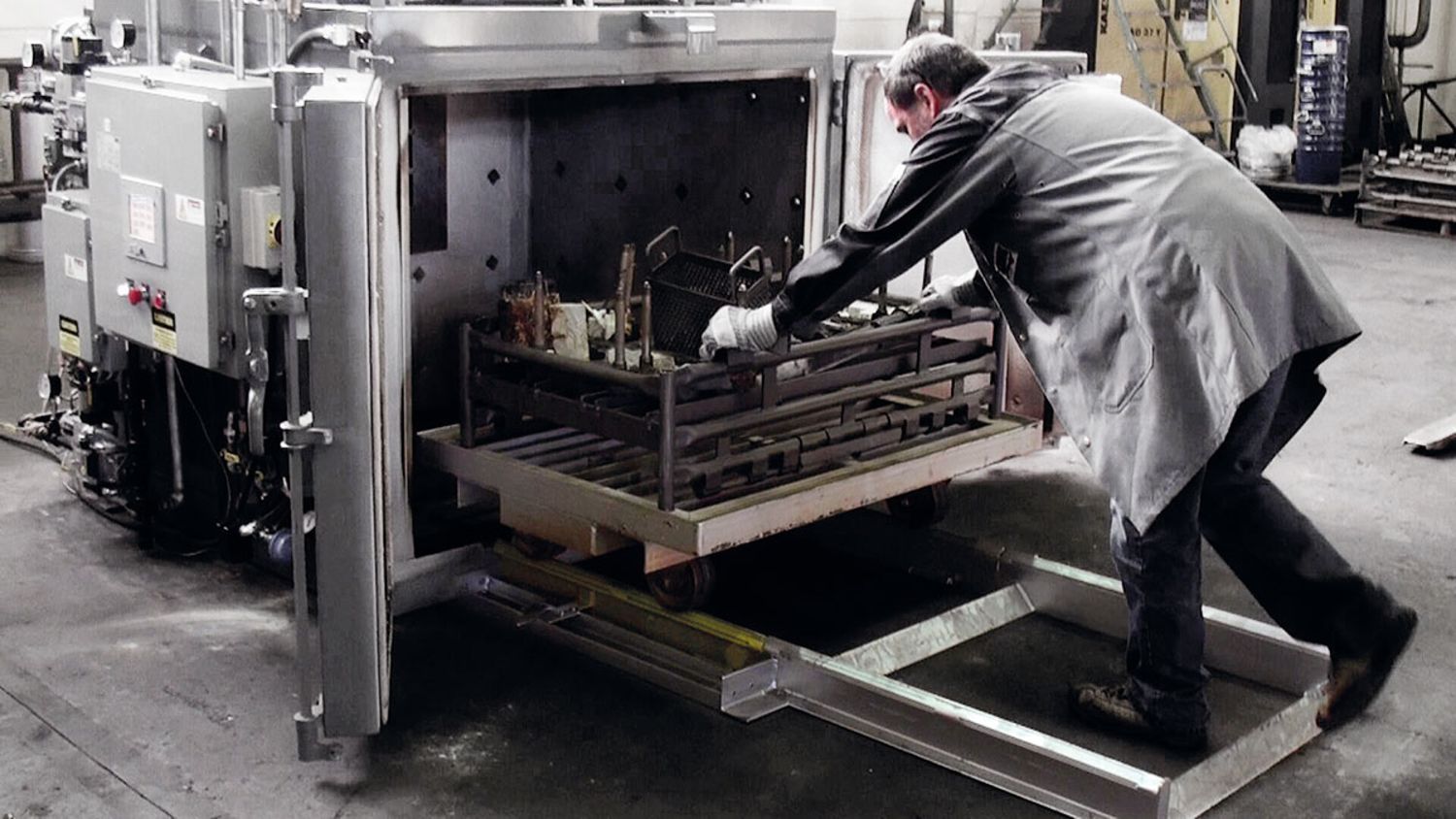
In injection molding, polymer residues can adhere to nozzles, screw tips, non-return valves, static mixers, and other melt-carrying components. In hot-runner systems, these residues are often found in long, winding flow channels that are inaccessible from the outside.
In the event of defects, material fatigue, or leaky components, polymer melt can also escape from the intended flow paths and extensively coat the hot runner manifold. Such heavily overmolded systems can only be cleaned manually with considerable effort. Internal channels are often not fully accessible during this process.
Polymer residues can remain in channels, bores, nozzles, and hard-to-reach passages. Cleaning only the exterior is not sufficient.
In the event of leaks or defects, molten polymer can partially or completely encase the manifold, nozzles, and adjacent components.
The cleaning process is tailored to the specific component and polymer. Afterward, the condition, patency, and function of the components must be specifically tested.
Thermal cleaning is an option for suitable metal parts that are sufficiently heat-resistant. Whether a part is suitable depends, among other things, on the material, component design, joining methods, coatings, internal components, and permissible thermal stress.
Part/Component | Typical Cleaning Task | Special Requirement |
|---|---|---|
Hot runner manifold | Remove polymer from outer surfaces and internal melt channels | Evaluate channel system, size, and component design |
Hot-runner nozzles | Remove polymer from the nozzle area, bores, and external deposits | Take small openings and any internal components into account |
Injection nozzles | Remove adhered or thermally altered polymer residues | Preserve the nozzle channel and nozzle tip |
Needle-valve nozzles | Remove polymer from melt-carrying areas | Take into account the needle, guide, and multi-part construction |
Non-return valves | Remove polymer from the ring, tip, and melt-carrying surfaces | Check mobility and functional surfaces after cleaning |
Screw tips | Remove polymer and degradation residues from geometries and surfaces | Consider material, coating, and wear condition |
Static mixers | Remove polymer from mixing elements and internal areas | Address complex and sometimes hard-to-reach structures |
Complete injection molds or mold halves are not suitable for thermal cleaning based solely on their designation. It is necessary to assess which metal components are actually contaminated with polymer and can be removed or disassembled as defined items for cleaning.
Temperature-sensitive seals, cables, sensors, insulating materials, and electrical components must be identified prior to cleaning. Depending on the design and process, they are removed, treated separately, or replaced after cleaning.
Is your component not listed? Have its technical suitability checked →


The components may be contaminated with unmodified base polymer, blended materials, thermally aged polymer residues, additives, pigments, fillers, and reinforcing materials, as well as partially charred deposits.
The exact polymer composition influences the melting behavior, the required temperature control, the resulting decomposition products, and the necessary post-treatment.
Residue Group | Examples | Relevant for Evaluation |
|---|---|---|
Halogen-free standard polymers | PE, PP, PS, and comparable thermoplastics | Polymer type, residue amount, and location |
Engineering polymers | PA, PC, PBT, PEEK, and comparable materials | Processing temperature and thermal behavior |
Reinforced or filled polymers | glass-fiber-reinforced PA, mineral-filled materials | inorganic residues after thermal treatment |
Additive-modified and colored polymers | Masterbatch, pigments, functional additives | Composition and potential halogen content |
Aged or charred residues | Thermally degraded or carbonized polymers | Condition, quantity, and accessibility |
Blended and recycled materials | multiple polymers, recycled materials, unknown mixtures | incomplete composition |
Halogenated polymers | PVC, PTFE, PVDF, or halogen-containing additives | Check cleaning specifically with INNOVACLEAN |
The appropriate process cannot be determined solely by the terms “hot runner” or “injection nozzle.” The decisive factors are part size, design, materials, polymer type, amount of residue, degree of overmolding, internal features, and the required cleaning result.

MAXICLEAN is particularly suitable for large hot-runner manifolds, large components, and high volumes of halogen-free polymer deposits.
The cleaning process uses temperature profiles specific to the plastic and polymer. Thanks to controlled hot-air flow and automatic process control, the components are heated uniformly, and organic residues are thermally removed within approximately four to eight hours. The actual cleaning time depends on the polymer, the amount of residue, the component geometry, and the load.

INNOVACLEAN is suitable for sufficiently robust small and medium-sized components such as hot runner nozzles, injection nozzles, non-return valves, and static mixers.
The intense heat transfer in the fluidized THERMCLEAN sand enables short cleaning times. For smaller hot-runner components that are not heavily overmolded, cleaning times range from about one to several hours, depending on the polymer.
For PVC, PTFE, PVDF, and other halogenated residues, INNOVACLEAN is the relevant SCHWING technology. The aggressive byproducts generated during decomposition are immediately separated from the parts being cleaned and treated in the customized exhaust gas treatment system.
In the case of narrow bores, blind holes, or complex assemblies, it must be verified whether the process medium can be completely removed after cleaning.

VACUCLEAN can be used to test complex, high-quality metal components or those requiring particularly careful thermal treatment. Under vacuum, polymers can decompose at lower component temperatures than in comparable atmospheric processes.
VACUCLEAN COMPACT is particularly suitable for smaller batches and components such as injection nozzles, needle-valve nozzles, non-return valves, and screw tips. The specific suitability of the process depends on the material, geometry, polymer, and cleaning objective.
Not sure which process is right for your component?
Have your cleaning task evaluated from a technical standpoint →
When it comes to injection-molded and hot-runner components, it is not enough to simply remove visible plastic residue from the outer surfaces. The process must also take into account internal flow paths that are difficult to access and be tailored to the thermal capacity of the entire cleaning unit.
Before cleaning, it must be determined whether a single part, a disassembled group of components, or an assembled metal subassembly is to be treated.
Polymer residues must be removed from both overmolded exterior areas and from nozzle channels, bores, manifolds, and other internal areas through which the melt flows.
The temperature profile and process sequence must be tailored to the material, mass, geometry, polymer, and amount of residue. Controlled temperature distribution is particularly important for large manifolds and components with varying cross-sections.
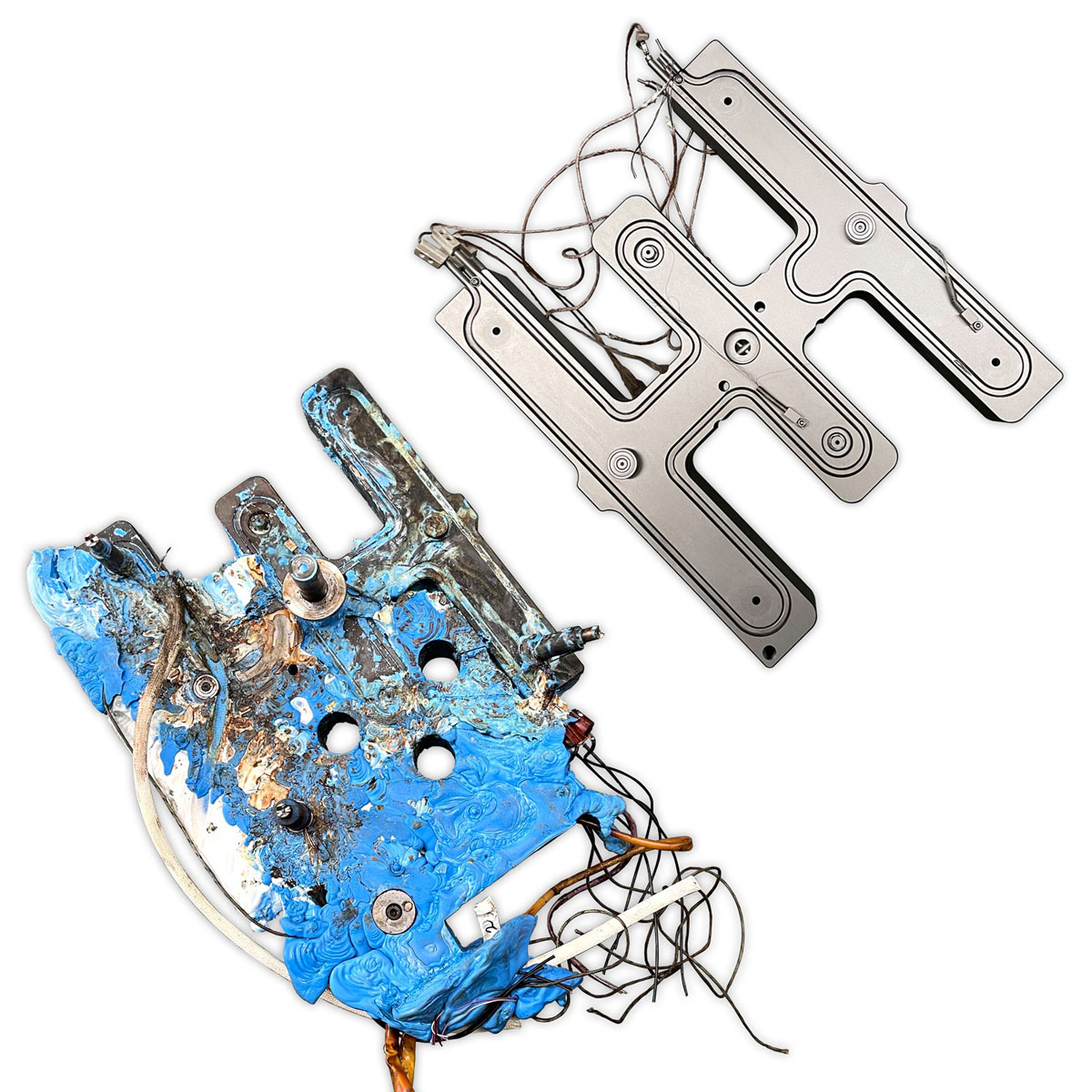
Existing heaters, thermocouples, cables, sensors, seals, and non-metallic components must be identified and evaluated.
Before the process begins, the criteria to be met after cleaning should be defined. These may include:
Thermal cleaning removes the organic components of polymer and plastic residues. However, depending on the material being processed, glass fibers, pigments, mineral fillers, or other inorganic components may remain on surfaces or in flow channels. Post-treatment and testing are therefore tailored to the component, the residue, and the required cleaning result.
Inorganic components are not thermally decomposed. Depending on the component geometry, surface, and type of residues, additional processes may be used, such as:
The post-treatment method must be selected so that nozzle areas, bores, functional surfaces, and sensitive surfaces are not compromised.
After thermal cleaning and any necessary post-treatment, accessible surfaces, bores, nozzle areas, and melt-carrying channels are inspected to ensure they meet the agreed-upon cleaning target. In particular, the inspection assesses whether:
The type and scope of the inspection depend on the component’s design, accessibility, and the company’s quality requirements.
Cleaning exposes surfaces and functional areas, thereby facilitating an assessment of the component’s condition. However, thermal cleaning does not remedy wear, cracks, corrosion, or pre-existing mechanical damage.
If any abnormalities are detected, they must be technically evaluated before further use, repair, or reassembly.
After cleaning and post-treatment, the components are ready for further technical processing. Heaters, thermocouples, cables, seals, and other components can be inspected, reused, or replaced depending on their condition.
The final functional and safety testing of the hot runner system is based on the manufacturer’s specifications and the operator’s operational requirements.
About the component:
Regarding the residue:
Not every company needs its own thermal cleaning system. SCHWING handles the application-specific cleaning of suitable injection-molded and hot-runner components—from the initial test cleaning to regularly scheduled cleaning jobs.
The cleaning service is particularly suitable for:
Request a 24/7 hot runner cleaning service
Not sure whether a cleaning service or your own system makes more sense?
Compare cleaning methods on the overview page

Depending on the component design, polymer, and cleaning objective, SCHWING combines the appropriate thermal process with a tailored post-treatment. Upon request, regular cleaning intervals as well as pickup and return can be integrated into a predictable service plan.
Thermal cleaning removes organic polymer and plastic deposits from suitable heat-resistant metal components. The process is tailored to the component, material, polymer, amount of residue, and cleaning objective.
Typical examples include hot runner manifolds, hot runner nozzles, injection nozzles, needle-valve nozzles, backflow preventers, screw tips, and static mixers. Suitability must be assessed based on the material, design, internal components, and thermal resistance.
Yes. MAXICLEAN is typically the solution for large and heavily overmolded hot runner manifolds. The decisive factors are component size, polymer type, degree of overmolding, disassembly condition, and any temperature-sensitive components present.
MAXICLEAN is primarily used for large or heavily oversprayed hot-runner manifolds with halogen-free residues. INNOVACLEAN is suitable for smaller, robust components and halogenated polymers. VACUCLEAN or VACUCLEAN COMPACT can be evaluated for smaller, complex components or those requiring careful thermal handling.
The organic polymer content can be removed thermally. However, glass fibers and other inorganic components are not thermally decomposed and may require a tailored post-treatment.
For PVC, PTFE, PVDF, and other halogenated residues, INNOVACLEAN is the relevant SCHWING technology. Additionally, component geometry, process control, removal of the process medium, and exhaust gas treatment must be evaluated.
That depends on the polymer, the fillers it contains, and the required cleaning result. Inorganic residues such as glass fibers, pigments, or mineral components may require a tailored post-treatment.
In particular, we need details on the component type, structure, material, dimensions, weight, disassembly status, and temperature-sensitive components, as well as photos or drawings. Regarding the residue, the relevant factors include the polymer, additives, potential halogen content, amount of residue, and its location. In addition, the desired cleaning and testing results should be described.
Whether you need a cleaning service, a trial cleaning, or your own system:
SCHWING will help you select the right thermal cleaning process for your components, polymers, and production requirements.
back-to-top