
Virgilio Perez Guembe
Salesregion: South & Middle America, Europe, Asia
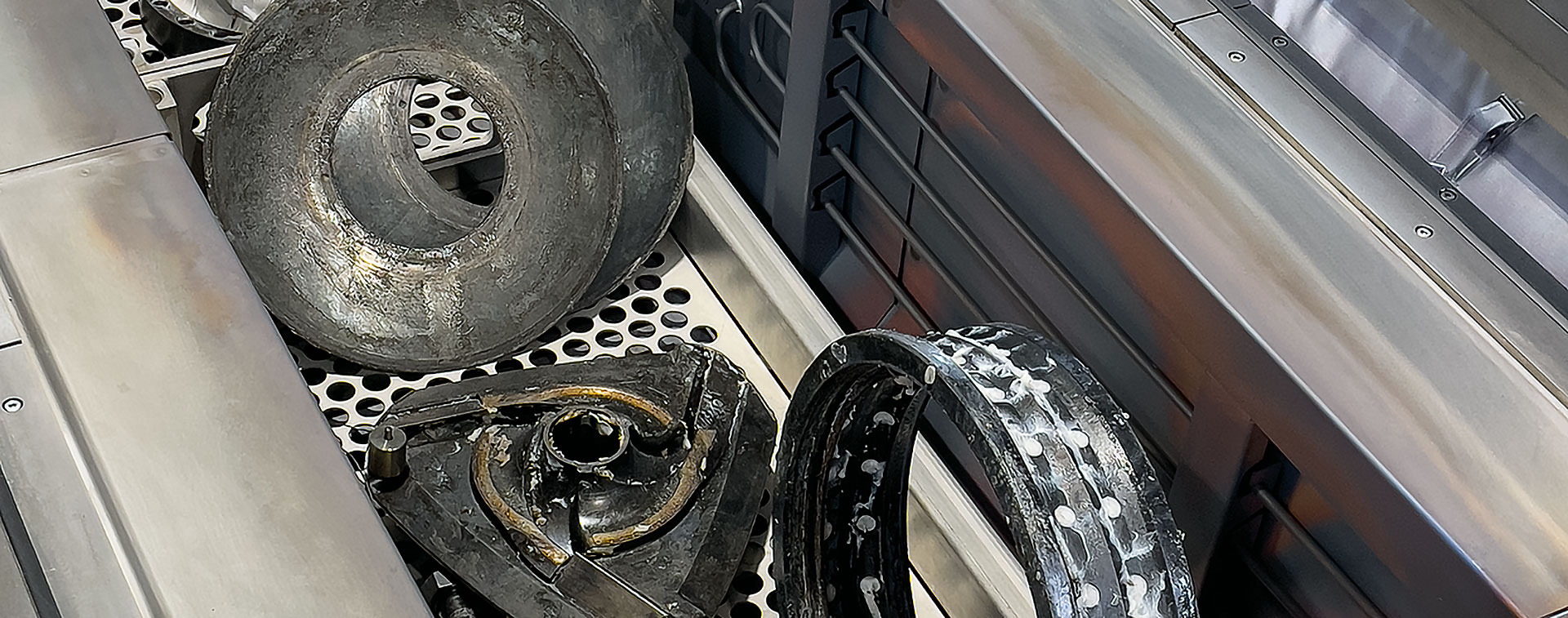
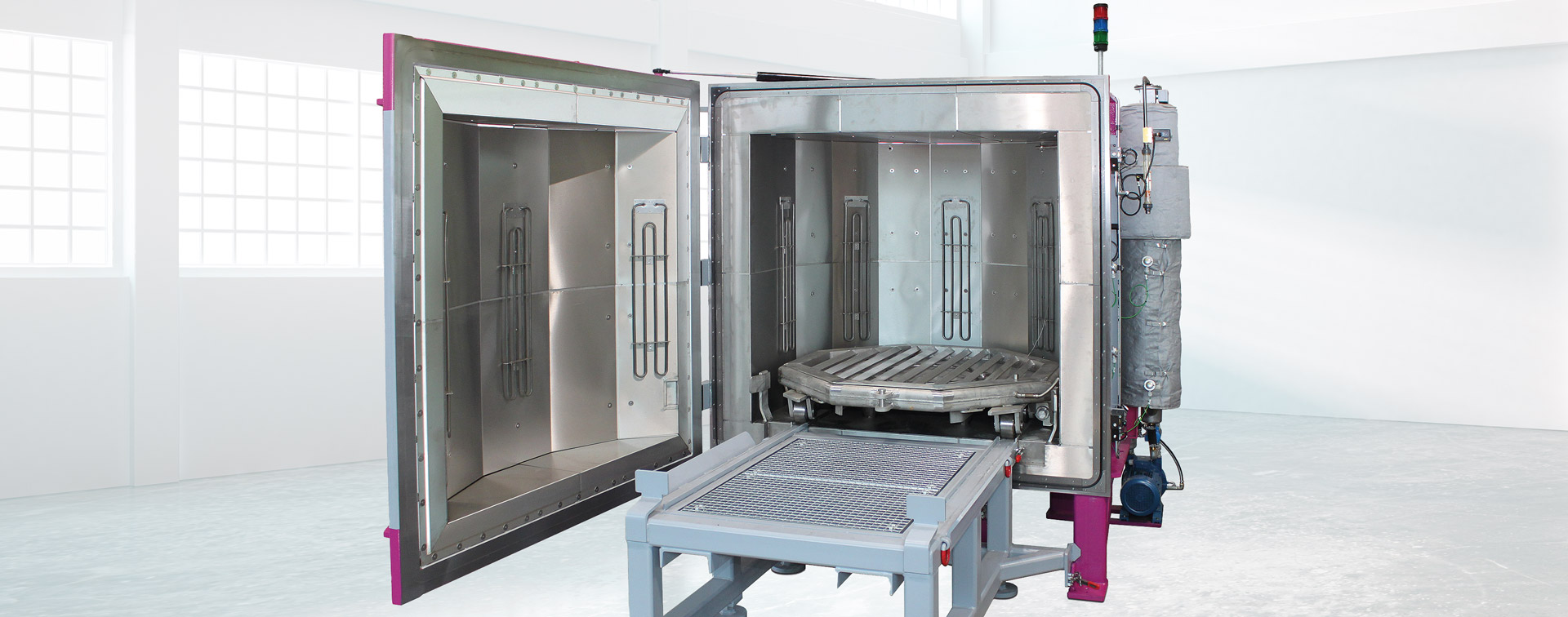
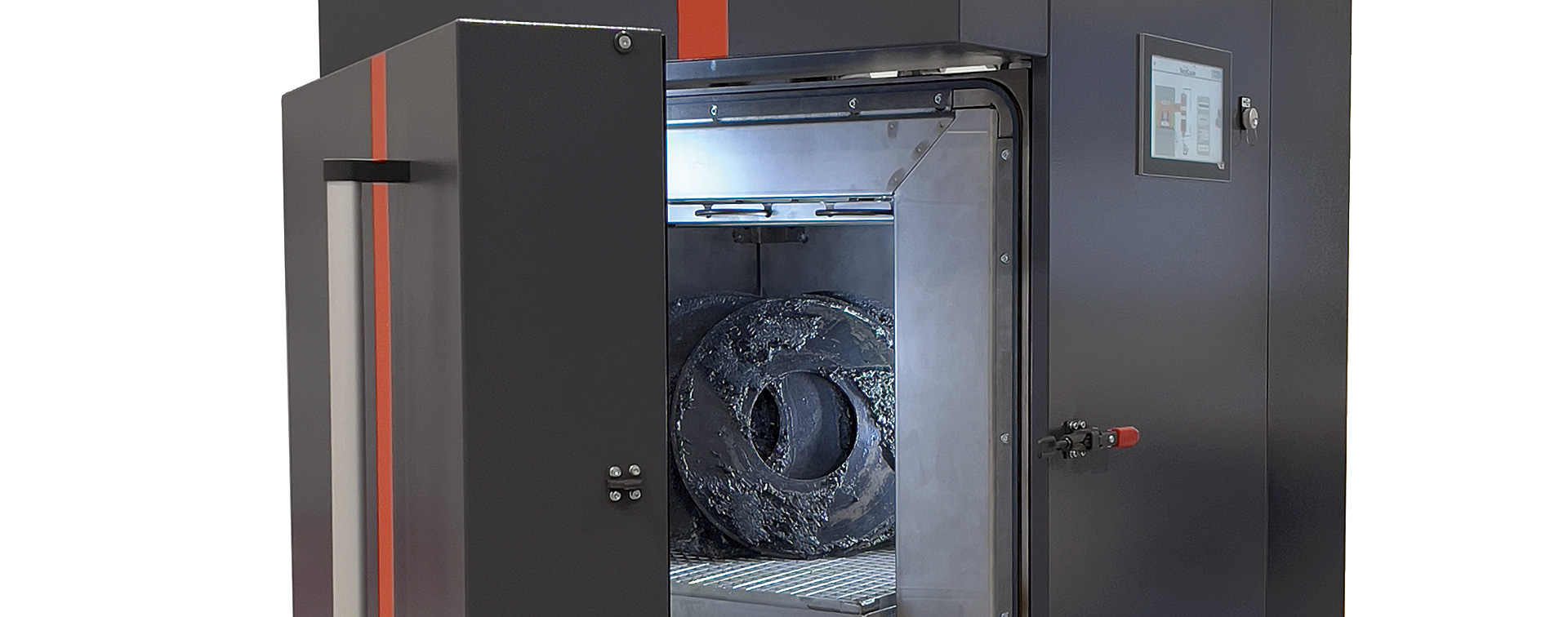

Remove polymer residues without subjecting sensitive components to unnecessary thermal or mechanical stress.
VACUCLEAN is the system developed by SCHWING Technologies GmbH (Neukirchen-Vluyn) for particularly gentle thermal cleaning under vacuum. The systems remove plastic, polymer, and organic residues from heat-resistant metal parts using a controlled process involving melting, vacuum pyrolysis, and oxidation.
The key advantage lies in the controlled heat distribution: The items being cleaned are heated slowly and evenly under vacuum. A large portion of the adhering polymers first melts away before the remaining organic residues are thermally decomposed. This ensures that sensitive components, micro-bores, fine capillaries, filter structures, and complex internal geometries are treated with particular care.
VACUCLEAN is particularly suitable for high-quality tools and components where mechanical cleaning, uncontrolled burning off, or aggressive processes can lead to damage, warping, residues, or a loss of quality.
Have your cleaning task technically assessed. SCHWING evaluates the component, residue, polymer, geometry, and cleaning objective—including a test cleaning and subsequent customized system design, if necessary.
Characteristic | Classification |
|---|---|
System | VACUCLEAN |
System Type | Electrically heated vacuum pyrolysis cleaning system |
Manufacturer | SCHWING Technologies GmbH (Neukirchen-Vluyn, Germany) |
Process | Vacuum pyrolysis with melting and oxidation phases |
Main benefit | Particularly gentle removal of plastic, polymer, and organic residues |
Suitable Components | Heat-resistant metal parts, tools, filters, nozzles, fiber tools, extrusion tools |
Particularly Relevant for | Micro-holes, capillaries, filter structures, complex internal geometries, high-quality tools |
Typical models | VACUCLEAN 154, VACUCLEAN 254, VACUCLEAN COMPACT, VACUCLEAN 1212 |
Temperature range | up to 480 °C; higher temperatures up to 600 °C for special applications upon request |
Typical cleaning time | 8 to 30 hours, depending on the component, polymer, and amount of residue |
Power supply | electrically heated |
Media | electricity and water |
Exhaust air treatment | catalytic exhaust air purification |
Not suitable for | halogen-containing polymers and polymers with flame retardants |
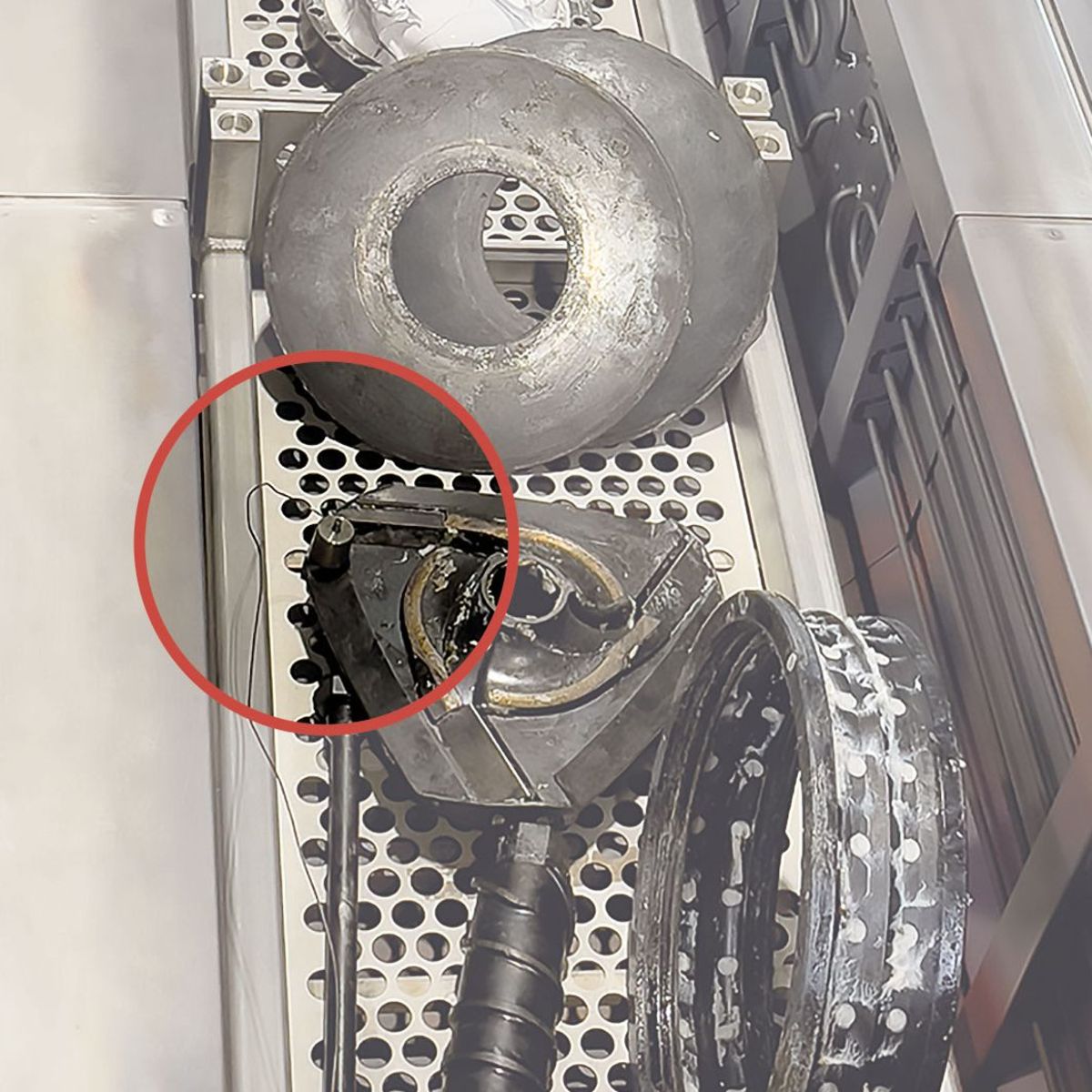
For sensitive tools, it is not enough to simply “burn away” plastic residues. The key factor is how heat is applied to the component in a controlled manner.
VACUCLEAN operates under vacuum. This makes the cleaning process controllable and prevents uncontrolled exothermic reactions. The component is not subjected to stress from aggressive oxygen supply or localized overheating. Instead, the temperature is raised slowly, evenly, and under constant monitoring.
This is particularly important for:
The temperature is measured directly on the item being cleaned. This allows the process to be tailored to the specific component. This reduces the risk of overheating, thermal warping, material stress, or damage to fine geometries.
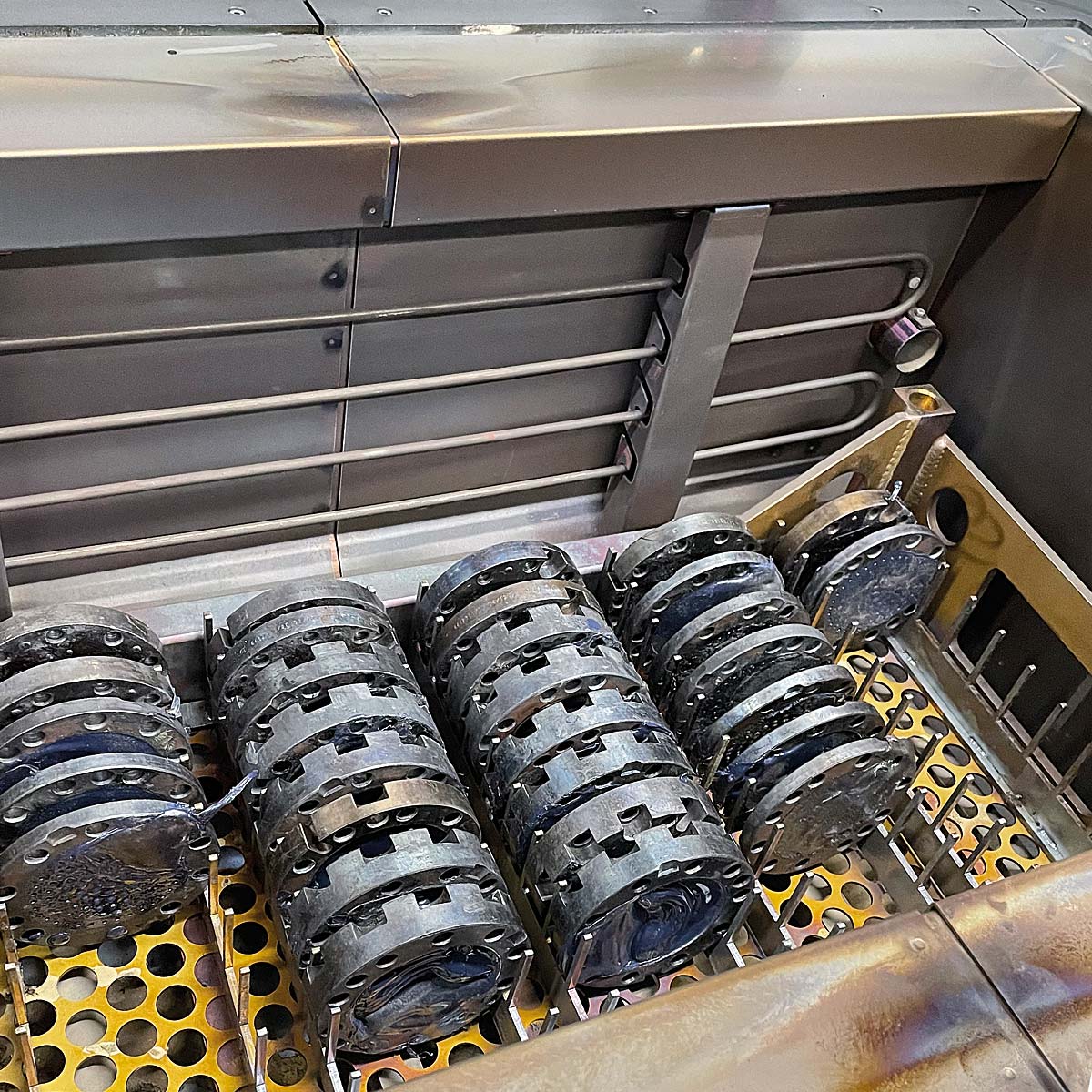


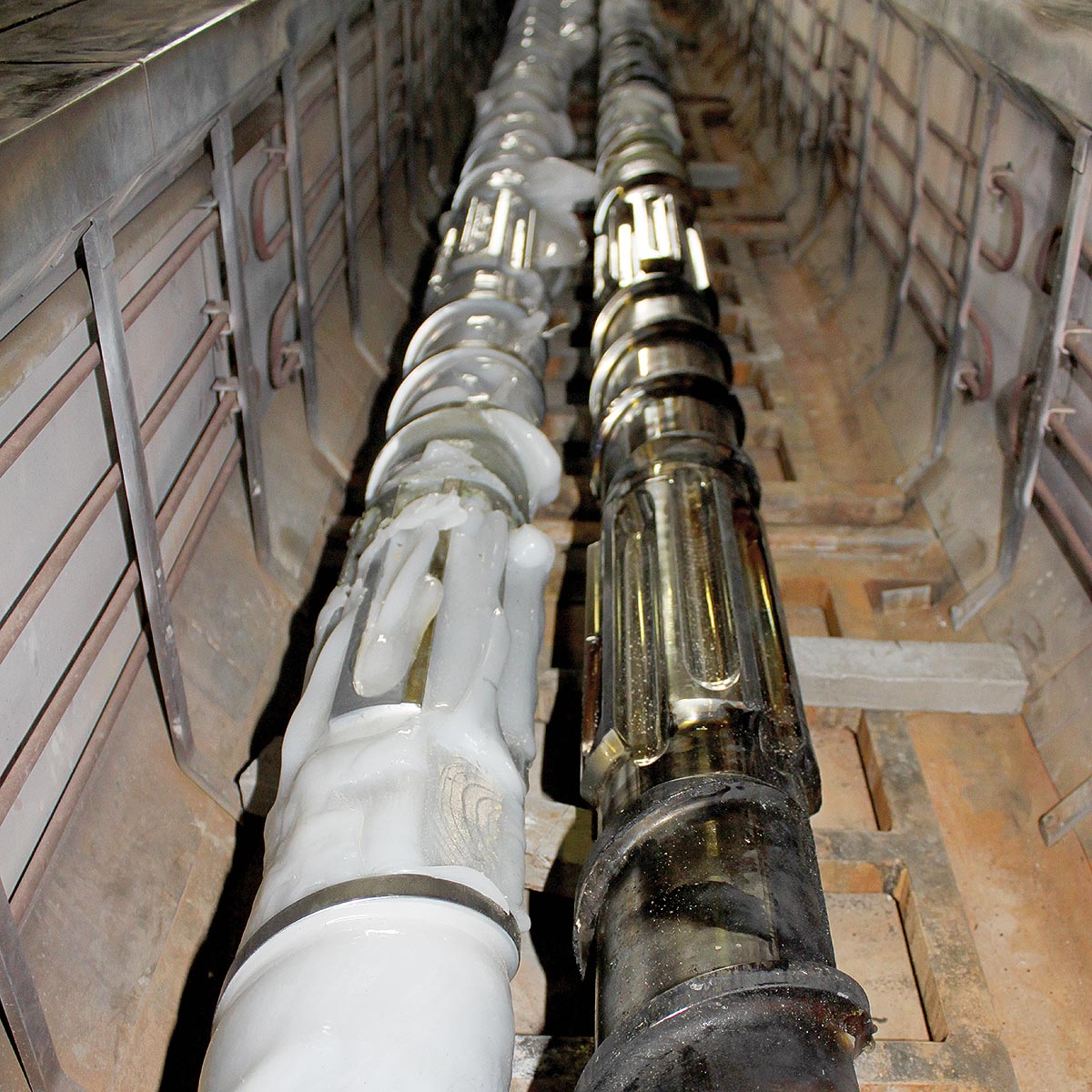
VACUCLEAN is used when plastic, polymer, or organic residues need to be removed from high-quality, complex, or delicate metal parts. The process is particularly relevant for components with micro-holes, capillaries, filter structures, internal channels, narrow passages, or delicate surfaces.
Typical applications are found primarily in the fiber industry, nonwoven production, film extrusion, melt filtration, plastics processing, compounding, polymer production, and plastics recycling.
Applications | Typical Components | Why VACUCLEAN Matters |
|---|---|---|
Melt Filtration | Filter Cartridges, Filter Bundles, Filter Stacks, Leaf Discs, Laser Filters | Filter structures must be freed of polymer residues without compromising the function of the filter elements. |
Fiber Industry and Nonwovens | Spinning nozzles, spinning assemblies, meltblown and spunbond nozzles | Micro-holes and capillaries must be preserved; mechanical cleaning can damage fine geometries. |
Film Extrusion | Blown film heads, film dies, larger die components | Complex internal channels and large die geometries require controlled heating and gentle cleaning. |
Extrusion and Compounding | Extruder screws, screw elements, extrusion dies | Residues of polymers, colorants, additives, or masterbatches must be removed consistently. |
Pelletizing | Pelletizing dies, perforated plates, breaker plates | Holes and passages must be cleared without damaging die geometries. |
Plastics Processing | Screen changers, polymer pumps, nozzles, and precision components | Sensitive components benefit from cleaning without mechanical scraping, brushing, or burning out. |
Whether VACUCLEAN is suitable for a specific component depends on the component's geometry, material, polymer, amount of residue, cleanliness requirements, and handling.

The material to be cleaned is heated slowly and in a controlled manner under vacuum. The heating ramp can be adjusted to suit the component, the residue, and the cleaning objective.
A large portion of the adhering polymers melts and flows into a cooler melt collection vessel. This reduces the polymer load before the actual pyrolysis begins. This is particularly advantageous for heavily fouled filters, extrusion dies, blown film heads, or larger batches.

After melting, the remaining organic residues are thermally decomposed under vacuum. Since the process does not involve uncontrolled burning off but instead takes place under controlled conditions, sensitive tools and delicate geometries are protected.
Specialized sensors and direct temperature measurement on the component protect the item being cleaned from unnecessary thermal stress.

After pyrolysis, the process transitions in a controlled manner to the oxidation phase. During this phase, any remaining carbon residues are oxidized.
Depending on the component, polymer, and purity requirements, additional post-treatment steps may be necessary afterward, such as compressed air, high-pressure water, or ultrasonic cleaning.

VACUCLEAN cleans without mechanical scraping, brushing, or burning during the main process. This ensures that fine holes, capillaries, filter structures, and internal channels remain particularly well protected.

The item being cleaned is heated slowly and evenly. Vacuum, adjustable heating ramps, and temperature measurement on the component reduce the risk of overheating, warping, or material stress.

A large portion of the polymers is melted down and collected separately before the actual pyrolysis. This reduces the load on the process, especially when filters and tools are heavily clogged or when processing larger batches.

The automated process can be adapted to the component, polymer, and amount of residue. This ensures consistent cleaning results and enables the safe reuse of high-quality tools.

VACUCLEAN systems are electrically heated and do not require a gas connection. For many locations, this simplifies integration into existing production, maintenance, or service areas.

The exhaust air is treated using a catalytic exhaust air purification system. This ensures that the process is technically controlled and seamlessly integrated into plant operations.
The selection of the appropriate model depends primarily on the components that need to be cleaned regularly. Key factors include length, diameter, weight, batch size, polymer load, melt-off volume, and handling. The models listed here as examples are not rigid industry-specific solutions. A recycling plant, a fiber manufacturer, or an extrusion plant may require different VACUCLEAN models depending on component size and cleaning frequency.
Model | Typical Application | Typical Design Criteria |
VACUCLEAN 154 | proven top-loading system for longer, slender, or small- to medium-sized parts | regular cleaning with manageable batch volumes |
VACUCLEAN 254 | Top-loading system for longer components and larger batches | Longer component lengths, higher polymer volumes, larger batch volumes |
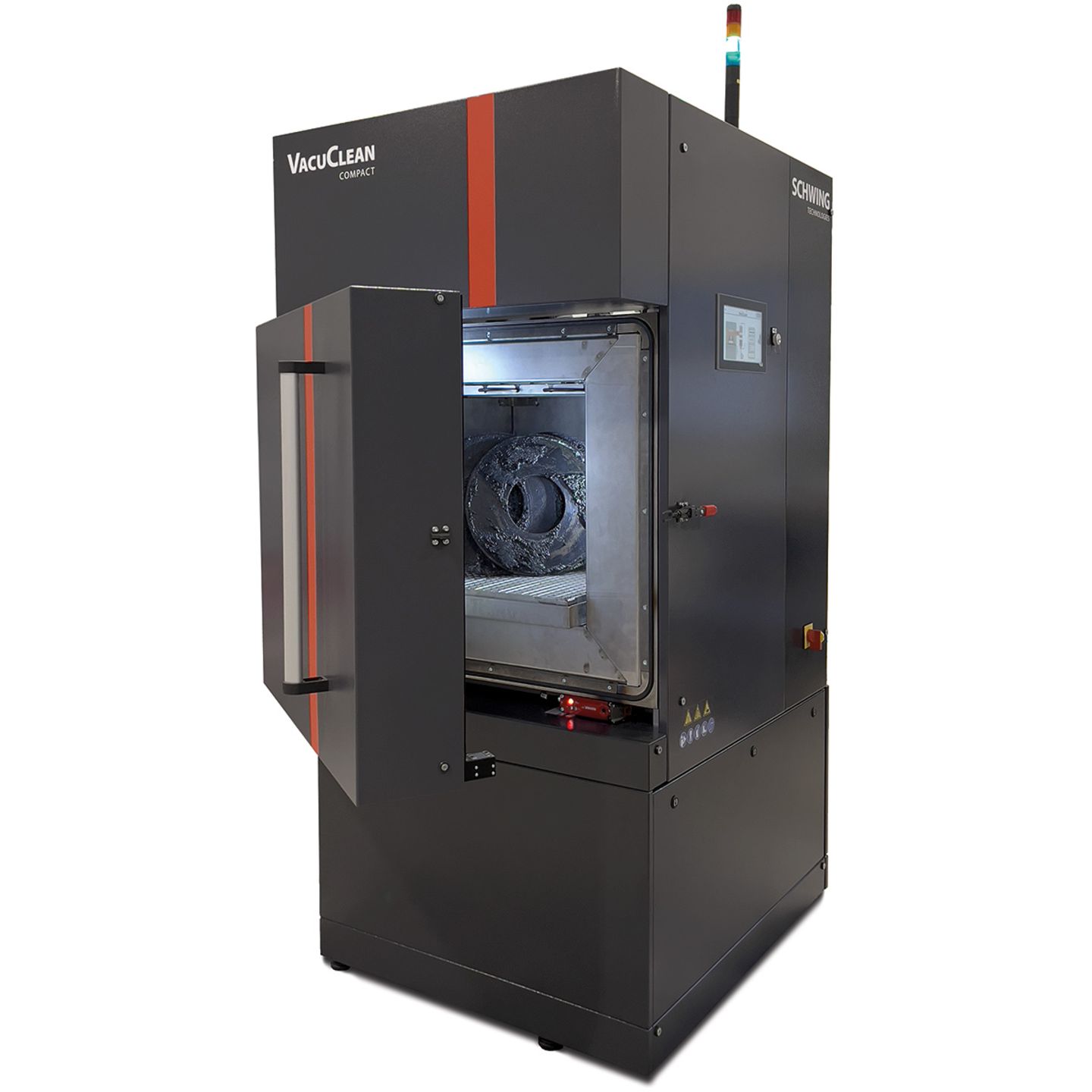
VACUCLEAN COMPACT | Compact front-loading system for smaller batches and sensitive specialty parts | Laser filters, small nozzles, spinnerets, small pumps, limited floor space |
VACUCLEAN 1212 | Front-loading system for larger, heavier, or bulkier components | Larger filter bundles, film molds, heavy molds, front-loading |
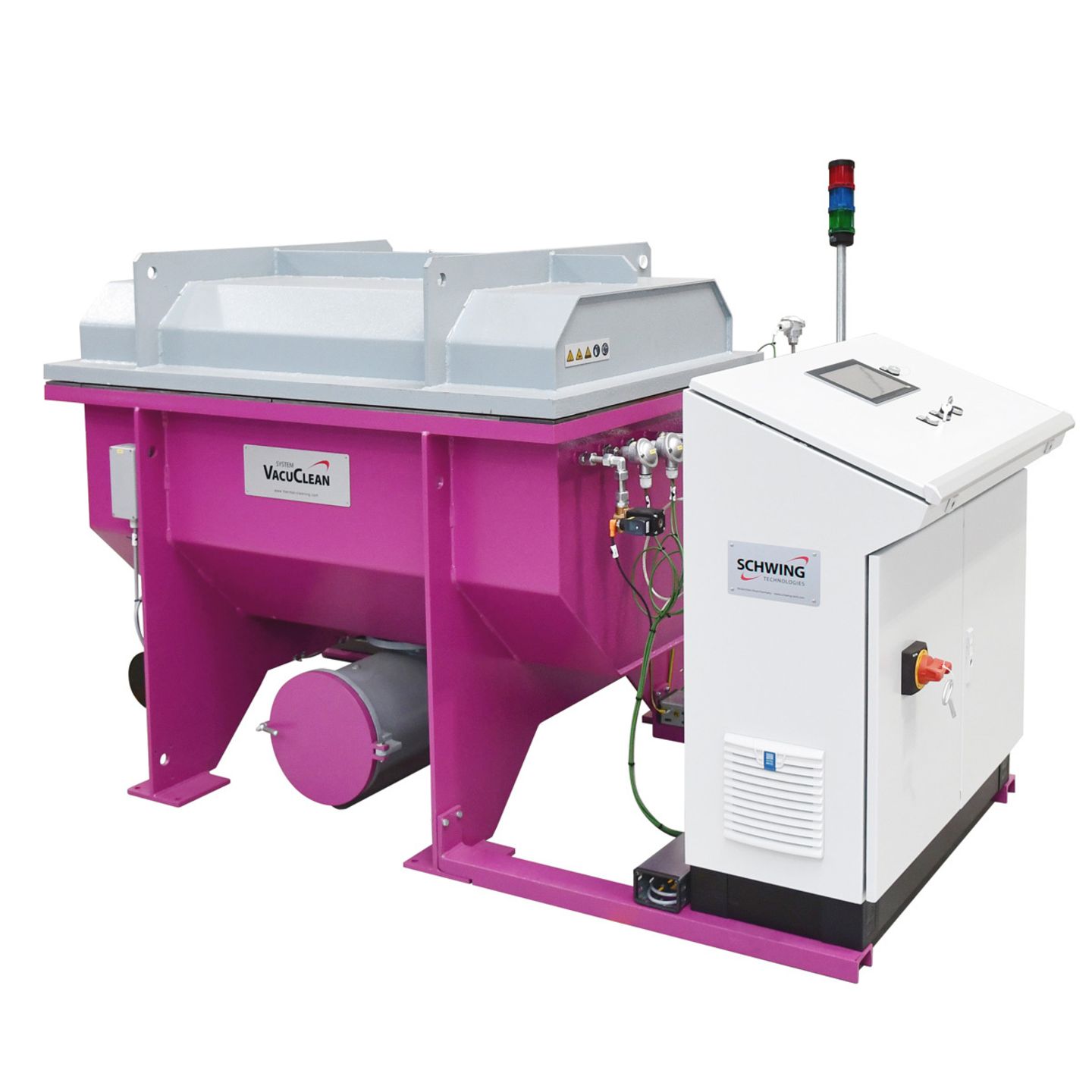
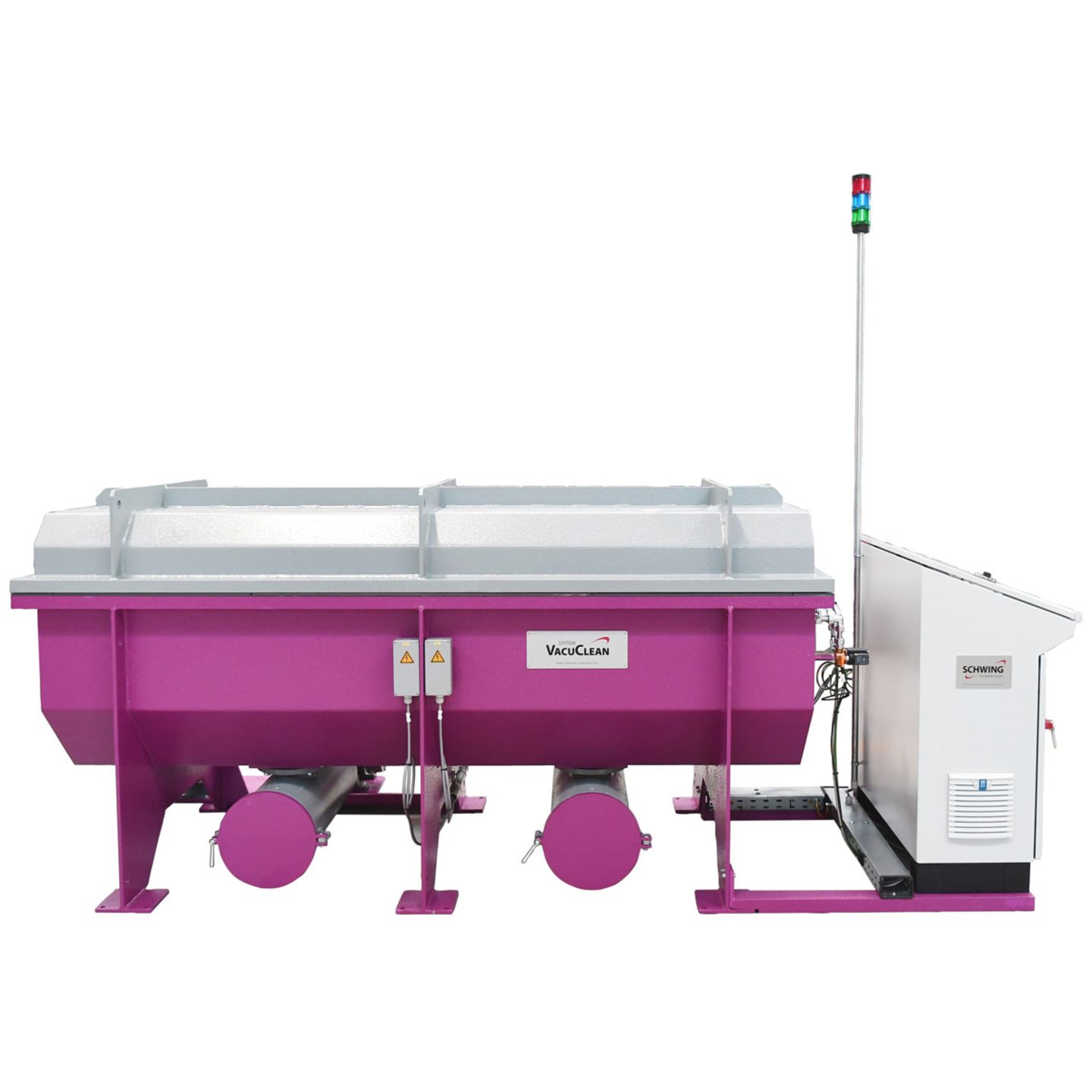
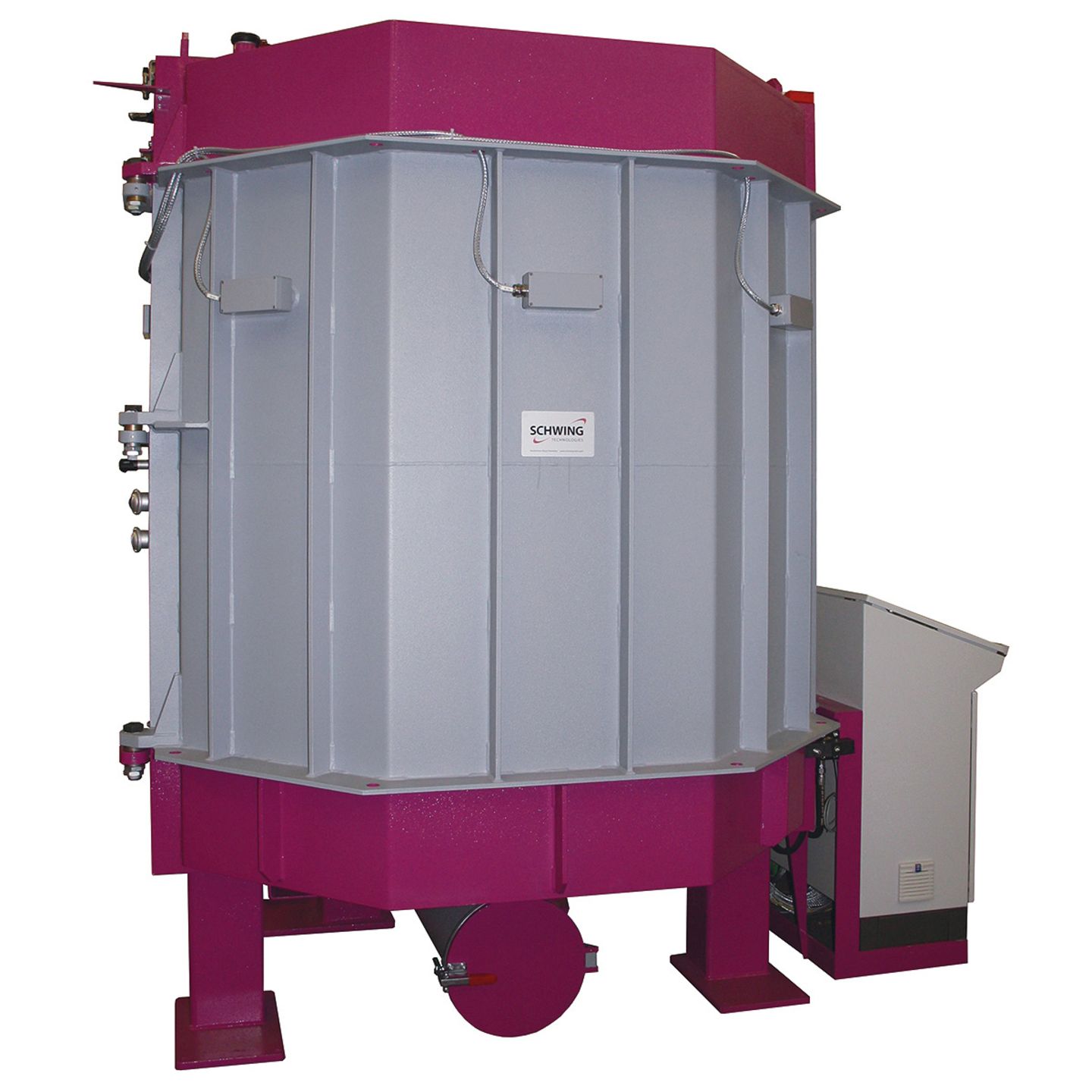
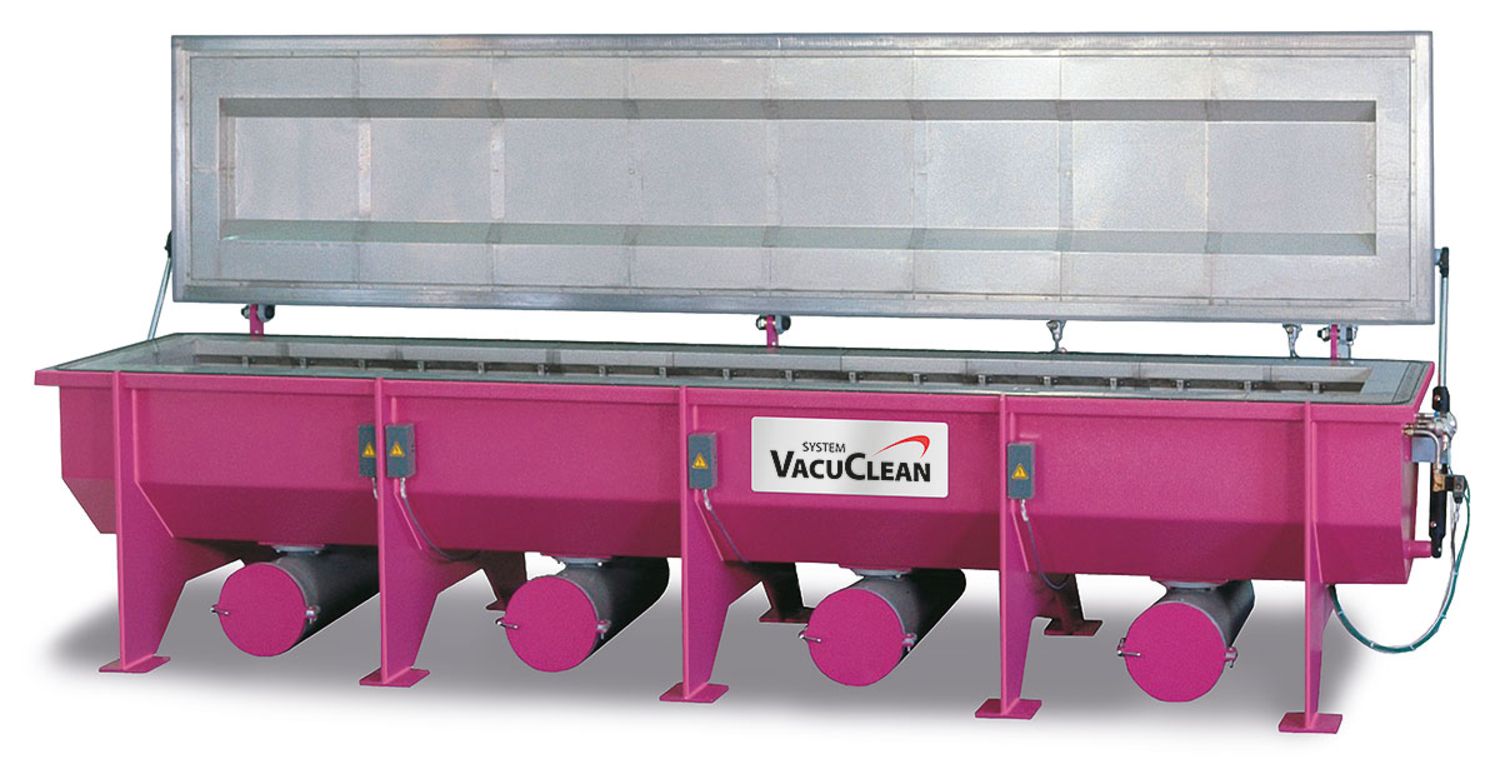
Top-loaders such as the VACUCLEAN 154 and VACUCLEAN 254 are particularly well-suited for longer, slender components or those that need to be cleaned in batches. They are loaded from the top and are a practical choice when components can be loaded using a crane or other suitable device.

Front-loaders such as the VACUCLEAN COMPACT or VACUCLEAN 1212 are particularly well-suited for compact specialty parts, larger components, or heavier tools that are handled using carts, pallets, or custom loading systems.
The decision between a top-loader and a front-loader is based on the actual component logistics: dimensions, weight, available loading methods, and on-site operating procedures.
VACUCLEAN COMPACT is the compact system within the VACUCLEAN family. It is designed for smaller batches, sensitive specialty parts, and limited installation spaces.
Typical applications include:
VACUCLEAN COMPACT also utilizes the principle of gentle melting, vacuum pyrolysis, and oxidation. Especially for expensive and delicate small parts, it is crucial that plastic residues be removed from complex internal areas without mechanically damaging microgeometries.
Would you like to review technical details about the VACUCLEAN system family? The VACUCLEAN brochure contains information on the operating principle, typical applications, sizes, top-loader and front-loader systems, polymer groups, exclusion limits, and technical specifications.
Download: VACUCLEAN Brochure (English)
Format: PDF
Contents: Vacuum pyrolysis, melting, oxidation, model overview, typical components, polymers, and technical data
Download
PDFHave your cleaning requirements evaluated by a technical expert
VACUCLEAN is suitable for many organic residues and numerous engineering polymers. The type of polymer, additives, concentration, component geometry, and cleaning objective are always decisive factors.
Typically Suitable Polymer Groups | Examples |
|---|---|
Polyolefins | PE, HDPE, PP, EVA, EVOH |
Polyesters | PET, PBT, PC, PTT, PEN |
Polyamides | PA6, PA6.6, PA12, PPA |
Polystyrenes and Acrylates | PS, ABS, SAN, PMMA |
High-performance polymers | PEEK, PEI, PI, and others upon testing |
Polyurethanes and specialty polymers | PUR, TPU, LCP, and others upon testing |
VACUCLEAN is not designed for halogen-containing plastics and residues such as PVC, PVDF, PTFE, PVDC, or PCTFE, nor for polymers containing flame retardants. For halogen-containing plastics, SCHWING generally recommends the INNOVACLEAN cleaning system, as aggressive decomposition products must be safely removed and neutralized.
A VACUCLEAN system is not selected based solely on a model name. The selection is based on the specific cleaning task: component, polymer, amount of residue, purity requirements, process objective, handling, and site conditions. For new or critical applications, a test cleaning can demonstrate how the component and residue behave in the VACUCLEAN process. Based on this, SCHWING engineers design the appropriate system solution.
SCHWING evaluates components, residues, polymers, geometry, weight, the current cleaning method, and the desired cleaning result.
The evaluation determines whether vacuum pyrolysis is suitable for the component, the residue, and the cleaning objective—particularly with regard to component protection, micro-holes, internal channels, and filter structures.
For new, critical, or high-value components, a test cleaning can demonstrate what level of cleanliness can be achieved and what post-treatment will be required.
Only then are the chamber size, feed, handling, melting volume, batch size, process duration, exhaust air routing, and integration into operations finalized.
The result is not a blanket product recommendation, but rather a technically sound system solution within the VACUCLEAN system family.
VACUCLEAN is the SCHWING system for particularly gentle thermal cleaning under vacuum. The systems remove plastic, polymer, and organic residues from heat-resistant metal parts using a controlled process involving melting, vacuum pyrolysis, and oxidation.
VACUCLEAN operates under vacuum with slow, adjustable heating and direct temperature measurement on the component. This ensures that sensitive parts are not subjected to unnecessarily high thermal stress. Fine geometries such as micro-holes, capillaries, filter structures, and internal channels remain better protected. At the same time, mechanical scraping, brushing, or burning out are eliminated from the main process.
Typical components include filter cartridges, filter bundles, filter stacks, leaf discs, laser filters, spinning nozzles, spinning packages, meltblown and spunbond nozzles, blown film heads, extrusion dies, screw elements, perforated plates, screen changers, polymer pumps, and other heat-resistant metal parts with plastic or polymer deposits.
The VACUCLEAN process consists of three steps. First, the component is slowly heated under vacuum, causing a large portion of the adhered polymer to melt. Next, any remaining organic residues are thermally decomposed under vacuum. Finally, carbon residues are oxidized in a controlled manner. Depending on the component and the cleaning objective, post-treatment may be necessary.
VACUCLEAN is suitable for many organic residues and numerous engineering polymers, including polyolefins, polyesters, polyamides, polystyrene, acrylates, high-performance polymers, polyurethanes, and other specialty polymers following technical evaluation. The decisive factors are the type of polymer, additives, concentration, amount of residue, and component geometry.
VACUCLEAN is not designed for halogen-containing polymers or polymers containing flame retardants. Examples of halogen-containing polymers include PVC, PVDF, PVDC, PTFE, and PCTFE. For such applications, an alternative thermal cleaning process should be considered.
Before an investment decision is made, SCHWING conducts a technical evaluation of the specific cleaning task. For new, critical, or particularly high-value components, a test cleaning may be advisable. Based on the component, residue, cleaning result, post-treatment, handling, and on-site conditions, SCHWING engineers then design the appropriate VACUCLEAN system solution.
Another system may be appropriate if the cleaning task is better suited to a different thermal process. INNOVACLEAN uses fluidized-bed cleaning and is particularly suitable for small to medium-sized components. MAXICLEAN, as a pyrolysis furnace, is primarily designed for large components and halogen-free residues. The basic system selection process is explained on the “Thermal Cleaning” pillar page.
Whether you need a cleaning service, a trial cleaning, or your own system:
SCHWING can help you select the right thermal cleaning process for your components, polymers, and production requirements.
back-to-top